 Bellingham Exterior
 Building a Deck That Actually Holds Up in York
York is one of Bellingham's older, established neighborhoods, with a mix of housing ages and lot styles close enough to the water and the surrounding tree cover that the same climate pressures hit almost every property: salt-tinged marine air, rain that comes in sideways as often as it falls straight, and a moss season that can run most of the year on shaded lots. A deck out here isn't just outdoor furniture bolted to the house. It's a structure that sits exposed to all of that, year-round, and either the framing, fasteners, and decking material are chosen and built to handle it, or the deck starts showing problems well before it should.
This page covers what a York-area deck build actually needs given Whatcom County's climate, what a correct job looks like from the ground up, and how we approach the work when we build or rebuild a deck in this neighborhood specifically, rather than treating it like a generic backyard project.
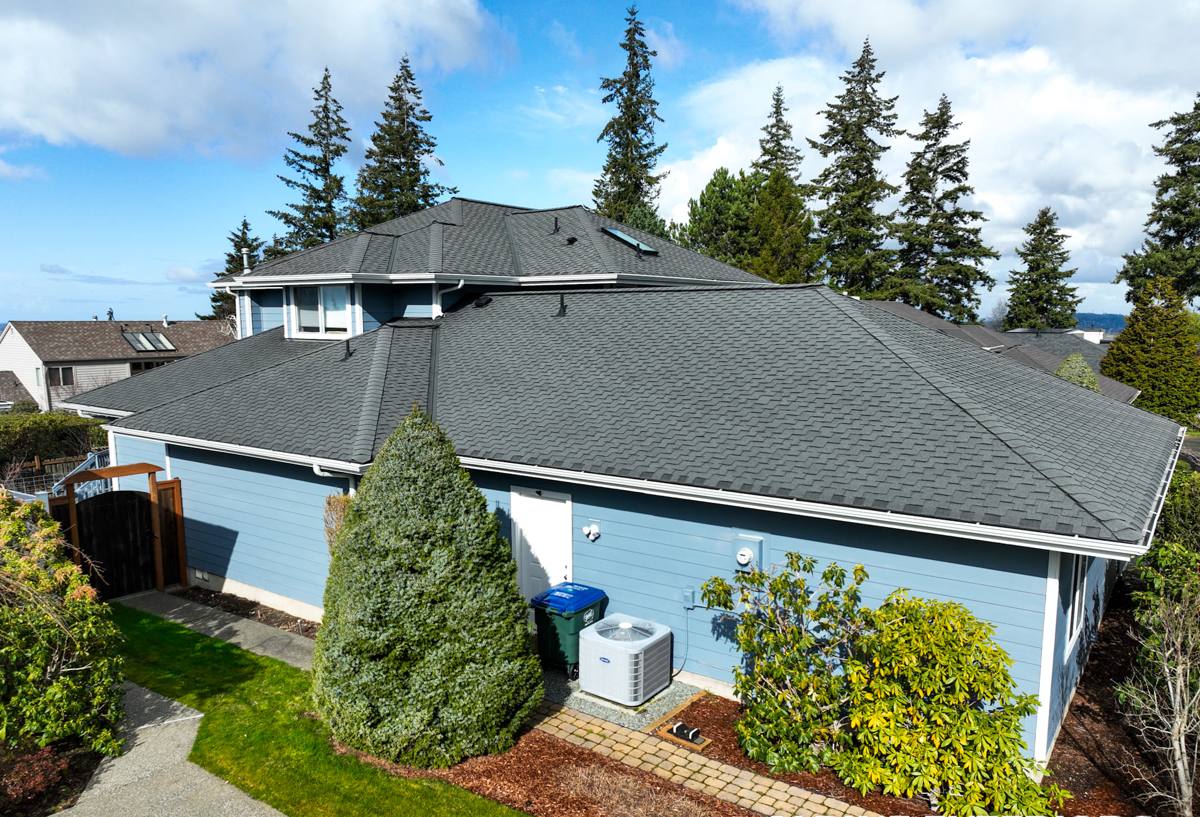
What Bellingham's Climate Does to a Deck
Salt Air and Slow Corrosion
Bellingham's setting on the bay means a steady flow of moisture-laden, salt-tinged air moving through neighborhoods like York, not just during storms. On a deck, that exposure works on every piece of exposed metal — joist hangers, structural screws, railing hardware, ledger bolts — a little at a time. A fastener that's corroding from the inside out doesn't always look bad on the surface, but it loses holding strength long before it's obviously failing, which is exactly why fastener grade matters more here than it would in a drier inland climate.
Wind-Driven Rain
Rain in this part of Whatcom County frequently arrives at an angle, pushed by wind off the water rather than dropping straight down. On a deck, that matters most at the ledger board — the point where the deck structure attaches to the house — and at any point where the decking surface meets siding, posts, or stairs. Flashing and water management details that would be fine in a calmer, drier region can still let water track behind the wall assembly here specifically because the rain is hitting those joints from an angle a simple gravity-drainage design doesn't account for.
A Long Moss and Mildew Season
Mild temperatures, tree cover, and near-constant dampness add up to extended moss and mildew growth on decks across Bellingham, and shaded or north-facing decks in York see it worse than most. Moss doesn't just look bad — it holds moisture against the decking surface and framing underneath, and on wood decking in particular, that trapped moisture is what drives rot. Deck orientation, board spacing, and how well air can move underneath the structure all affect how much of a problem this actually becomes over time.
Ground Moisture and Substructure Stress
Whatcom County's wet season means the ground around and under a deck often stays damp for months at a stretch. The framing underneath the visible decking boards — posts, beams, joists — is doing the structural work the whole deck depends on, and it's usually the first place problems start when the wrong materials or fastening details are used, long before the surface boards show any visible sign of trouble.
Decking Material Options for This Climate
The decking surface gets most of the attention when homeowners picture a new deck, but the material choice has real consequences in a climate this wet. Here's how the common options actually compare for a York-area build.
| Material | How It Handles This Climate | Maintenance | General Notes |
|---|---|---|---|
| Capped composite | Strong — cap layer resists moisture absorption, staining, and moss growth better than uncapped products | Occasional washing; no staining or sealing | Our standard recommendation for most York builds given the moss and rain exposure |
| Uncapped composite | Moderate — can absorb some moisture, more prone to mildew staining over time | Periodic cleaning to manage mold and mildew | Lower upfront cost, but shows this climate's effects faster than capped boards |
| Cedar | Naturally rot-resistant when new, but needs upkeep to keep that resistance as it weathers | Regular sealing or staining to prevent graying and moisture intrusion | A classic look many homeowners want; the tradeoff is an ongoing maintenance schedule |
| Pressure-treated wood | Adequate structurally, but surface is more prone to splintering, staining, and mold in sustained wet conditions | Regular sealing or staining required | Most common for cost-driven builds and almost always used for the substructure regardless of what's on top |
There isn't one universally correct answer — a shaded, moss-prone lot pushes harder toward capped composite, while a homeowner set on a natural wood look can still get a good result from cedar if they're realistic about the maintenance it needs in this climate. We'll walk through the tradeoffs against your specific lot and how the space will actually be used.
What a Correct Deck Build Involves Here
Whatever surface material ends up on top, the structure underneath is what determines whether a deck in York actually lasts. A build done right for this climate includes:
- Framing material rated for ground contact and sustained moisture exposure, not a generic lumber spec
- Corrosion-resistant structural fasteners and joist hardware throughout, sized for a marine-air environment rather than standard-grade hardware
- Correct ledger board flashing and attachment where the deck ties into the house, since this connection is one of the most common failure points in wind-driven rain
- Post footings set below frost depth and sized to local soil conditions, not just poured to a minimum code depth
- Board gapping calculated for the specific decking material's expansion and contraction, and for drainage
- Joist spacing matched to the decking product's actual span rating, whether that's wood or composite
- Railing and stair framing built to current code requirements for guard height and baluster spacing
- Ventilation and drainage beneath the deck so moisture doesn't sit against the framing through the wet months
Skip any one of these and the deck usually still looks fine on day one. The problems show up two, five, or ten years in — a soft spot in the framing, a post that's started to shift, or fastener corrosion staining the boards around it.
New Build vs. Replacement vs. Repair
Not every deck project in York means starting from scratch. We generally see three situations, and they call for different approaches:
New Deck Construction
A new build starts with no existing structure to work around, which means the framing, footings, and layout can all be designed correctly from the start for the specific lot — grade, sun and shade pattern, and how close the site is to mature trees that will drop debris and hold moisture against the deck.
Full Replacement
When an existing deck's framing has been compromised by long-term moisture exposure, or the deck is simply an older structure that's reached the end of its service life, a full replacement is usually the honest recommendation. Rebuilding the substructure correctly the second time around, rather than reusing questionable framing to save money, is what actually gets you a deck that lasts.
Repair and Partial Rebuild
Isolated problems — a section of rotted decking, a loose or leaning railing post, stairs that have settled — can often be repaired or rebuilt in place without touching a structurally sound frame. The key question is always whether the substructure underneath the visible problem is still solid. If moisture has been tracking into the framing for a while, a surface-level patch usually just delays a bigger job, and we'll tell you plainly which situation you're actually in rather than upselling a repair into a full rebuild or the reverse.
How Our Process Works
We start with a site visit to look at what's actually there: existing deck and framing condition if it's a replacement or repair, grade and drainage around the build area, sun and shade exposure through the day, and how close the site sits to trees or shrubs that will affect moss and debris buildup. From there we talk through material options and layout that fit the budget and how the space will actually get used, whether that's a simple entertaining deck, something built around an existing patio, or a full replacement of a deck that's failed.
Deck construction in Bellingham generally requires a building permit through the City of Bellingham or Whatcom County, depending on the property's location, and the requirements can shift based on deck height, size, and proximity to property lines. We handle that permitting process as part of the job rather than leaving it for the homeowner to sort out. Once permitted, the build follows the sequence above — footings and framing first, built to the specifications the site and material actually call for, then decking, railing, and stairs. We finish with a walkthrough covering what maintenance the specific material you chose actually needs, since even low-maintenance composite decking isn't a maintenance-free product.
Maintaining a Deck Through Bellingham's Wet Season
Whatever material ends up on your deck, a few habits go a long way toward getting the full service life out of it in this climate:
- Sweep or rinse debris — leaves, needles, seed pods — off the deck surface regularly, since trapped organic matter is what feeds moss and mildew growth
- Keep gaps between boards clear so water and airflow can move through the way the build was designed for
- Check railing posts and structural hardware periodically for any early sign of corrosion or movement, especially heading into the wet months
- Trim back overhanging branches or shrubs that keep the deck surface shaded and damp longer than it needs to be
- If you have a wood deck, keep the sealing or staining schedule current rather than letting it lapse a season, since that gap is when moisture damage tends to start
- Address any soft spots, standing water underneath, or shifting posts right away — those are structural signs, not cosmetic ones
Why It Matters That We Already Work York
A crew that occasionally builds a deck in Bellingham can still do competent work, but a neighborhood like York has enough of its own variables — lot grading, established tree cover, older homes with framing and siding details from a different construction era — that familiarity with the area actually shows up in the finished product. Working this neighborhood regularly means we're not guessing at how a given lot drains, what the moss exposure looks like on a shaded side yard, or how permitting works for this part of the city. We've built to those conditions before, on the same kind of lots, and that experience shows up in decisions homeowners don't always think to ask about — fastener grade, footing depth, and which decking lines actually hold up here over years rather than months.
If you're planning a new deck, replacing one that's past its useful life, or just want a straight read on what a repair versus a rebuild would take on your York property, we're glad to walk the site with you and lay out the options plainly. Reach out below for a free, no-pressure estimate.