 Bellingham Exterior
 Roof Repair in York Comes With Its Own Set of Problems
Every roof repair job starts with the same question: what actually caused the damage? In the York area, the answer is almost always some combination of moisture, moss, and wind-driven rain working on a roof year-round rather than in short seasonal bursts. That changes what "repair" needs to mean here. A patch that would hold up fine in a dry inland climate can fail within a season in Whatcom County if it doesn't account for how much water this roof will see and how long it stays wet between dry spells.
This page covers what we look for, what a correct repair actually involves, and how we approach roof repair work for homes in and around York specifically — not a generic rundown of roofing problems that could apply anywhere.
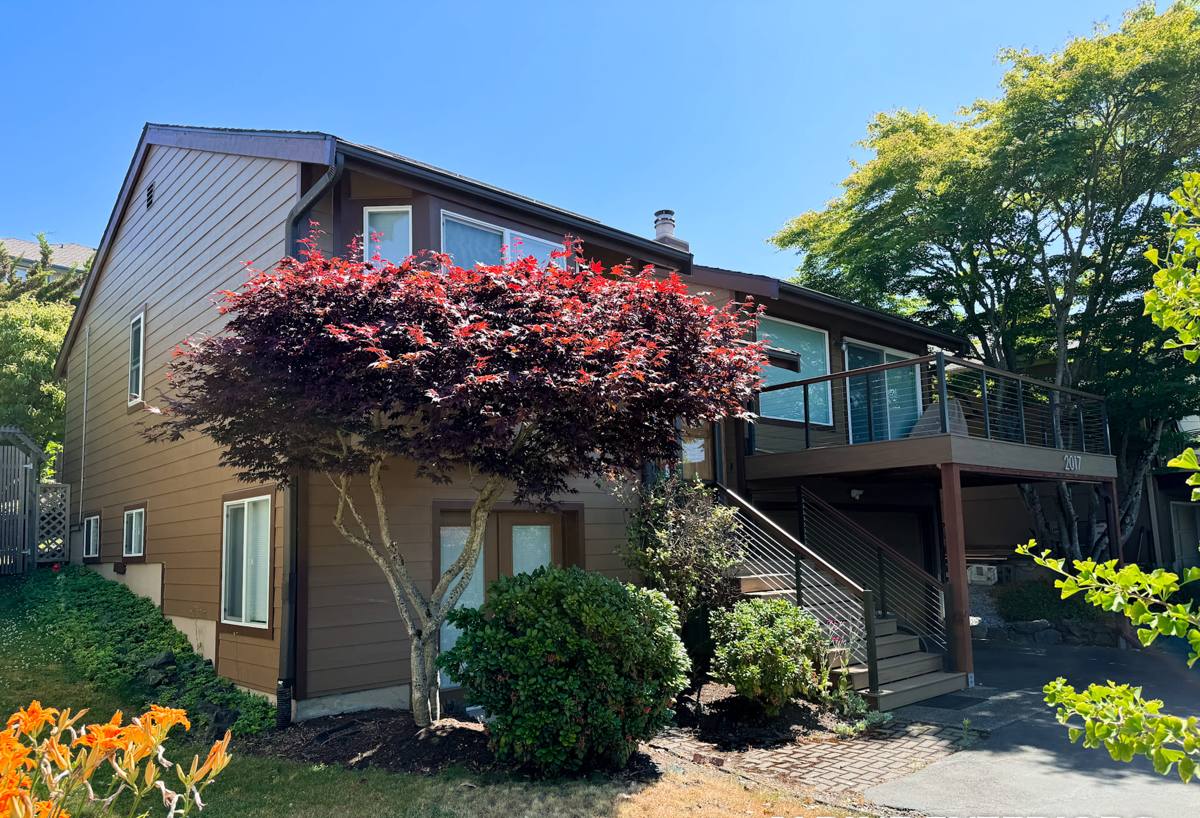
What Bellingham's Climate Does to a Roof
Bellingham sits close enough to the water that salt air is a real factor on fasteners, flashing, and any exposed metal on a roof system. Combine that with Whatcom County's long stretch of overcast, wet months and you get two slow, steady sources of roof damage: corrosion and moss.
Moss and Organic Growth
Moss doesn't just sit on top of shingles looking bad — it holds moisture against the roofing material for extended periods, works its way under shingle tabs and shakes, and lifts edges as it grows. Once moss gets a foothold on a north-facing slope or a shaded section under trees, it tends to come back faster each time unless the underlying moisture problem is addressed, not just the visible growth.
Driving Rain
Wind-driven rain doesn't behave like straight-down rain. It gets pushed sideways and upward under shingle edges, around flashing laps, and into any gap that a calmer rain would never reach. Repairs that don't account for wind direction — flashing lapped the wrong way, sealant used in place of proper overlap — tend to leak specifically in storms, which is often when a homeowner first notices a problem.
Salt Air and Metal Fatigue
Flashing, fasteners, and gutter systems corrode faster near the coast. A fastener that's rusted through isn't just cosmetic — it's a hole that water will eventually find, and a corroded flashing seam is a leak point waiting for the right storm.
Signs a York-Area Roof Needs Repair
Most roof problems don't announce themselves as a hole in the ceiling. They show up as smaller signals first, and catching them early is usually the difference between a repair bill and a much larger one.
- Dark streaking or green/black patches on shingles, especially on shaded or north-facing slopes
- Granules collecting in gutters or at downspout outlets
- Soft or spongy spots when walking the roof or visible sagging from the ground
- Daylight visible through the attic roof deck
- Water stains on interior ceilings, especially near chimneys, skylights, or valleys
- Lifted, curling, or missing shingle tabs after a windstorm
- Rust streaks below metal flashing or fasteners
- Moss or lichen growth thick enough to hold visible moisture after a dry day
What a Correct Roof Repair Actually Involves
A repair that lasts isn't just about replacing the shingles a homeowner can see. Most leaks trace back to a flashing detail, a underlayment gap, or a decking issue underneath the visible surface — so a repair that only addresses the top layer often just delays the same leak.
Flashing First
Flashing around chimneys, skylights, valleys, and wall intersections is where most roof leaks actually originate, not the open field of shingles. Correct flashing repair means removing and properly lapping the metal — not caulking over a gap and calling it fixed. Sealant has its place, but it's a backup, not a substitute for proper overlap and step flashing.
Underlayment and Decking
If water has been getting under the shingles for a while, the underlayment and the plywood decking beneath it may be compromised even if the shingles themselves still look presentable. We check for soft decking, delamination, and underlayment that's torn or no longer doing its job before closing a repair back up. Patching over damaged decking is a common shortcut that leads to a callback.
Matching Materials
Shingle color and profile change over time with sun exposure, so a repair patch using brand-new material next to weathered shingles will usually be visible. We're upfront about that trade-off — sometimes a slightly mismatched patch is the honest, cost-effective answer, and sometimes a larger section needs to come up to keep the repair from standing out or from creating a new seam that's prone to leaking.
Repair or Replace? What Actually Drives That Decision
Homeowners often ask us to just tell them a number before we've looked at the roof, but the honest answer depends on a handful of specific factors. Here's what we actually weigh:
| Factor | Leans Toward Repair | Leans Toward Replacement |
|---|---|---|
| Roof age | Under 15-20 years, depending on material | At or past the material's expected service life |
| Damage location | Isolated to one slope, flashing detail, or penetration | Spread across multiple slopes or recurring in several spots |
| Decking condition | Solid, no soft spots found | Widespread soft or delaminated decking |
| Moss/moisture history | First occurrence, addressed early | Long-term, repeated moss damage with granule loss |
| Remaining shingle stock | Matching material still available or acceptable | Discontinued material, poor match, or brittle shingles that crack when disturbed |
We'll tell you plainly if a repair is a short-term patch on a roof that's genuinely near the end of its service life. It's not in anyone's interest — including ours — to repair a roof that needs a full replacement within a year or two.
How Our Repair Process Works
- Inspection. We walk the roof (weather permitting) and check the attic from inside where accessible, looking at decking, insulation, and any staining that points to where water is actually entering versus where it's showing up.
- Diagnosis. We trace the leak or damage back to its actual source. Water often travels along decking or rafters before it shows up on a ceiling, so the visible stain and the actual entry point can be several feet apart.
- Written scope. Before any work starts, you get a plain explanation of what's damaged, what we're repairing, and why — no surprise add-ons once we're up there.
- Repair. We remove and replace only what's compromised, correctly lapping flashing and matching underlayment and decking work to the original construction where possible.
- Cleanup and check. Job site debris, old nails, and shingle scraps are cleared from the roof and gutters — leftover granules and nails in a gutter system cause their own problems down the line.
Materials We Use and Why
For most repair work in this climate, we lean toward materials with a track record of handling sustained moisture rather than materials that look good but demand more upkeep than a typical homeowner wants to commit to.
Flashing Metal
We prefer corrosion-resistant flashing metal given the salt air exposure this close to the coast. Cheaper flashing that corrodes in a handful of years just moves the same leak risk a few years down the road.
Underlayment
Synthetic underlayment generally holds up better than older felt products in a climate with this much sustained moisture — it resists tearing and handles the freeze-thaw and wet-dry cycling that's typical of a Whatcom County winter.
Sealants
We use sealant as a supporting detail around penetrations and fastener heads, not as the primary defense against water intrusion. Any repair that relies on sealant alone to hold back driving rain is one we consider undersized for this climate.
Why a Crew That Already Works in York Matters
Roofing problems in this area tend to repeat themselves in patterns — moss on shaded north slopes, flashing corrosion on homes closer to the water, valley leaks on roofs with steeper pitches and tight tree cover. A crew that's already worked on roofs in and around York has a head start on recognizing those patterns instead of treating every job as a first-time diagnosis. That matters for speed, and it matters for getting the diagnosis right the first time instead of chasing a leak through two or three return visits.
It also means we understand the practical side of working in this area — permitting expectations in Bellingham and Whatcom County, typical roof pitches and construction styles found on homes here, and scheduling around the wetter months when repair timing matters more.
Simple Maintenance That Extends a Repair's Lifespan
A repair only lasts as long as the roof around it is maintained. A few habits make a real difference in this climate:
- Clear gutters and downspouts at least twice a year, more often under heavy tree cover
- Remove moss buildup before it spreads across a full slope, using methods that don't damage the shingle surface
- Trim back branches that keep a section of roof shaded and slow to dry
- Check attic ventilation — poor airflow keeps decking damp longer after wet weather
- Have flashing and penetrations checked after any major windstorm
- Address small leaks immediately rather than waiting for a dry season to deal with them
Get a Straightforward Look at Your Roof
If you're seeing moss buildup, a stain on a ceiling, or storm damage on a roof in the York area, we're happy to take a look and give you an honest read on what's actually going on — repair, replacement, or just something to keep an eye on. Use the form below to request a free, no-pressure estimate.