 Bellingham Exterior
 Why Birch Bay Windows Take More Punishment Than Most
Windows on a shoreline lot don't age the same way windows do a few miles inland. Birch Bay sits right on the water in Whatcom County, and that location comes with a specific set of stresses: salt-laden air that works on metal hardware and fasteners, wind-driven rain that gets pushed sideways into gaps a calm-weather install would never expose, and a long stretch of the year — fall through spring — where moss, algae, and standing moisture sit against wood trim and sills. Add the freeze-thaw swings we get in a Pacific Northwest winter, and you've got a climate that finds every weak point in a window assembly within a few years, not a few decades.
None of that means Birch Bay homes need exotic solutions. It means the basics — flashing, sealant, frame material, and installation sequence — have to be done right the first time, because this environment doesn't forgive shortcuts the way a drier, more sheltered site might.
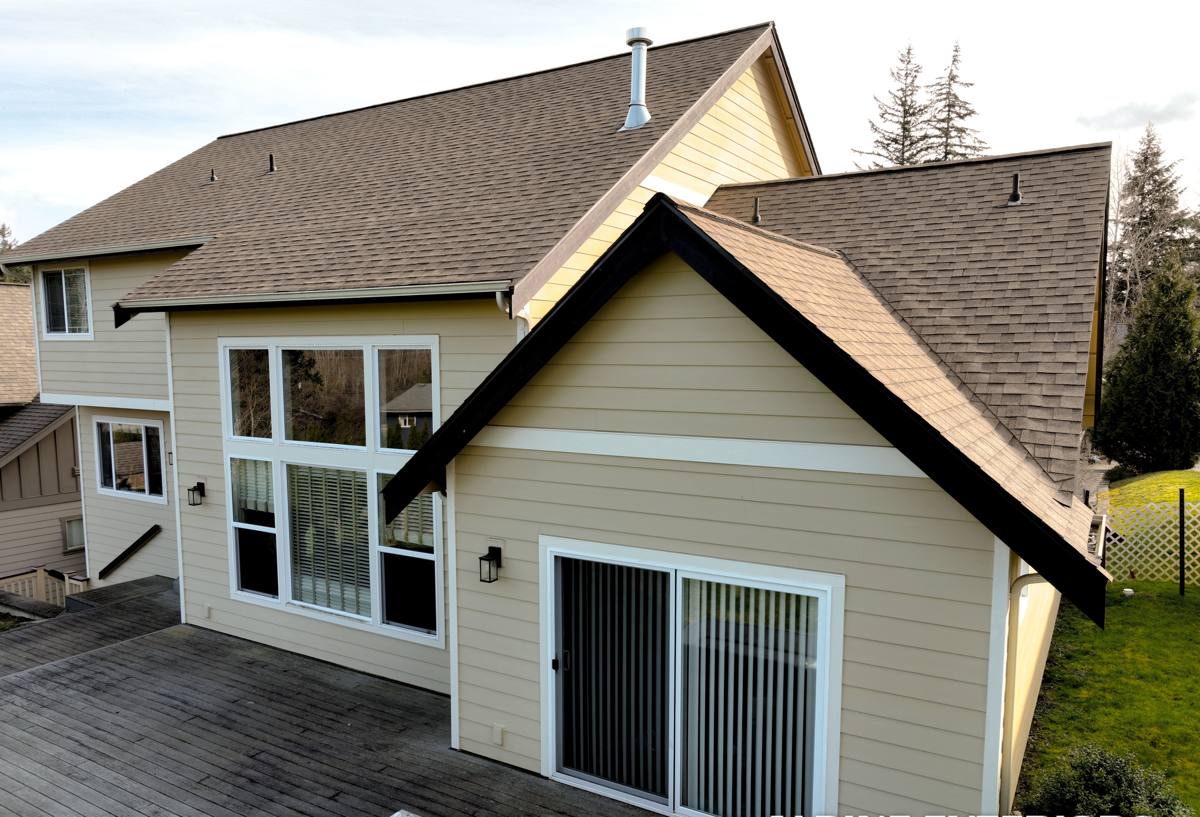
Signs Your Birch Bay Home Needs New Windows
Some of these show up gradually enough that homeowners get used to them before realizing they're a problem. Worth checking for:
- Fogging or a milky haze between the panes — the seal on the insulated glass unit has failed
- Green or black staining on sills and lower frames from moss and algae holding moisture against the material
- Noticeable drafts near the frame, especially during a storm with wind off the water
- Windows that are hard to open, close, or lock — swollen wood or a warped vinyl frame
- Soft or discolored wood at the corners or bottom rail, a sign rot has already started
- Condensation forming on the inside of the glass in cold weather
- A jump in heating costs that isn't explained by anything else changing in the house
One or two of these can sometimes be patched. Several at once, especially on a house that's been through a decade or more of coastal weather, usually means the windows are past the point where repair makes financial sense.
What a Correct Window Replacement Job Actually Involves
Removing the Old Window and Checking What's Underneath
Pulling the old unit is also the moment we find out what's actually going on behind the trim. On a waterfront property, this is often where hidden rot, degraded flashing, or a moisture barrier that was never installed correctly gets discovered. A rushed job skips this step or glosses over what it finds. We don't — if the rough opening needs repair before a new window goes in, that gets addressed first, not covered up.
Flashing and the Moisture Barrier
This is the single most important — and most commonly rushed — part of a window install in a place like Birch Bay. Flashing tape and pan flashing at the sill direct any water that gets past the window itself back out, not into the wall. With driving rain coming off the water, a window that looks fine from across the room can still be letting moisture into the framing if the flashing sequence was done out of order or skipped. We integrate the flashing with the house's existing weather-resistive barrier so water has one continuous path out, not a gap where it can collect.
Insulation and Air Sealing
The gap between the window frame and the rough opening gets filled with a low-expansion foam or backer rod and sealant — not stuffed with fiberglass insulation, which does nothing to stop air movement. Done correctly, this step is a big part of why a new window actually performs better on your energy bill, not just looks newer.
Setting, Shimming, and Finish Sealing
The window gets shimmed level, plumb, and square, fastened per the manufacturer's schedule, and finished with exterior sealant at the joints that are exposed to weather. A window that's slightly out of square will bind, leak, or wear its hardware out early — small errors here cause most of the callbacks in this trade.
Choosing Windows That Hold Up Near the Water
Frame material matters more on a bay-front lot than it does a few miles inland. Here's the honest tradeoff picture:
| Frame Material | Salt Air / Corrosion Resistance | Maintenance | Typical Cost |
|---|---|---|---|
| Vinyl | Good — won't corrode, but hardware quality varies by manufacturer | Low — occasional cleaning | Lower |
| Fiberglass | Very good — dimensionally stable in temperature swings, resists moisture | Low | Mid to higher |
| Aluminum-clad wood | Good exterior protection, but any breach in the cladding exposes wood underneath | Moderate — cladding seams need periodic checking | Higher |
| Bare aluminum | Prone to pitting and corrosion in salt air over time | Higher — needs more frequent attention | Lower to mid |
We don't push one material on every job. A fiberglass or quality vinyl frame with corrosion-resistant hardware is usually the more sensible call directly on the shoreline, where bare aluminum's long-term corrosion risk and clad-wood's exposure at any cladding seam are real maintenance considerations — not because any of these products are bad, but because some hold up to salt air with less upkeep than others. What's right for your house depends on your exposure, your budget, and how much maintenance you actually want to do.
Full-Frame Replacement vs. Insert (Pocket) Replacement
This is one of the first decisions on any project, and it depends on the condition of what's already there — not just preference.
| Insert (Pocket) Replacement | Full-Frame Replacement | |
|---|---|---|
| When it's the right call | Existing frame is sound, square, and free of rot or water damage | Frame or sill shows rot, the opening is out of square, or you're changing window size/style |
| What it involves | New window fits into the existing frame; less disruption to interior/exterior trim | Old frame comes out entirely down to the rough opening; flashing and moisture barrier fully redone |
| Cost and timeline | Generally faster and less expensive | More labor and material, but the only option when there's hidden damage |
| Best fit for | Newer or well-maintained homes with sound framing | Older coastal cottages and homes where moisture has had years to work on the frame |
On older Birch Bay properties — a lot of the housing stock near the water started as smaller seasonal cabins that were later winterized or expanded — we find full-frame replacement is needed more often than the homeowner expects, simply because the original construction wasn't built with today's flashing and air-sealing standards in mind. We'll tell you honestly which one your house needs after a look at the actual condition, not before.
How We Handle a Birch Bay Window Replacement Project
- Walkthrough and assessment: We look at every window being considered, check the condition of the framing and sills, and talk through what's actually driving the replacement — comfort, appearance, energy loss, or visible damage.
- Measuring and product selection: Exact measurements get taken for each opening, and we go through frame material, glass, and style options based on your budget and how exposed that side of the house is to wind and rain.
- Scheduling around the weather: Window installs need a dry work window. We plan install dates with Birch Bay's weather patterns in mind so openings aren't left exposed longer than necessary.
- Installation: Removal, inspection of the opening, flashing, insulation, setting, and finish sealing — done in that order, on every window, every time.
- Cleanup and walkthrough: Old windows and debris hauled off, work area cleaned, and a final walkthrough so you can see and operate every window before we consider the job done.
Why Hiring a Crew That Already Works This Shoreline Matters
A contractor who mostly works inland can still do a technically fine window install. But there's a real difference in judgment that comes from having done this work repeatedly on bay-front and near-bay-front homes specifically. We know to expect hidden rot around old flashing on the older cabin-style homes in this area, we plan installs around weather windows instead of gambling on a dry afternoon, and we're not guessing at what salt air does to hardware and sealant over five or ten years — we've seen it. That local pattern recognition is what keeps a job from turning into a warranty callback.
There's also a practical side: a crew based in Bellingham and already working Whatcom County's coastal communities can get to your property quickly if something needs a look after the install, without a long drive eating into response time.
Keeping New Windows Performing in a Marine Climate
A correct install is most of the battle, but a little upkeep goes a long way toward getting the full lifespan out of new windows in this environment:
- Rinse sills and frames periodically to clear salt residue, especially after storms with wind off the water
- Clean moss and algae off sills and trim before it has a chance to hold moisture against the frame
- Check and lubricate hardware — locks, hinges, rollers — once or twice a year
- Inspect exterior caulking annually and touch it up before gaps let water behind the trim
- Keep gutters and downspouts clear so roof runoff isn't sheeting down across upper windows
None of this is complicated, but skipping it is how a well-installed window ends up needing attention years earlier than it should.
If your windows are showing any of the signs above, or you're just ready to stop fighting drafts and moss stains every winter, we're happy to come take a look. The estimate is free, there's no pressure, and you'll get a straight answer about what your house actually needs — just fill out the form below to get started.