 Bellingham Exterior
 Board & Batten Siding for Lynden Homes
Board and batten has been a staple look on farmhouses, barns, and homes across Whatcom County for generations, and it's still one of the most requested siding styles we install in Lynden today. The vertical lines, the deep shadow reveals at every batten, the clean and simple profile — it fits Lynden's rural and small-town character better than almost any other siding style. But the look is only half the story. What holds up under Lynden's weather for the next thirty or forty years is the material underneath that look, and that's where a lot of board and batten installations go wrong.
Lynden sits close enough to the coast to catch salt-laden air moving in off the Salish Sea, and far enough inland to collect the driving, sideways rain that comes through Whatcom County in the fall and winter. Add in the long stretch of gray, damp months every year that keep moss and algae thriving on north-facing walls, and you've got a climate that is genuinely hard on exterior materials. Board and batten siding, with its many seams and butt joints, has more places for water to find a way in than a flat lap profile does — which makes material choice and installation quality matter even more here than on a standard siding job.
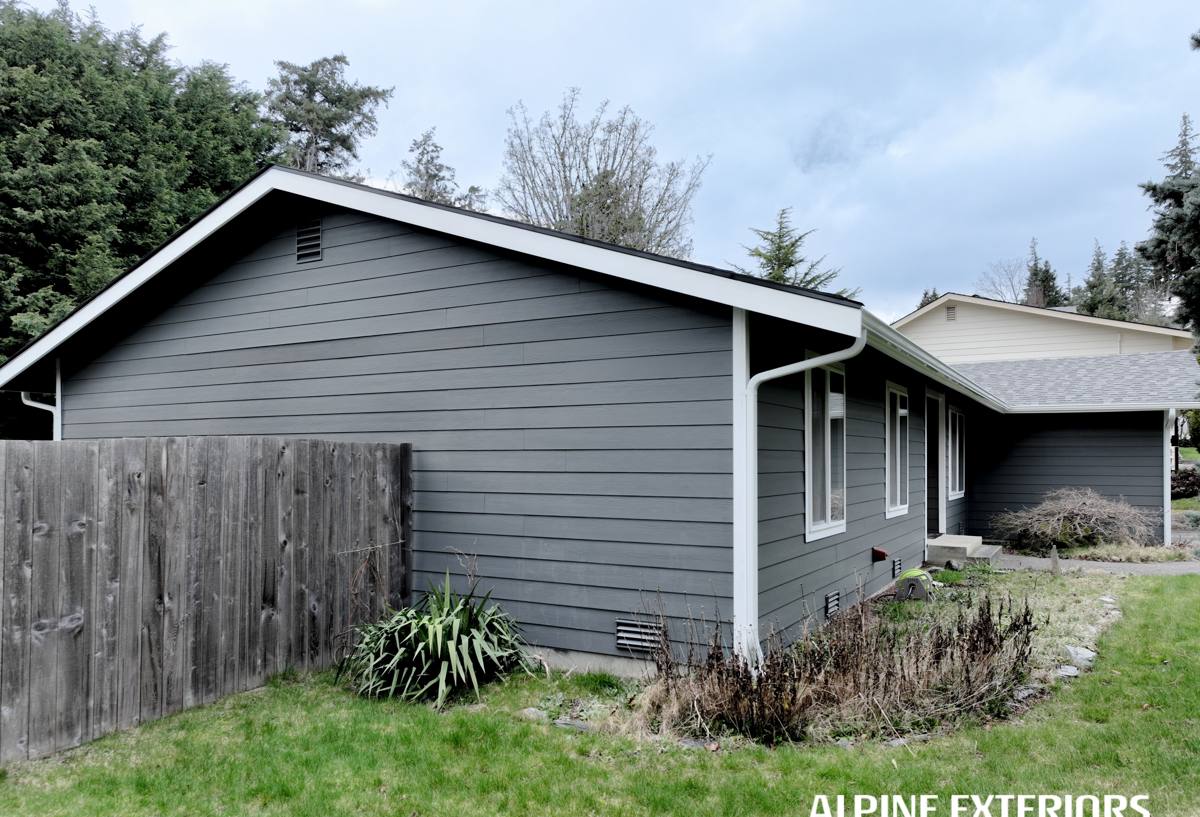
What Board and Batten Actually Is
Board and batten is a vertical siding pattern built from wide flat panels or boards, with narrower strips — the "battens" — installed over the seams between them. The result is a rhythm of wide, flat sections and shadow lines running top to bottom. It reads as simple, but the way it's built determines everything about how it performs:
- How the panels are backed and fastened behind each batten
- What's happening behind the siding — the water-resistive barrier, flashing, and drainage plane
- What material the panels and battens are actually made of
- How the bottom edge, corners, and window/door transitions are detailed
A board and batten wall can look identical from the curb whether it's built out of cedar boards, vinyl panels, LP SmartSide, or James Hardie fiber cement — but those four walls will age completely differently in a Lynden winter.
Why We Only Build Board and Batten in James Hardie Fiber Cement
We get asked fairly often why we won't quote board and batten in cedar, vinyl, or LP SmartSide, since all three are common and all three can be made to look the part. Here's the honest breakdown of why we standardized on James Hardie fiber cement for this profile specifically.
Real Wood (Cedar or Primed Spruce)
Cedar board and batten has genuine character, and there's nothing wrong with the look. The problem in this climate is moisture management over time. Wood siding absorbs and releases moisture with every wet-dry cycle, and Whatcom County doesn't give wood much of a dry season to recover in. Battens trap moisture against the boards behind them, and that's exactly where we see splitting, cupping, and paint failure show up first on older wood board and batten homes in this area. It's maintainable, but it asks for repainting, caulking, and board replacement on a schedule most homeowners don't want to keep up with.
Vinyl Board and Batten
Vinyl is inexpensive and low-maintenance in the sense that it doesn't need paint, but it's a poor match for the crisp, flat-panel look board and batten is supposed to have — it tends to look thin and can ripple or warp with temperature swings. It's also not something we install at all; it doesn't hold up structurally or visually the way we require for work we put our name on.
LP SmartSide
LP SmartSide is an engineered wood product — strand-based, resin-treated, and better than raw wood in some respects. But it's still a wood-based product at its core, which means the cut edges and seams (and board and batten has a lot of seams) are the vulnerable points if caulking and sealed cuts aren't maintained exactly per spec, indefinitely. In a high-moisture climate like Whatcom County's, that's an ongoing maintenance obligation we don't think is fair to hand a homeowner without saying so plainly.
James Hardie Fiber Cement
Hardie's board and batten systems — whether built from HardiePanel vertical siding with HardieTrim battens, or from the Artisan lines for a more refined reveal — are fiber cement: sand, cement, and cellulose fiber, engineered and pressed under pressure. It doesn't absorb water the way wood or wood-composite products do, it won't rot, it's non-combustible, and it holds paint and factory finish far longer than wood-based alternatives. Hardie also engineers specific product lines (the HZ5 formulation) for wetter climate zones like ours, which is a level of climate-specific engineering neither cedar nor LP SmartSide offers. That's the whole reason we standardized on it — not because it's the cheapest option on the table, but because it's the one we're comfortable standing behind for decades, not years.
Material Comparison for Board and Batten in This Climate
| Material | Moisture Behavior | Maintenance Needs | Typical Lifespan Here |
|---|---|---|---|
| Cedar / Primed Spruce | Absorbs moisture, prone to cupping/splitting at battens | Repaint every 4-7 years, ongoing caulk checks | 15-25 years before major repair |
| Vinyl | Doesn't rot, but warps/ripples with heat and cold | Low, but limited repair options if damaged | Not installed by our crew |
| LP SmartSide | Engineered wood — cut edges/seams need sealed maintenance | Regular caulk and paint upkeep at seams | 20-30 years with diligent upkeep |
| James Hardie Fiber Cement | Doesn't absorb/swell; engineered for wet climates (HZ5) | Occasional wash, repaint on ColorPlus interval | 30-50 years installed to spec |
What a Correct Board and Batten Installation Involves
Board and batten is more sensitive to installation quality than flat lap siding, because it has more penetrations, more fastener points, and more places for a crew to cut corners that won't show up as a problem for a few years. On every Lynden job, our installation includes:
- A water-resistive barrier and properly lapped flashing behind every panel and at every horizontal transition
- Correct panel spacing and fastening pattern per James Hardie's published specs — not "close enough"
- Battens fastened through to framing or backer, not just face-nailed to the panel
- Sealed, back-flashed joints at window and door openings before trim goes on
- Proper clearance at the foundation line and any grade-adjacent areas, so board bottoms aren't sitting in splash-back moisture
- Factory ColorPlus finish maintained through installation — no field-painted touch-ups that leave a visibly different sheen
Skipping any one of these doesn't usually show up on day one. It shows up three or four winters later as a stain, a soft spot, or a seam that's started to fail — right around the time the driving rain and moss season have had a few cycles to work on it.
Our Process for a Lynden Board and Batten Project
- On-site assessment — we look at your home's current siding, sheathing condition, and exposure (which walls take the most weather, where moss and moisture are already showing up)
- Design and product selection — panel width, batten spacing, and ColorPlus color selected to fit the home and the neighborhood
- Tear-off and prep — removal of old siding, inspection and repair of any sheathing damage found underneath, and correct house wrap and flashing installation
- Installation to Hardie spec — panels, battens, and trim installed with the fastening and flashing details above
- Final walkthrough — we go over the finished job with you before we consider it done
Maintenance in Whatcom County's Moss and Rain Season
Even with a fiber cement system, board and batten homes in Lynden benefit from a bit of seasonal attention — mostly because of moss and algae growth on shaded, north- or east-facing walls during the wetter months. A simple soft wash on a normal cleaning schedule keeps growth from taking hold and keeps the ColorPlus finish looking like it did on day one. That's a fraction of the upkeep a wood or wood-composite board and batten wall asks for in the same climate, and it's one of the practical reasons this material has become our standard recommendation for this style specifically.
What to Ask Before Hiring a Board and Batten Contractor in Lynden
- Do they install board and batten regularly, or is it an occasional special order for them?
- Will they show you the flashing and water barrier details before panels go up, not just the finished look?
- Are they following the manufacturer's published fastening and spacing specs, or their own shortcuts?
- Do they carry manufacturer certification or training specific to the product they're installing?
- Can they speak specifically to how the home's exposure (wind, rain direction, shade) affects the installation plan?
Why Local Experience in Lynden Matters
Board and batten done wrong doesn't fail everywhere at once — it fails first on the walls that take the worst of the weather, and knowing which walls those are on a given property comes from having actually worked on homes in this specific area. A crew that installs across Whatcom County regularly knows how Lynden's exposure differs from a tighter-in Bellingham lot, how the moss season behaves on shaded elevations, and where driving rain tends to find the gaps other crews miss. That local pattern recognition is the difference between a board and batten installation that looks right for one season and one that's still tight and clean in twenty years.
If you're considering board and batten siding for a home in Lynden, we're happy to take a look and walk you through what a correct installation would involve for your specific property — no pressure, no obligation. Use the form below to request a free estimate.