 Bellingham Exterior
 Composite Decking in Columbia: Built for Bellingham's Marine Climate
Columbia sits close enough to Bellingham Bay that the weather off the water shapes how every outdoor structure ages, and decks take the brunt of it. Salt-laden air, driving rain off the Sound, and a moss season that can stretch from fall through spring all work against a deck that wasn't built with this climate in mind. Composite decking, installed correctly, handles that combination better than most alternatives — but "installed correctly" is doing a lot of work in that sentence, and it's where most of the difference between a deck that lasts and one that doesn't gets decided.
This page covers what Columbia homes specifically need from a composite deck, what a correct installation actually involves, and how our crew approaches the job when we're already working in the neighborhood.
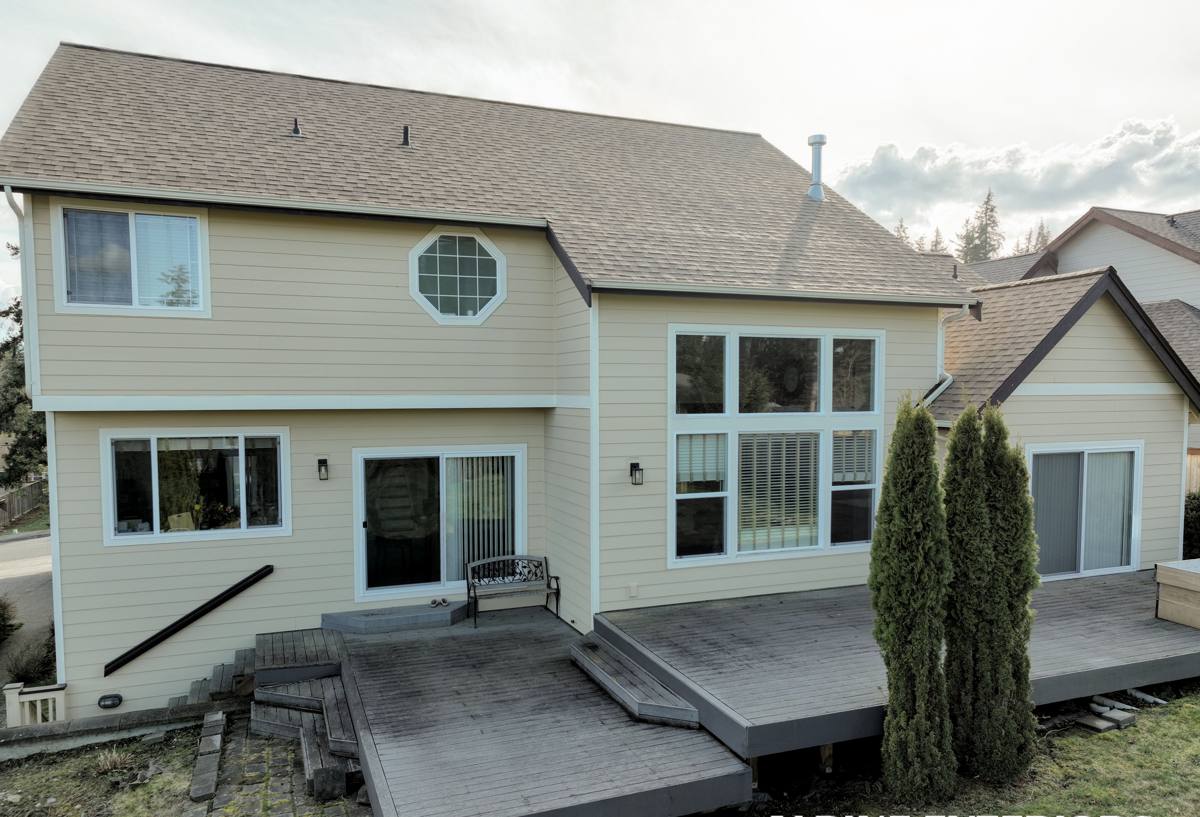
What Bellingham's Climate Does to a Deck
Moss and Algae
Whatcom County's damp, shaded shoulder seasons are ideal growing conditions for moss and algae on any horizontal surface that doesn't dry out quickly. On a deck, that growth isn't just cosmetic — it holds moisture against the board surface and turns the deck slick and dangerous underfoot, especially on stairs and shaded sections under overhangs or tree canopy. Wood decking is more vulnerable here because the growth can work into the grain; composite boards give it less to grip onto, but airflow underneath the deck and gaps between boards still matter more than the material itself.
Salt Air and Coastal Exposure
Homes in Columbia that sit within reach of salt air off the bay see accelerated corrosion on anything metal — screws, joist hangers, railing hardware, post bases. A deck can look fine on the surface while the fasteners holding it together are quietly failing underneath. This is one of the most common causes of premature deck failure we see in this part of Bellingham, and it has nothing to do with the decking boards themselves.
Driving Rain and Standing Water
Rain here doesn't just fall straight down — wind-driven rain gets under railings, behind ledger boards, and into any joint that isn't properly flashed or sealed. Add in Whatcom County's wet-season volume, and any spot where water can pool or get trapped without draining or drying will eventually cause a problem, whether that's rot in the substructure or degraded fastener performance.
Why Composite Decking Fits This Environment
Composite decking doesn't rot, splinter, or need periodic staining, and it resists moisture absorption far better than solid wood — which matters directly in a climate defined by rain and humidity. It also holds up better against the freeze-thaw cycles Bellingham gets in winter, since composite boards don't swell and contract the way wood does when they take on and release moisture. For homeowners tired of restaining or replacing rot-damaged boards every few years, composite is a legitimate long-term answer.
That said, composite isn't maintenance-free, and it isn't immune to moisture problems if it's installed wrong. The board itself resists water; the structure underneath it — framing, fasteners, ventilation — still has to be built to shed water and dry out. A composite deck built on a poorly ventilated or improperly flashed substructure will still develop moisture and rot problems, just in the framing instead of the decking.
What a Correct Composite Deck Installation Involves
A lot of composite deck problems we get called out to fix in Bellingham trace back to shortcuts taken during installation, not defects in the material. A correct job addresses each of these:
Framing and Substructure
Joists and beams need to be sized correctly for the span and load, and treated for ground contact or moisture exposure where relevant. In a climate this wet, we also pay attention to joist tape or flashing on top of the framing — a strip of protective tape over each joist keeps water from soaking directly into the wood every time it rains, which extends the life of the substructure significantly.
Fasteners and Hardware
Given the salt air exposure common in Columbia and along the Bellingham waterfront corridor, we use corrosion-resistant, coated or stainless fasteners and hardware rated for coastal or treated-lumber contact. Using the wrong-grade fastener is one of the fastest ways to end up with hidden structural failure years before the decking itself shows any wear.
Ventilation and Drainage
Composite decking needs airflow underneath it to dry out after rain, just like any deck. Low-clearance decks, decks built close to grade, or decks enclosed with solid skirting need extra attention to venting so moisture doesn't get trapped underneath — this is a common issue on ground-level decks and is worth flagging before construction, not after.
Board Spacing and Fastening
Composite boards expand and contract with temperature more than most homeowners expect. Gaps between boards need to be set correctly for the specific product and the span involved, and fastening methods (hidden clips versus face screws) need to be matched to the manufacturer's specs to avoid buckling or uneven surfaces over time.
Flashing at the House
Where the deck attaches to the house — the ledger board — is one of the most common failure points on any deck, composite or wood. Proper flashing here keeps water from getting behind the siding and into the wall structure, which is a much more expensive problem than anything happening on the deck surface itself.
Composite Board Types: What's the Difference
Not all composite decking is built the same way, and the differences matter more in a wet coastal climate than they would somewhere dry.
| Board Type | How It's Built | Best Fit for This Climate |
|---|---|---|
| Uncapped composite | Wood fiber and plastic blended throughout the board, no protective outer layer | More prone to moisture absorption and surface wear over time; lower upfront cost |
| Capped composite | Wood-plastic core wrapped in a protective polymer shell on some or all sides | Better resistance to moisture, staining, and mold growth — a strong fit for Bellingham's damp conditions |
| PVC / cellular decking | No wood fiber content, fully synthetic core | Highest moisture resistance of the three; different look and feel underfoot, higher cost |
We'll walk through which category fits your budget and the look you're after, but for a home in Columbia's damp, moss-prone conditions, we generally steer people toward capped composite or PVC over uncapped boards unless there's a strong reason otherwise.
Our Process for Composite Deck Projects
- On-site assessment of the existing deck or build area, including drainage, grade, and sun/shade exposure specific to your lot
- Discussion of board type, color, and railing options based on your home and budget
- Written estimate covering demolition (if replacing an existing deck), framing, decking, railing, and any permit work
- Framing and substructure work, including joist protection and corrosion-resistant hardware
- Composite board installation per manufacturer spacing and fastening specs
- Final walkthrough covering care and maintenance specific to your board type and site conditions
Because we already work regularly in Columbia and the surrounding Bellingham neighborhoods, we're familiar with the older housing stock in the area, common substructure conditions we run into, and how local permitting through the City of Bellingham or Whatcom County typically works for deck projects — which keeps the process moving without surprises.
What Affects the Cost of a Composite Deck
We don't quote pricing without seeing the site, but these are the main factors that move a project up or down in cost:
| Factor | Why It Matters |
|---|---|
| Square footage and shape | Larger decks and complex shapes (multi-level, curved edges, wraparounds) require more material and labor |
| Existing substructure condition | Reusable, sound framing lowers cost; rotted or undersized framing needs replacement first |
| Board type | Uncapped, capped, and PVC composite decking sit at different price points |
| Railing style | Composite or metal railing systems cost more than basic options; glass or cable railing adds further cost |
| Height and stairs | Elevated decks with stairs and additional railing require more structural work |
| Site access | Difficult access for material delivery or equipment can add labor time |
The honest range for a composite deck project is wide — a straightforward, ground-level replacement deck costs much less than a large elevated multi-level deck with custom railing. We'll give you real numbers after seeing the site, not a generic estimate that doesn't reflect your actual project.
Maintaining a Composite Deck in a Moss-Prone Climate
Composite decking is lower-maintenance than wood, not maintenance-free. In Bellingham's climate, a little seasonal attention goes a long way toward keeping the deck safe and looking good.
- Sweep debris (leaves, needles, seed pods) off the deck regularly, especially in fall — trapped organic material holds moisture and feeds moss growth
- Rinse the deck periodically with a hose, and use a soft-bristle brush with mild soap on shaded or moss-prone areas rather than a pressure washer, which can damage some composite surfaces if used incorrectly
- Keep gutters and downspouts near the deck clear so runoff isn't dumping directly onto the deck surface
- Check railing hardware and fasteners periodically for corrosion, especially on homes closer to the water
- Trim back overhanging branches or shrubs that keep sections of the deck shaded and slow to dry
- Address any standing water or slow-draining spots early — they're usually a sign of a leveling or drainage issue worth having looked at
Why a Bellingham-Based Crew Matters for Columbia Homeowners
Composite decking is a good product, but it's not a product that installs itself correctly by following a generic set of instructions. The framing decisions, fastener choices, and drainage details that make a deck last in Whatcom County's climate are different from what a crew used to a dry inland climate might default to. A crew that already works in Columbia and the surrounding Bellingham area has seen how local homes hold up over time in this specific combination of salt air, rain, and moss exposure, and builds accordingly from the start rather than learning the hard way after a callback.
There's also a practical side to hiring local: a nearby crew can respond faster if something needs a look after the job is done, and has a reputation in the neighborhood worth standing behind.
Get a Free Estimate
If you're planning a new composite deck or replacing an aging one in Columbia, we're happy to take a look and walk you through your options — no pressure, no obligation. Use the form below to request a free estimate and we'll follow up to schedule a time that works.