 Bellingham Exterior
 Roofing a Columbia Home in Bellingham's Coastal Climate
The Columbia neighborhood sits close enough to Bellingham Bay that homes here take a different kind of weather beating than roofs a few miles inland. Salt-laden air off the water accelerates corrosion on fasteners, flashing, and any metal roofing component that isn't rated for it. Driving rain off Puget Sound doesn't just fall straight down — wind pushes it sideways and under poorly lapped shingles or flashing that was installed to a lower standard. And Whatcom County's long, wet, mild winters mean moss and moisture have months on end to work into anything that isn't properly ventilated and sealed. A roof built for a dry-climate spec sheet is not the same as a roof built to last on a Columbia rooftop.
When it's time for a full replacement rather than another round of patch repairs, the goal isn't just "new shingles." It's a roofing system — decking, underlayment, flashing, ventilation, and the surface material — that's matched to what this specific neighborhood's weather actually does to a house year after year.
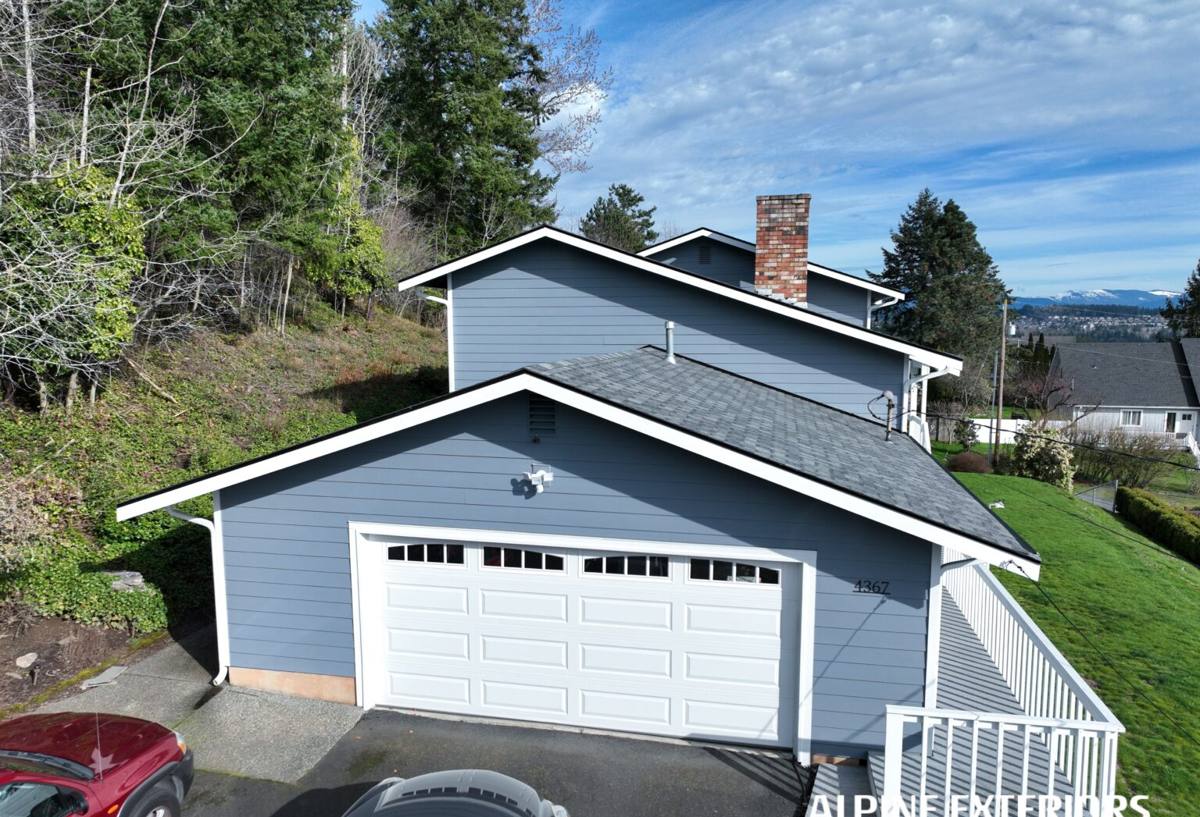
Signs a Columbia Roof Needs Replacement, Not Another Repair
Roof repair has a ceiling. Past a certain point, patching becomes more expensive over time than a single well-done replacement, and it stops protecting the house the way it should. Common signs we look for on older Columbia homes include:
- Granule loss heavy enough that asphalt shingles look bald or blotchy from the ground
- Moss colonies established at the ridge, valleys, or north-facing slopes that keep coming back after cleaning
- Soft or spongy decking felt underfoot during inspection, a sign moisture has already reached the wood
- Daylight or water staining visible in the attic along the roofline or around chimneys and vents
- Curling, cracking, or lifted shingle edges, especially on slopes that catch the most wind-driven rain
- A roof at or past the age where the manufacturer's warranty has effectively expired
Any one of these on its own might still be repairable. Several at once, or a roof already past 20-25 years in this climate, usually means replacement is the more honest recommendation — and the more cost-effective one over the next decade.
What a Correct Roof Installation Actually Involves
Tear-Off and Deck Inspection
We don't install new roofing over old, failing layers. A full tear-off lets us see the decking underneath — plywood or plank sheathing that may have soft spots, delamination, or rot from years of slow leaks that never showed up as an obvious problem indoors. Any compromised decking gets replaced before anything new goes down. Skipping this step is one of the most common shortcuts in the trade, and it's the one most likely to cause a "new" roof to fail early.
Underlayment and Ice/Water Protection
In a marine climate like Bellingham's, the underlayment matters almost as much as the visible roofing material. We use synthetic underlayment across the field for its water resistance and tear strength, with self-adhering ice-and-water membrane at eaves, valleys, and any low-slope transitions — the spots where wind-driven rain and standing water are most likely to find a weakness.
Flashing
Flashing around chimneys, skylights, sidewalls, and roof penetrations is where most leaks actually start, not in the field of the shingles. Salt air speeds up corrosion on lower-grade flashing metal, so we use flashing rated for coastal exposure and install it with proper step-and-counter technique rather than relying on caulk or sealant to do the job flashing should be doing mechanically.
Ventilation
A roof that traps heat and moisture in the attic will fail from the inside regardless of how good the shingles are. Balanced intake (soffit) and exhaust (ridge or roof vents) ventilation keeps attic temperature and humidity in check, which slows moss growth from the underside, protects the decking, and helps the roofing material itself last its full rated lifespan.
Choosing the Right Roofing Material for This Neighborhood
There isn't one "best" roofing material for every Columbia home — it depends on the roof's exposure, the home's style, and the owner's budget and maintenance tolerance. Here's how the common options actually compare for a coastal Whatcom County property:
| Material | Typical Lifespan Here | Moss & Moisture Behavior | Relative Upfront Cost | Best Fit |
|---|---|---|---|---|
| Architectural asphalt shingle | 20-30 years | Algae-resistant granule lines help; still needs periodic moss removal on shaded slopes | Lowest | Most homes; best value-to-performance balance |
| Standing-seam metal | 40-50+ years | Sheds moisture fast, very moss-resistant on steeper pitches; needs coastal-rated fasteners and coatings near the bay | Highest | Owners planning to stay long-term or wanting minimal maintenance |
| Cedar shake | 20-30 years with upkeep | Attractive but moisture-sensitive; requires real maintenance discipline in a wet climate or moss and rot take hold early | High | Owners committed to regular upkeep for the look |
| Synthetic/composite shingle | 30-40 years | Engineered for moisture resistance with a lower maintenance burden than cedar | Mid to high | Owners who want a shake or slate look without the upkeep |
We'll walk your specific roof's pitch, sun exposure, and tree cover against this table during the estimate — a heavily shaded, low-pitch section of roof has very different moss risk than a steep, sun-exposed one, even on the same house.
Moss and Moisture: The Long Game in a Marine Climate
Whatcom County's moss season isn't a one-time nuisance — it's a months-long condition that a roof either handles well or doesn't. Moss holds moisture against the roofing surface, works into shingle laps, and over years can lift edges and shorten the material's usable life well below its rated lifespan. A correct installation reduces moss pressure from the start: proper ventilation to limit under-deck condensation, algae-resistant shingle products where appropriate, and attention to which slopes get the least sun and the most tree cover. No roof in this region is moss-proof forever, but a well-installed one needs far less intervention than one that was installed to a minimum standard.
Our Process, Start to Finish
- On-site inspection and estimate — we look at the existing roof, attic ventilation, and any problem areas, and give you a written scope and price.
- Material selection — we go over the options above based on your roof's actual exposure and your budget, not a one-size pitch.
- Permitting — full roof replacements typically require a permit through the local jurisdiction; we handle that paperwork.
- Tear-off and deck repair — old roofing removed, decking inspected and repaired as needed before anything new is installed.
- Underlayment, flashing, and roofing installation — installed in the order and detail described above.
- Ventilation check — intake and exhaust venting confirmed balanced for the finished roof.
- Cleanup and magnet sweep — job site and yard cleared of debris and stray fasteners.
- Final walkthrough — we go over the finished roof and warranty paperwork with you before calling the job done.
Why a Bellingham-Based Crew That Works This Neighborhood Matters
A crew that regularly works Columbia and the surrounding Bellingham neighborhoods already knows how this area's weather treats a roof — which slopes hold moss the longest, how far wind-driven rain travels under an eave, and what corrosion looks like on hardware after a few winters this close to the bay. That's not something a spec sheet teaches. It also means we're a known, reachable local business if a warranty question or storm-related concern comes up years down the line — not a crew that worked the county for one season and moved on.
Before You Hire: A Practical Checklist
Whether you go with us or anyone else, use this list before signing a roofing contract:
- Verify the contractor is licensed and bonded to do roofing work in Washington State
- Confirm they carry current liability insurance and workers' comp — ask to see certificates, not just claims
- Get the full scope in writing: tear-off, decking, underlayment, flashing, ventilation, and material specifics, not just "new roof"
- Ask what happens if decking repair is needed and how that's priced — it shouldn't be a surprise mid-job
- Understand both the manufacturer's material warranty and the contractor's workmanship warranty separately
- Ask who pulls the permit and confirm it will be inspected, not skipped
- Check for local references or completed work in your own neighborhood, not just a generic company profile
Getting Started
If your Columbia-area roof is showing its age — moss that keeps returning, granule loss, or a roof simply past its expected years in this climate — a straight assessment beats guessing. We offer free, no-pressure estimates for local homeowners: we'll walk the roof, explain what we find, and lay out honest options and costs before you decide anything. Use the form below to request one.