 Bellingham Exterior
 Decking Built for Ferndale's Climate, Not a Showroom in Arizona
Ferndale sits close enough to the water that salt air is a real factor in how exterior materials age, and it gets the same long, wet Whatcom County winters as the rest of Bellingham Bay. A deck here doesn't just get rained on — it stays damp for days at a time, sits under tree cover that keeps sunlight off large sections of the boards, and picks up a green film of moss and algae almost every year if nothing is done about it. Composite decking was built to handle exactly this kind of environment, but only when it's specified and installed correctly for it. A lot of the complaints homeowners have about composite decking — fading, staining, boards that stay slick, boards that warp at the ends — trace back to installation shortcuts or product choices that were never right for a marine, high-moisture climate in the first place.
This page covers what composite decking actually needs to perform well in Ferndale specifically: the moisture and moss pressure it's up against, what a correct installation looks like, and what to expect when you hire a crew that already works this part of Whatcom County.
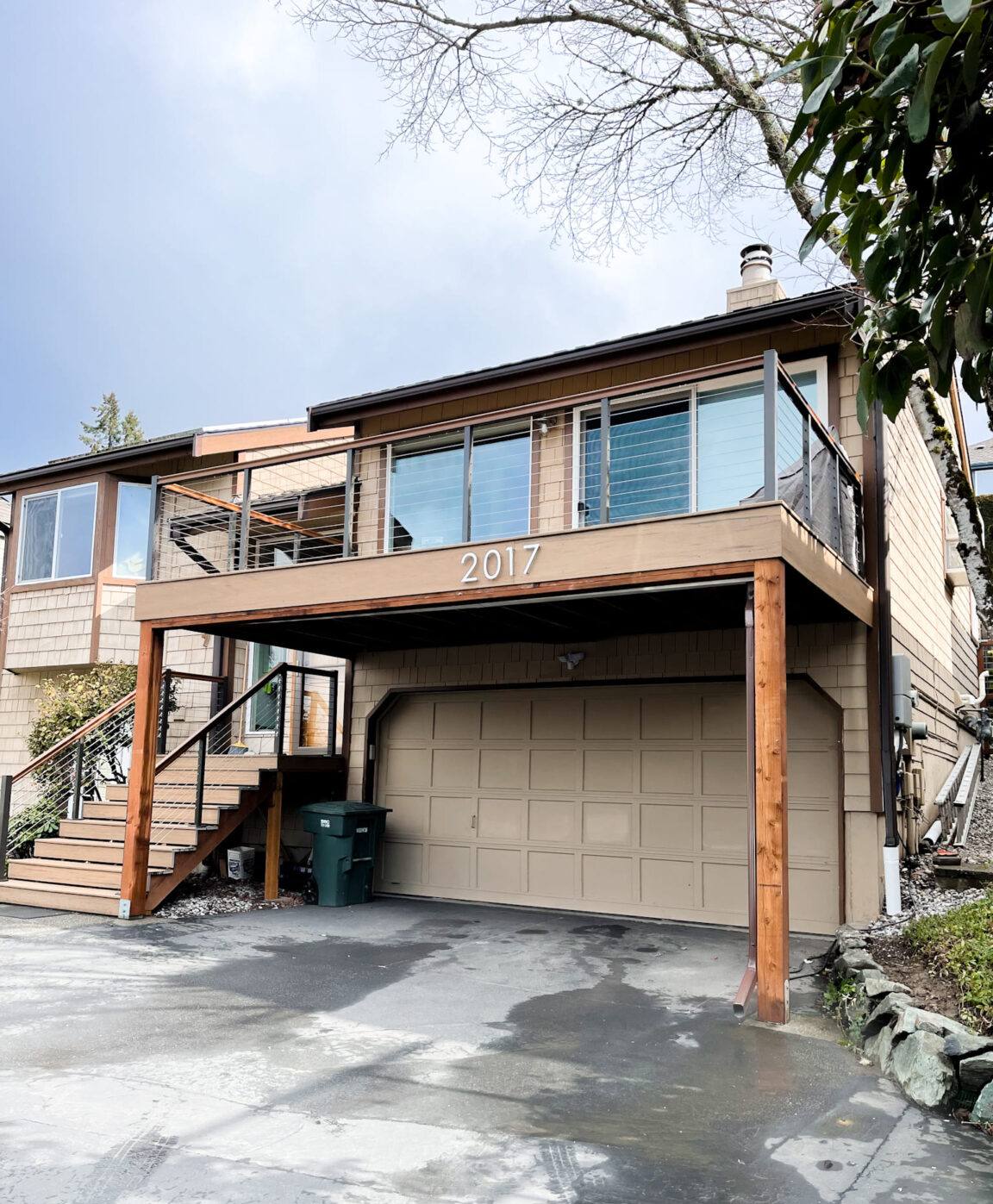
What Ferndale's Climate Actually Does to a Deck
Salt Air and Metal Fasteners
Proximity to Bellingham Bay and the broader Puget Sound coastline means airborne salt is a slow, steady presence on exterior surfaces, even a few miles inland. Salt air accelerates corrosion on any exposed metal — screws, joist hangers, brackets — faster than it would in a dry inland climate. It doesn't damage the composite boards themselves the way it corrodes fasteners and structural hardware, which is why fastener selection and hidden connection details matter more here than the marketing copy on a box of decking usually lets on.
Driving Rain and Standing Moisture
Whatcom County rain doesn't fall straight down very often — wind-driven rain gets up under railings, into end grain, and against ledger boards where a deck meets the house. Composite boards resist water absorption far better than wood, but the substructure underneath, the flashing behind the ledger, and the gaps between boards still have to be built to shed water fast. A composite deck built on top of a poorly drained or poorly ventilated frame will trap moisture underneath even if the walking surface stays dry.
Moss, Algae, and Long Shaded Seasons
Between the tree cover common in Ferndale yards and the region's long stretch of overcast, damp months, moss and algae growth is close to unavoidable on any exterior surface that doesn't drain and dry quickly. Composite decking doesn't feed mold the way untreated wood fiber can, but boards installed too tight, with poor airflow underneath, or in constant shade will still develop a green film faster than boards installed with drainage and airflow in mind.
Why Composite Makes Sense for This Kind of Weather
Composite decking isn't automatically the right answer for every home, but for Ferndale's combination of salt air, near-constant moisture, and moss pressure, it solves problems that wood decking struggles with year after year.
- No annual sanding, staining, or sealing to keep water out of the wood fiber
- Capped boards resist moisture absorption at the surface, so they don't swell, cup, or splinter the way untreated or under-maintained wood does
- Consistent color and density mean no soft spots or rot pockets developing under a deck chair or planter over time
- Better resistance to the kind of surface staining that tannins, moss, and standing water leave on wood
- No re-staining schedule to keep up with through a Whatcom County winter
None of that means composite decking is maintenance-free — it isn't, and any contractor telling you otherwise is oversimplifying. It means the maintenance shifts from structural upkeep (sealing wood against rot) to surface upkeep (keeping moss and debris from building up), which is a much easier and cheaper problem to stay on top of.
What a Correct Composite Deck Installation Involves
The Substructure Comes First
Composite boards are only as good as the frame underneath them. In a climate this wet, that means pressure-treated or naturally durable joists, proper joist spacing for the specific composite product being used (many require tighter spacing than traditional wood decking, especially at angles or stair treads), and a ledger board connection that's flashed correctly where the deck meets the house. This is the single most common place we see older decks fail — not the decking material, but a ledger that was never properly flashed and has been letting water into the house framing for years.
Hidden Fasteners and Corrosion-Resistant Hardware
Given the salt air exposure this close to the water, we spec stainless or coated corrosion-resistant fasteners and hardware rather than standard galvanized where it matters most — joist hangers, ledger bolts, and structural connections. Most composite systems today use hidden fastener clips rather than face screws, which also gives a cleaner look and removes dozens of exposed screw heads that would otherwise be the first thing to show corrosion.
Gapping, Airflow, and Drainage
Board spacing has to account for both drainage and the composite material's minor expansion and contraction with temperature swings. Underneath, the frame needs enough clearance and airflow to let the structure dry out between rain events instead of staying damp for weeks. Skipping this is how you end up with a deck that looks fine on top but has a mildew problem underneath within a couple of seasons.
Picture-Framing and Trim Details
Most composite deck designs use a picture-frame border to hide cut ends of the field boards, since cut composite ends aren't capped like the factory edge. Done right, this is both a durability detail and a finished look — done wrong, it leaves exposed core material that absorbs moisture at every cut end.
Composite vs. the Alternatives, Straight Up
| Material | Moisture behavior in this climate | Maintenance | Typical lifespan here |
|---|---|---|---|
| Pressure-treated wood | Absorbs water readily; needs sealing to resist Whatcom County's wet season | Annual cleaning, periodic sealing/staining | 10-15 years with consistent upkeep |
| Cedar | Naturally rot-resistant but still absorbs moisture over time; softens without upkeep | Regular sealing to preserve color and resist moss staining | 15-20 years with consistent upkeep |
| Capped composite | Resists moisture absorption at the surface; core protected by the cap | Periodic washing to control moss and algae film | 25-30+ years, backed by manufacturer warranty |
| PVC decking | Fully synthetic, effectively moisture-proof | Low; similar washing needs to composite | Comparable to or longer than composite, at a higher material cost |
We install capped composite on most Ferndale projects because it strikes the best balance of moisture performance, appearance, and cost for this climate. PVC is a reasonable option for homeowners who want to spend more up front for slightly lower long-term maintenance; we'll walk through that trade-off honestly if it's relevant to your project rather than pushing whichever product happens to be on sale.
Our Process, Start to Finish
1. On-Site Assessment
We look at drainage around the existing structure or build site, sun and shade exposure, proximity to trees, and how the deck will tie into the house — including whether an existing ledger connection needs to be opened up and re-flashed.
2. Product and Layout Discussion
We walk through composite board options, color and grain choices, and railing systems that hold up to the same salt air and moisture exposure as the decking itself, then lay out board direction and picture-framing to fit the space.
3. Frame and Structural Work
This is where most of the long-term performance of the deck actually gets decided — joists, hardware, ledger flashing, and drainage all get built correctly before a single composite board goes down.
4. Decking Installation
Boards go down with hidden fastening systems, correct gapping, and picture-frame trim at cut edges, following the manufacturer's specifications for this climate and board spacing.
5. Final Walkthrough
We go over basic care with you — what to expect in year one, how to handle moss buildup, and what's covered under the manufacturer's warranty versus our installation workmanship.
What Drives Cost on a Ferndale Composite Deck
| Factor | Why it matters here |
|---|---|
| Deck size and shape | More linear feet of picture-framing and cuts adds labor beyond simple square footage |
| Substructure condition | Replacing rotted or undersized framing on an existing deck adds cost but is not optional for a lasting install |
| Ledger and flashing work | Proper flashing at the house connection is non-negotiable in this rainfall and can require siding or trim work to do correctly |
| Board tier and brand | Composite pricing ranges from entry-level capped boards to premium PVC-composite hybrids |
| Railing and stair systems | Composite or aluminum railing to match the deck's moisture resistance adds to the total versus reusing existing wood rail |
| Site access | Sloped Whatcom County lots or limited backyard access can add time for material handling and equipment |
Keeping a Composite Deck Ahead of Moss and Moisture
Composite decking cuts down on maintenance, but "low maintenance" isn't "no maintenance" in a climate this wet. A short seasonal routine keeps a Ferndale deck looking and performing the way it should for decades.
- Sweep leaves and debris off the deck regularly, especially in fall — trapped organic matter is what feeds moss and algae growth
- Wash the deck surface once or twice a year with a composite-safe cleaner and a soft brush; avoid pressure washers set too aggressively, which can damage the cap layer
- Keep gutters and downspouts near the deck clear so water isn't dumping directly onto or under the structure
- Check that furniture feet and planters aren't blocking drainage gaps between boards
- Have railing hardware and structural connections inspected periodically, since fasteners are more exposed to salt air corrosion than the decking itself
- Address any moss or algae film early — it's far easier to clean off than to remove after it's had a full wet season to set in
Why It Matters That We Already Work in Ferndale
A crew that installs decking across different climate zones without adjusting for local conditions will build the same deck in Ferndale that they'd build somewhere dry — same fastener grade, same spacing, same lack of attention to ledger flashing. That's how decks that look great on installation day develop moisture problems by year three. Working consistently in Whatcom County means knowing which fastener hardware actually holds up to this air, which drainage details matter given how long things stay wet here, and how much shade and moss pressure a given lot is realistically going to see. It also means we're a local call away if a warranty question or a maintenance question comes up after the install, not a company that did one job in the area and moved on.
If you're considering composite decking for a Ferndale property, we're happy to walk the site, talk through board and railing options, and give you a straightforward, no-pressure estimate. Use the form below to get started.