 Bellingham Exterior
 Roofing for Cordata's Specific Climate, Not a Generic One
Cordata sits far enough inland from the open water that people sometimes assume it's spared the worst of what Bellingham Bay throws around. It isn't. Salt-laden air still moves through north Bellingham on a west wind, driving rain still comes in sideways off the Sound during fall and winter storms, and the tree cover that makes the neighborhood pleasant to live in also keeps roofs shaded and damp for a good chunk of the year. That combination — airborne salt, wind-driven moisture, and shade — is exactly the mix that shortens the life of a shingle roof if the installation doesn't account for it.
A shingle roof that would hold up fine in a dry inland climate can fail early here if the underlayment, flashing, and ventilation aren't matched to what Whatcom County actually does to a roof over a Pacific Northwest winter. This page is about what that means specifically for asphalt shingle roofs on Cordata homes — not a generic rundown of shingle roofing in general.
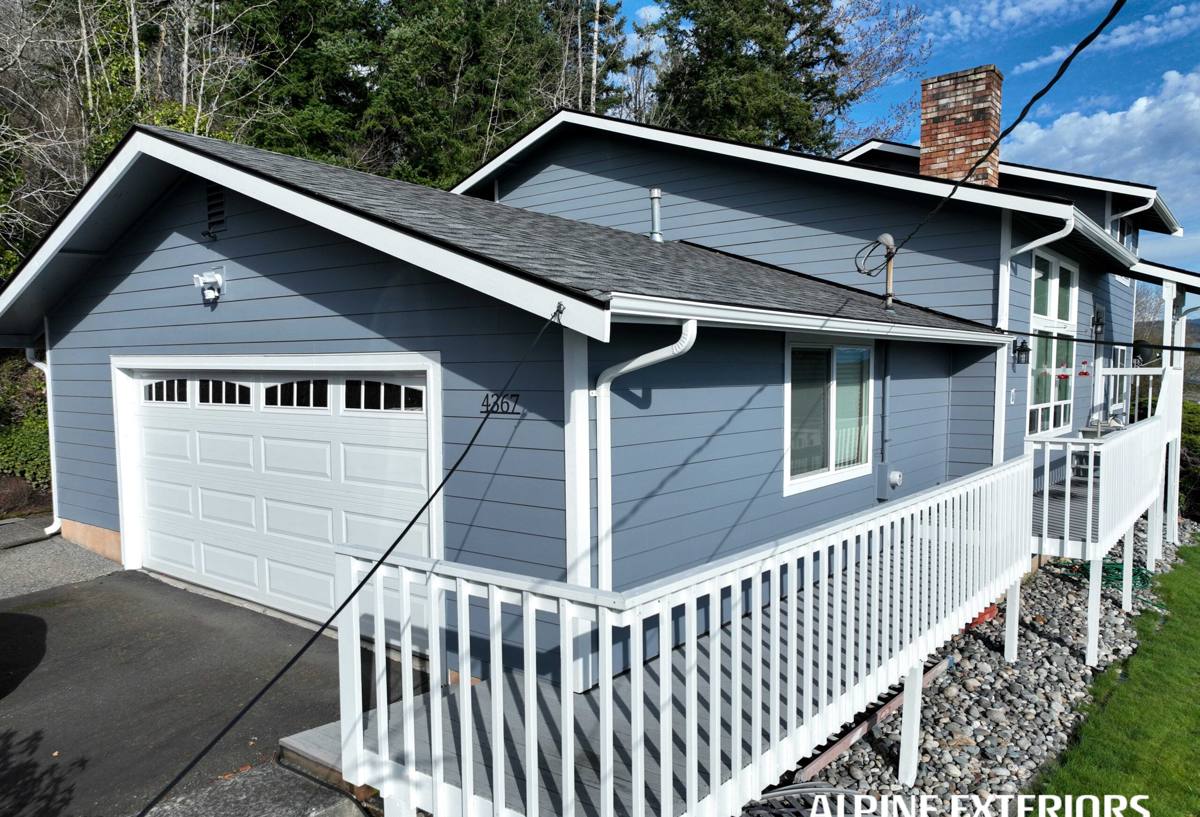
What Cordata's Climate Actually Does to a Shingle Roof
Salt Air and Corrosion
Metal components — flashing, drip edge, nail heads, vent stacks — are the first parts of a roof to show wear from salt exposure. Left unaddressed, corroded flashing is one of the most common causes of a leak that has nothing to do with the shingles themselves being worn out. We spec corrosion-resistant metal at every flashing point on Cordata jobs, not just at the eaves.
Driving Rain
Storms coming off the water don't just drop rain straight down — they push it sideways, up under shingle tabs and into any gap in the flashing that a calmer climate could get away with. That's why underlayment coverage and how the flashing is lapped matter more here than in places that only see straight-down rain.
Moss and Algae Season
Whatcom County's damp season runs long, and shaded roofs — the kind you get under mature tree canopy, which is common through Cordata — stay wet for days after a storm passes. That's the environment moss and algae need to take hold. Once moss gets a foothold under shingle tabs, it lifts them, holds moisture against the roof deck, and accelerates rot. Algae staining is mostly cosmetic but signals a roof that's staying wet longer than it should.
What a Correct Installation Looks Like Here
A shingle roof is a system, not a single product. In Cordata's climate, every layer of that system needs to be right, because the shingles alone can't compensate for a weak underlayment or poor ventilation.
Underlayment
We use a synthetic underlayment across the full roof deck as a continuous water-resistant barrier beneath the shingles, with self-adhering ice-and-water membrane at eaves, valleys, and any roof-to-wall transition — the spots where wind-driven rain is most likely to find a way in.
Flashing
Every roof-to-wall junction, chimney, skylight curb, and vent penetration gets new flashing during a re-roof, not a reuse of whatever was there. Old flashing is one of the most common failure points we find on roof inspections, and it's far cheaper to replace during a re-roof than to chase a leak later.
Ventilation
Balanced intake and exhaust ventilation keeps the underside of the roof deck dry and regulates attic temperature. Poor ventilation traps moisture, which shortens shingle life from underneath — a problem that's easy to miss because it doesn't show up on the surface until the damage is done.
Fastening and Wind Rating
Shingles are only as wind-resistant as their installation. Correct nail placement, pattern, and count matter more than the wind rating printed on the shingle wrapper — a shingle rated for 130 mph winds installed with the wrong nail pattern won't perform to that rating.
Choosing the Right Shingle for This Climate
Not every asphalt shingle product is a good fit for a shaded, damp, coastal-adjacent neighborhood like Cordata. We generally steer homeowners toward algae-resistant shingle lines — these use copper or zinc granules blended into the shingle surface that inhibit algae growth over time, which matters more here than in a drier climate where algae staining is rarely an issue.
| Shingle Type | Typical Lifespan | Algae Resistance | Best Fit For |
|---|---|---|---|
| 3-Tab (Standard) | 15–20 years | Limited unless specified | Budget-conscious re-roofs, secondary structures |
| Architectural / Dimensional | 25–30 years | Available as algae-resistant option | Most Cordata homes — better wind and moisture performance |
| Premium / Designer | 30–50 years | Standard on most premium lines | Homeowners wanting maximum lifespan and a heavier profile |
Architectural shingles are our default recommendation for most Cordata homes. They have a thicker laminate construction than 3-tab shingles, which gives them better wind uplift resistance and a longer service life — both worth the modest cost difference in a climate that tests roofs as hard as this one does.
How We Approach a Cordata Re-Roof
- Inspection and estimate. We look at the existing roof, deck condition, ventilation, and any problem areas before quoting anything.
- Tear-off. Full removal of old roofing material down to the deck — we don't install new shingles over old ones. Layering shingles traps moisture and hides deck problems.
- Deck inspection and repair. Any soft, rotted, or delaminated decking gets replaced before anything new goes down. This is the step that reveals whether prior moss or leak damage did more harm than it looked like from the ground.
- Underlayment and ice-and-water membrane. Installed per the specifications above, matched to the roof's slope, valleys, and penetrations.
- Flashing. New flashing at every wall transition, chimney, skylight, and vent.
- Shingle installation. Correct nail pattern and exposure for the specific shingle product and the manufacturer's wind-rating requirements.
- Ventilation check. Intake and exhaust balanced for the attic space.
- Cleanup and walk-through. Magnetic sweep for stray nails, debris removal, and a final review with the homeowner.
Signs Your Cordata Roof Needs Attention
Because moss and algae growth happen gradually, a lot of homeowners don't notice roof problems until they've been developing for a while. Worth checking for, especially after a wet winter:
- Dark streaking or green-black staining on the roof surface, especially on shaded slopes
- Visible moss growth, particularly along shingle edges, valleys, or where two roof planes meet
- Granules collecting in gutters or at the base of downspouts
- Shingles that look curled, cupped, or lifted at the tabs
- Soft spots or sagging when walking the attic space (or visible daylight through the roof deck)
- Water stains on interior ceilings, especially near chimneys, skylights, or exterior walls
- Flashing that looks rusted, loose, or separated from the surface it's sealed against
Any one of these on its own isn't necessarily an emergency, but they're all worth a professional look rather than waiting.
Maintenance That Actually Matters in a Marine Climate
A new roof doesn't mean a maintenance-free roof — not in a climate that grows moss on a roof left alone through two or three wet seasons. A few things make a real difference over the life of a Cordata roof:
Keep Gutters Clear
Clogged gutters back water up under the lowest course of shingles, which is one of the more preventable causes of eave-area rot we see.
Manage Overhanging Branches
Trimming back branches that shade the roof reduces how long shingles stay wet after a storm and cuts down on moss establishment — a meaningful factor given how much tree canopy is common through this neighborhood.
Address Moss Early, Correctly
Moss should be removed with methods appropriate to shingle roofing — not pressure-washed, which strips granules and shortens shingle life faster than the moss itself would. Zinc or copper control strips near the ridge can help suppress regrowth between cleanings.
Periodic Professional Inspection
A roof that looks fine from the ground can still have flashing or ventilation issues developing underneath. A periodic inspection catches problems while they're still a repair, not a replacement.
Why Hiring a Crew That Already Works in Cordata Matters
Roofing crews who mostly work drier inland climates sometimes underestimate what Whatcom County's coastal-influenced weather does to a roof — under-spec the underlayment, skip ice-and-water membrane where it's not technically required but is still a good idea, or install standard shingles where an algae-resistant product would've been the better call. None of that shows up as a problem on installation day. It shows up two or three winters later.
Working regularly in this specific climate means knowing which details matter here that wouldn't matter somewhere drier — where wind-driven rain actually gets in, which shaded rooflines need the extra attention, and what a Cordata roof looks like after it's been through a few real Whatcom County winters. That's the kind of judgment that only comes from doing the work in this exact climate, repeatedly.
Get a Straight Answer About Your Cordata Roof
If your roof is showing moss, staining, curling shingles, or you're just not sure how much life is left in it, we're glad to take a look and give you an honest read — no pressure, no upsell. Use the form below to request a free estimate for your Cordata home.