 Bellingham Exterior
 Why Lynden Decks Wear Out Faster Than the Rest of the Country
Lynden sits inland from Bellingham Bay, but that doesn't spare it from the Pacific Northwest's defining weather pattern: long stretches of damp, overcast days followed by driving winter rain and a moss season that can run from October through April. A deck here isn't just outdoor furniture — it's a structure that spends roughly half the year wet, shaded, and cool enough that wood and fasteners never fully dry out between storms. That combination is exactly what accelerates rot, corrodes hardware, and turns a smooth deck surface into a moss-covered slip hazard by the second or third winter if it wasn't built or maintained correctly.
We've replaced enough decks around Whatcom County to know the failure pattern is almost always the same: it isn't the decking boards that fail first, it's what's underneath them. Ledger boards, joists, and post bases hold moisture against wood or trap it behind flashing that was never properly lapped. By the time a homeowner notices soft spots or spongy boards, the framing underneath has often been quietly failing for a couple of seasons already.
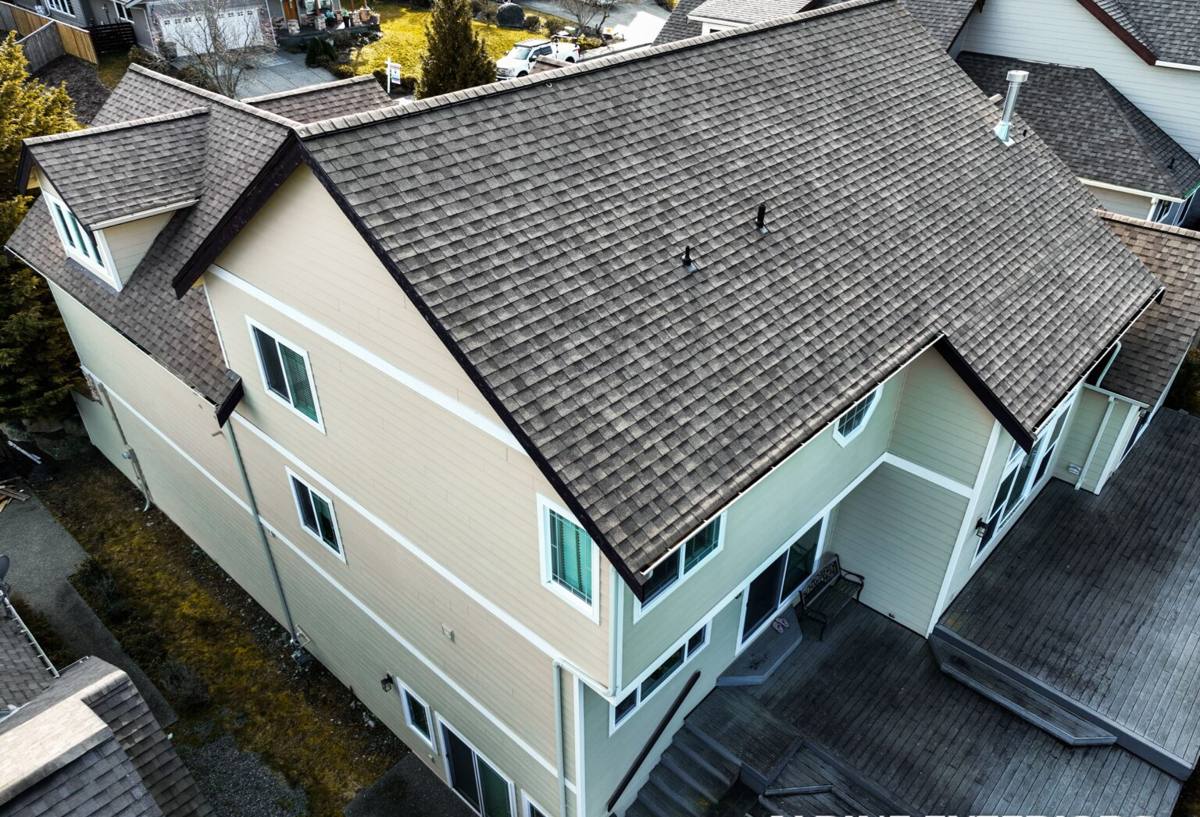
What "Correct" Looks Like for a Deck Replacement Here
A deck replacement isn't just tearing off old boards and screwing down new ones. Done right, it's a chance to fix the structural and moisture issues that shortened the life of the last deck. For Lynden and greater Bellingham conditions, that means paying close attention to a handful of details that matter more here than they would in a dry climate.
Ledger Board Flashing
Where the deck attaches to the house is the single most common failure point we find. If the ledger board isn't flashed with a proper drip cap and self-adhering membrane that sheds water away from the house sheathing, moisture gets trapped between the deck and the wall — which can lead to rot in both the deck framing and the home's structure behind it. This is non-negotiable on every replacement we do.
Joist and Post Protection
Untreated cuts, notches, and fastener holes in framing lumber are entry points for moisture even when the lumber itself is pressure-treated. We seal cut ends and use joist tape or a comparable barrier on the tops of joists so standing water can't wick into the wood from above — a detail that's easy to skip and one of the most common reasons framing rots out early in wet climates.
Fastener and Hardware Grade
Structural connectors, screws, and joist hangers need to be rated for the treatment chemicals used in modern pressure-treated lumber and for exterior/coastal-adjacent exposure. Mismatched or under-rated hardware corrodes faster than the wood around it does, which quietly weakens the whole structure long before the surface shows any sign of trouble.
Drainage and Airflow Underneath
Decks built low to the ground or over poorly graded soil trap moisture underneath with nowhere to go. We look at grading, ventilation gaps, and whether ground contact points need standoffs or gravel to keep air moving and water draining away from the framing.
Decking Material Options for This Climate
There's no single "best" decking material — there's a best fit for your budget, maintenance appetite, and how much moss and moisture exposure your specific yard gets (a deck under fir trees on the north side of a Lynden property behaves very differently than one in full southern exposure).
| Material | Upfront Cost | Maintenance | How It Handles Our Wet Season |
|---|---|---|---|
| Pressure-treated wood | Lowest | Annual cleaning, re-stain/seal every 2-3 years | Good if sealed and maintained; neglect shows fast as graying, splintering, and moss growth |
| Cedar | Moderate | Cleaning plus periodic oil or sealant | Naturally rot-resistant but still needs upkeep in shaded, damp spots |
| Composite decking | Higher | Occasional washing, no staining/sealing | Handles moisture well; still needs cleaning to prevent moss and algae film on the surface |
| PVC decking | Highest | Lowest — soap and water | Fully moisture-resistant surface, but framing underneath still needs the same protective detailing |
Whatever surface material you choose, the framing underneath gets built the same careful way — that's where the deck's real lifespan is decided, not in the decking brand.
Signs Your Lynden Deck Needs Replacing, Not Repairing
Not every deck problem means a full tear-off. Sometimes a few boards or a section of railing can be replaced on its own. But there's a point where patching stops making sense and a full replacement is the honest recommendation.
- Soft or spongy spots when you walk across the deck, especially near the house or around post bases
- Visible rot, dark staining, or fungal growth on joists or the ledger board when viewed from underneath
- Railings or posts that flex or wobble more than a light push should cause
- Persistent moss or algae film that returns within weeks of cleaning, no matter the season
- Fasteners that are rusted, backing out, or leaving dark streaks down the decking boards
- A deck more than 15-20 years old that was never properly flashed at the ledger
- Gaps opening up between boards or noticeable movement where the deck meets the house
If you're only seeing one or two of these and the framing underneath is sound, a repair may genuinely be the right call — we'll tell you that if it's true rather than upselling a full replacement you don't need.
Our Deck Replacement Process
Every deck we replace goes through the same sequence, whether it's a small side deck or a large multi-level structure:
- On-site assessment. We inspect the existing deck, the ledger connection, and the framing underneath to confirm replacement is the right call and to catch any hidden rot before we quote the job.
- Design and material selection. We talk through decking material, railing style, and layout changes if you want them, and put together a clear written scope.
- Permitting. Deck replacements involving structural changes typically require a permit through the local jurisdiction. We handle that paperwork so you don't have to chase it down.
- Demo and disposal. Old decking, framing, and any compromised ledger material comes out, with debris hauled off the property.
- Framing and flashing. This is where the durability of the deck actually gets decided — proper ledger flashing, protected joists, and correctly rated hardware, all built to current code for post spacing and footing depth.
- Decking, railing, and finish work. Surface material goes down, railings get installed, and everything gets a final walkthrough with you before we call it done.
What to Expect for Timeline
A straightforward deck replacement typically runs anywhere from a few days to a couple of weeks depending on size, permitting turnaround, and weather windows — Whatcom County's rainy stretches can push a schedule out, and we build that reality into the timeline we give you up front rather than pretending it won't happen.
Maintenance That Actually Extends the Life of a New Deck
A correctly built deck still needs seasonal attention in this climate. The good news is that the maintenance list is short and manageable if you stay on top of it:
- Sweep leaves and debris off the surface regularly in fall — trapped organic matter is what feeds moss and holds moisture against the decking
- Clean the surface at least once a year with a deck cleaner or diluted solution appropriate for your material, not just a pressure washer alone
- Check and re-seal or re-stain wood decking on the schedule appropriate to the product — skipping a cycle is how gray, weathered wood turns into cracked, absorbent wood
- Keep gutters and downspouts near the deck clear so runoff isn't dumping directly onto or under the structure
- Look underneath once a year for any new staining, softness, or hardware corrosion so small issues get caught early
Why Hire a Crew That Already Works in Lynden and Bellingham
Deck-building fundamentals don't change from region to region, but the details that determine whether a deck lasts 10 years or 25 years in Whatcom County's climate are specific to this area. A crew that works Lynden, Bellingham, and the surrounding county knows which details get skipped by out-of-area or inexperienced installers — ledger flashing, joist protection, hardware grade — because we've been the ones called back out to fix the results. We also know the local permitting process, which keeps your project from stalling out waiting on paperwork.
We're not interested in selling you the most expensive material or a bigger deck than you asked for. We'll tell you honestly whether your existing deck needs a full replacement or just targeted repairs, and we'll build whichever one you need to hold up against the salt air, driving rain, and moss season this region throws at it every single year.
If your deck is showing its age or you're ready to plan a replacement, we're happy to come take a look. Fill out the form below for a free, no-pressure estimate.