 Bellingham Exterior
 Building New in Silver Beach Means Building for the Weather You Already Know
If you're framing a new home in Silver Beach, you already know what Bellingham throws at a house over the years: driving rain off the water, salt-laden air that finds every unprotected metal surface, and a moss season that seems to stretch longer every winter. New-construction windows are one of the few building components where you get exactly one real chance to do it right. Once siding, trim, and interior finish go on, correcting a bad window installation means tearing back finished work — which is a very different (and much more expensive) job than getting it right the first time.
This page is about that first chance: installing new-construction windows correctly on a Silver Beach build, from the rough opening through final flashing, so the house is dry and solid for decades instead of just for the final walkthrough.
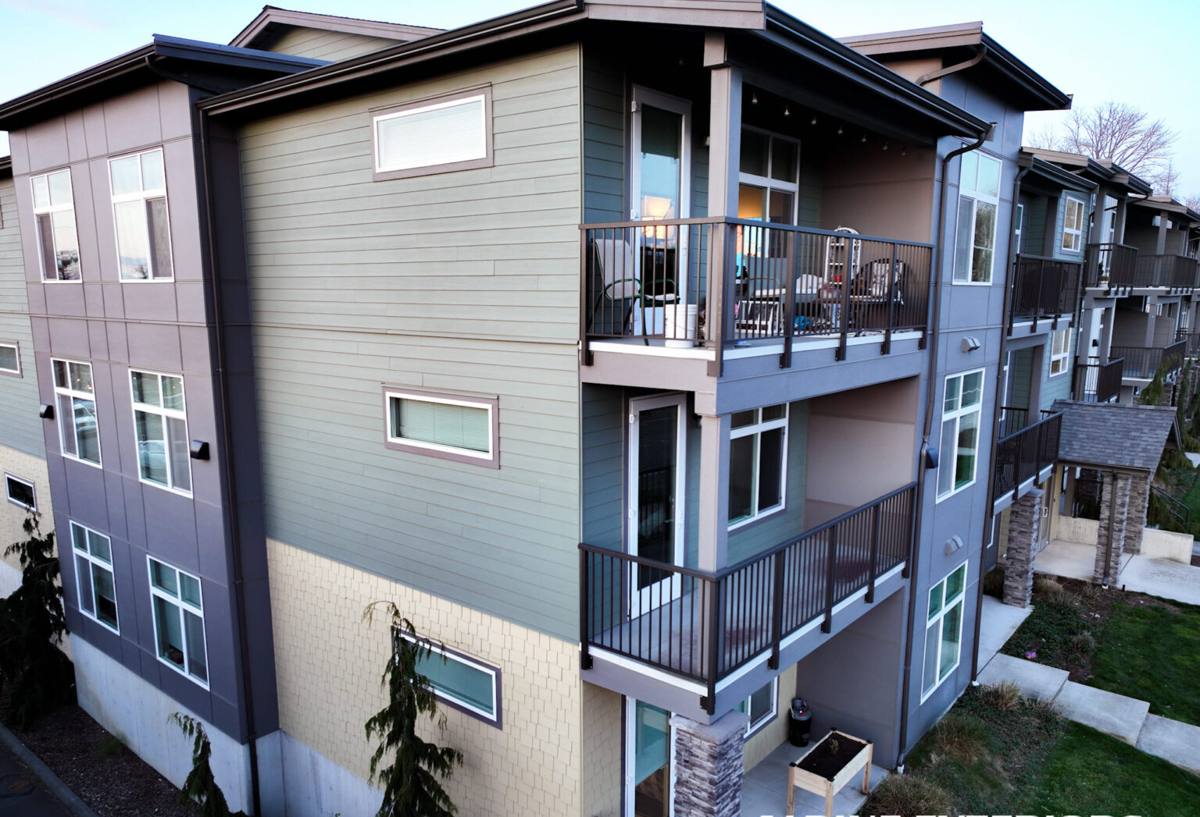
What "New-Construction Windows" Actually Means
New-construction windows are built with a nailing flange (also called a nail fin) around the perimeter of the frame. That flange gets fastened directly to the sheathing and integrated into the water-resistive barrier (WRB) before siding goes on. This is different from replacement or "pocket" windows, which are designed to slide into an existing frame without disturbing the exterior wall — a fine solution for remodels, but not what you want (or need) on a new build.
Why the Distinction Matters Here
On a replacement job, the existing wall already has a track record — you can often see how it's handled moisture over the years. On new construction, there's no track record yet. The window, the flashing, and the WRB are being installed together for the first time, which means the installer's sequencing and attention to detail is the entire moisture-management system. There's no existing wall to bail you out if a step gets skipped.
Getting the Water Management Right
Bellingham's driving rain doesn't fall straight down — wind pushes it sideways into wall assemblies, which is exactly where new-construction windows are most vulnerable if they're installed out of sequence. Correct water management isn't one product, it's a layered system, done in the right order.
The Sequence That Actually Matters
- Rough opening is checked for square, level, and correct size before the window ever shows up on site — not adjusted after the fact.
- A sloped sill pan goes in first, so any water that does get past the window has somewhere to go besides your framing.
- The WRB (house wrap or equivalent) is lapped correctly at the sides and head so water sheds outward and downward, never into a seam.
- The window's nailing flange is integrated into that WRB using flashing tape at the sides and a properly lapped head flashing on top — installed shingle-style so upper layers overlap lower ones.
- Fasteners go where the manufacturer specifies, at the spacing specified — not "close enough," since under-fastened flanges are one of the most common causes of movement and air leaks we find on inspections.
Skip or rush any one of these steps and you don't find out until a wind-driven rain event a year or two later, when the damage is already inside the wall cavity.
Choosing the Right Window Frame for a Whatcom County New Build
Frame material matters more here than in a drier inland climate, because of the combination of near-constant moisture and, closer to open water, salt air that accelerates corrosion on unprotected hardware and fasteners. There's no single "best" material for every home — it depends on your budget, your home's exposure, and how much upkeep you want to take on.
| Frame Material | Moisture & Salt-Air Behavior | Maintenance | Typical Fit |
|---|---|---|---|
| Vinyl | Won't rot or corrode; performs well in wet, salt-influenced air | Low — occasional cleaning | Budget-conscious builds, rentals, most standard new construction |
| Fiberglass | Very stable dimensionally, handles wet/dry cycling well | Low | Homes wanting a narrower sightline and long-term durability |
| Wood-clad | Interior wood needs the exterior cladding and flashing detail done correctly to stay protected from driving rain | Higher — interior wood finish upkeep, and any cladding breach needs prompt attention | Homeowners prioritizing a wood interior look who accept the added care |
| Aluminum | Prone to corrosion in salt-influenced coastal air unless properly coated/thermally broken | Moderate to high | We're selective about where we recommend this locally, given the exposure |
We'll walk you through the honest trade-offs for your specific lot and elevation rather than pushing one product line — a window that's fine on a sheltered, inland lot may not be the right call on a more exposed Silver Beach elevation.
How We Handle New-Construction Window Installs
Before the Windows Arrive
We verify rough openings against the actual window schedule, not just the plans — framing tolerances shift on site, and catching a discrepancy before the window shows up saves everyone a delay. We also coordinate directly with your builder or general contractor on sequencing, since window install has to slot in correctly between sheathing/WRB and siding.
Install Day
Each opening gets sill pan flashing, correct shimming and squaring, flange integration into the WRB, and fastening to spec. We check operation (open, close, lock) on every unit before moving on, since a window that binds or doesn't seal fully is a problem that only gets harder to fix once trim is on.
After Install
We do a final check of flashing laps and fastening before siding crews close the wall up, because that's the last point where a flashing error is a five-minute fix instead of a siding tear-off.
Mistakes We Regularly Catch on New Builds
Most of the water problems we get called out to fix in Whatcom County didn't come from a bad window — they came from installation shortcuts. On new construction specifically, we watch for:
- Head flashing installed under the WRB instead of over/integrated with it (reverses the shingle-lap and directs water into the wall)
- Missing or unsloped sill pans
- Nailing flanges fastened with the wrong fastener type or spacing, leading to loose flanges and long-term air/water infiltration
- Rough openings that are out of square, forcing the window frame to rack and stress the seals
- Sealant used as a substitute for proper flashing rather than as a secondary backup
What Affects New-Construction Window Cost
Costs vary by project, and we'll give you real numbers after seeing your plans — but these are the main factors that move the price up or down:
| Factor | Effect on Cost |
|---|---|
| Number and size of window openings | Largest single driver — more/larger units mean more material and labor |
| Frame material | Vinyl is typically the most budget-friendly; fiberglass and wood-clad run higher |
| Glazing package (double vs. triple pane, low-E coatings) | Better performance packages cost more up front, offset over time by energy performance |
| Site access and building stage | Easier access during framing keeps labor efficient versus retrofitting around finished work |
| Custom shapes or sizes | Non-standard openings add lead time and cost over stock sizes |
Why Local Experience in Silver Beach Actually Matters
A window installed correctly in a dry inland climate can still fail here if it's installed the same way. Crews that work Whatcom County new-construction sites regularly get a feel for how a particular street or elevation catches wind-driven rain, how long moss season really runs in a given year, and which details are worth extra time versus which are genuinely optional. That local pattern recognition doesn't show up in a manufacturer's install manual — it comes from doing the work here, on homes like yours, season after season.
We also already know how to coordinate with the builders, framers, and siding crews working this area, which keeps your schedule moving instead of waiting on miscommunication between trades.
Living With New Windows Through Moss Season and Beyond
A correctly installed new-construction window is largely maintenance-free, but a few habits keep it that way through Bellingham's wetter months:
- Clear debris and moss buildup away from window sills and trim at least once before winter
- Check exterior caulking at trim edges annually — it's a secondary defense, not the primary one, but it's easy to inspect
- Keep gutters and downspouts clear so roof runoff isn't dumping extra water onto window heads
- Watch for any staining or soft trim near window corners, which is often the earliest visible sign of a flashing issue
If you're planning a new build or addition in Silver Beach and want windows installed right the first time, we're happy to walk your plans, talk through frame options for your site's exposure, and give you a straightforward, no-pressure estimate using the form below.