 Bellingham Exterior
 Roof Repair Built for Silver Beach Conditions
Silver Beach homeowners deal with a roofing environment that's tougher than it looks from the street. Bellingham sits on Whatcom County's marine-influenced coast, which means roofs here absorb a steady diet of moisture-laden air, wind-driven rain that gets pushed sideways under normal roof coverings, and long stretches of shade and dampness that let moss take hold and stay. None of that is dramatic on its own, but stacked together over years, it's exactly the combination that turns a small, fixable roof problem into a much bigger one.
Roof repair, done right, is not just patching whatever is leaking today. It's understanding why that spot failed, what's happening around it, and whether the fix will actually hold up through another wet Whatcom County winter. That's the standard we hold every repair to on Silver Beach homes.
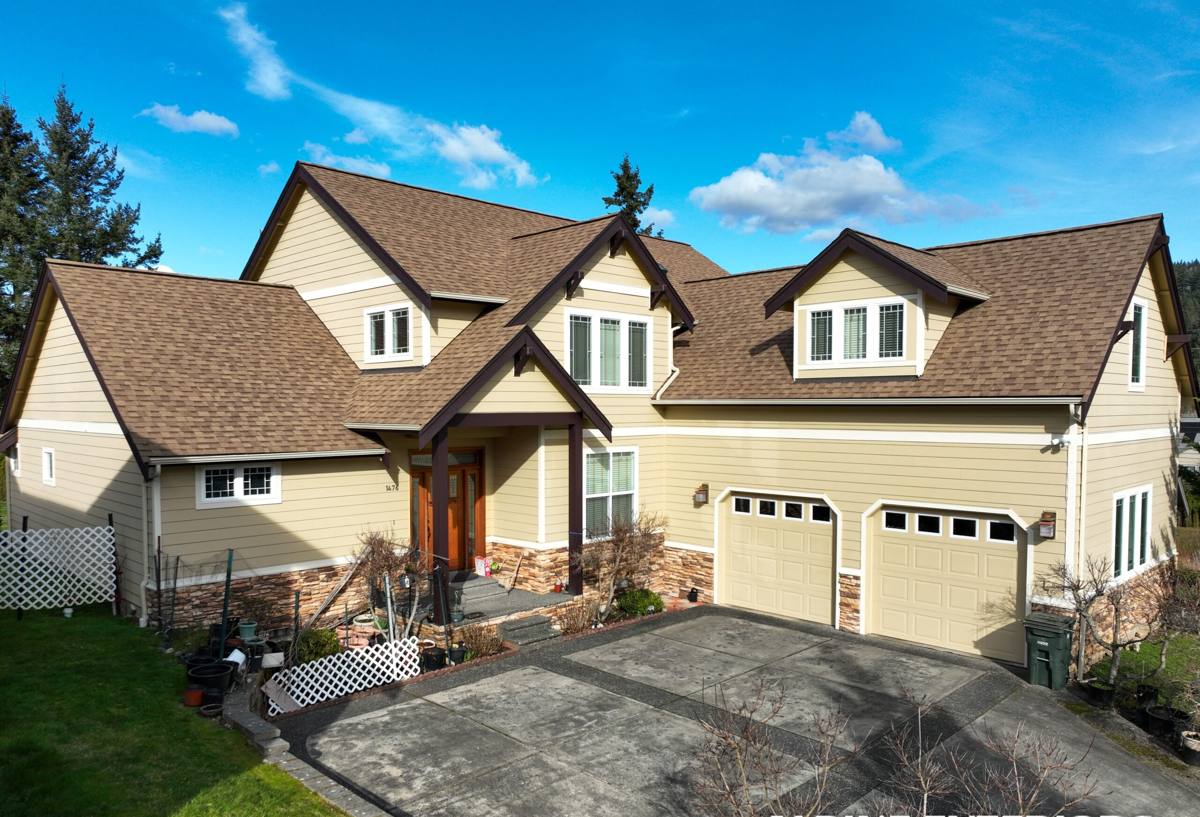
Why Local Climate Changes the Repair Approach
Salt Air and Slow Corrosion
Homes closer to Bellingham's shoreline environments deal with airborne salt that settles on metal roofing components — flashing, fasteners, vent stacks, gutters — and slowly accelerates corrosion. A fastener that would last decades inland can start weeping rust streaks or losing its grip years earlier here. When we repair a roof section, we check every piece of exposed metal nearby, not just the shingles, because corroded flashing is one of the most common hidden causes of a leak that seems to come from "nowhere."
Driving Rain, Not Just Rain
Straight-down rain is easy on a roof. Wind-driven rain is not. When storms push moisture sideways and upward under shingle edges, at ridge caps, and around anything that penetrates the roof deck — vents, chimneys, skylights — ordinary sealing methods can fail even though the roof "looks fine" from below. Repairs in this climate need to account for wind direction and exposure, not just patch the visible gap.
The Long Moss Season
Whatcom County's cool, damp stretches give moss and algae months of good growing conditions on north-facing slopes and shaded sections of roof. Moss isn't just cosmetic. As it spreads, it lifts shingle edges, holds water against the roofing material long after the rest of the roof has dried, and works its root structure into seams and granule surfaces. A roof that looks moderately mossy from the ground is often more compromised underneath than it appears.
Signs a Silver Beach Roof Needs Repair Now
Most roof failures give warning signs well before water reaches the inside of the house. Catching them early is the difference between a contained repair and a much larger job.
- Granules collecting in gutters or at downspout outlets — a sign shingles are wearing thin
- Dark streaking or thick moss patches, especially on shaded or north-facing slopes
- Curling, cracked, or lifted shingle edges, particularly on roof sections that face prevailing wind and rain
- Rust staining or visible corrosion around flashing, vent boots, and metal valleys
- Soft or discolored ceiling spots, especially after a windy rainstorm rather than a calm one
- Daylight visible through the roof deck from inside an attic space
- Sagging or spongy-feeling sections when walked (we check this — homeowners shouldn't)
Any one of these on its own may be minor. Several together usually mean water has been finding its way in for a while.
What a Correct Roof Repair Actually Involves
A repair that's done properly goes well beyond covering the visible hole. It involves diagnosis, matching materials, and confirming the fix addresses the actual water path — not just the symptom.
Finding the Real Source
Water doesn't always leak straight down from where it enters. It can travel along the roof deck or framing before showing up inside, which means the visible damage and the actual failure point are often in different spots. A rushed repair that only treats the visible symptom frequently leaves the real problem in place, and the "fixed" leak comes back in the next storm.
Matching Materials and Method
Patch materials need to match the existing roof in type, weight, and often color and profile — a mismatched patch can create a new weak point where old and new material meet, especially at seams that expand and contract differently in temperature swings. Flashing repairs need corrosion-resistant material given the salt-air exposure common in this area, not just whatever fits.
Sealing for Wind-Driven Conditions
Because Whatcom County storms frequently drive rain sideways, repair work around penetrations, valleys, and ridge lines needs underlayment and sealing details rated for that exposure — not just surface caulking, which tends to fail faster than a properly integrated repair.
Our Roof Repair Process
1. On-Roof Inspection
We get on the roof, not just the ladder, to inspect the deck, flashing, vents, and shingle condition directly. Ground-level inspections miss most of what actually causes leaks.
2. Written Findings and Options
We explain what we found, what's causing it, and what the repair involves — plainly, before any work starts. If a section is beyond a reasonable repair, we say so and explain why, rather than patching over a problem that will resurface.
3. The Repair
We remove and replace only what's compromised, integrate new flashing or underlayment where needed, and match shingle or roofing material as closely as the existing roof allows.
4. Cleanup and Walkthrough
Job site cleaned of debris and old material, and we walk the homeowner through what was done and what to watch for going forward.
Repair or Replace? How We Help You Decide
Not every roof problem calls for a full replacement, and not every roof problem is well served by another patch. We look at the roof's overall age and condition, not just the immediate leak, before recommending either path.
| Factor | Favors Repair | Favors Replacement |
|---|---|---|
| Roof age | Roof is well within its expected service life | Roof is near or past the end of its typical lifespan |
| Extent of damage | Isolated to one section or penetration | Spread across multiple slopes or recurring in different spots |
| Deck condition | Deck is sound underneath | Deck shows rot or soft spots in multiple areas |
| Moss/algae coverage | Light, localized growth | Heavy, widespread coverage lifting shingles broadly |
| Repair history | First or infrequent repair needed | Same areas have needed repeated patching |
Where the honest answer is repair, we repair. We don't recommend replacement to make a bigger sale, and we don't patch a roof that's genuinely at the end of its life just to avoid a harder conversation.
Materials and Methods We Rely On Here
For repair work in this climate, we lean on materials and methods chosen for durability against sustained moisture and salt-air exposure rather than lowest upfront cost. That includes corrosion-resistant flashing at valleys and penetrations, underlayment suited to wind-driven rain rather than basic felt alone, and shingle or roofing material matched to withstand the area's moss-prone shaded conditions. Where a homeowner's existing roofing product has known moisture-handling or maintenance trade-offs, we explain those honestly as part of the repair conversation — including what upkeep will help it perform well going forward — rather than making promises about a product's long-term behavior we can't back up.
What Roof Repair Typically Costs
Repair costs vary based on the cause, the roofing material, and how much of the roof structure is affected. Rough ranges below are for general planning — an accurate number requires an on-roof inspection.
| Repair Type | General Cost Range | What Drives the Price |
|---|---|---|
| Minor flashing or seal repair | Low end of repair costs | Single penetration, easy access, no deck damage |
| Shingle section replacement | Moderate | Area size, material match availability, slope pitch |
| Deck repair plus roofing | Higher | Rotted decking requires removal and rebuild before re-roofing |
| Moss remediation with repair | Varies widely | Coverage extent, whether shingles are salvageable underneath |
Steep or difficult-access roofs, multiple stories, and chimney or skylight penetrations tend to push cost up regardless of repair type, since they add time and equipment needs.
After the Repair: Keeping It That Way
A good repair is only half the equation — how a roof is maintained afterward has a real effect on how long that repair holds, especially given how much moss and moisture this area sees.
- Keep gutters and downspouts clear so water isn't backing up under roof edges
- Trim back overhanging branches to reduce shade and debris that feed moss growth
- Have moss treated before it spreads widely rather than after it's lifted shingles
- Check attic ventilation — poor airflow traps moisture against the underside of the roof deck
- Schedule a roof check after major windstorms, not just on a fixed annual schedule
- Address small granule loss or minor curling early, before the next wet season
Why Local Experience on Silver Beach Roofs Matters
A crew that regularly works roofs in Silver Beach and the surrounding Bellingham area already knows which slopes tend to hold moss longest, which roof details tend to take the brunt of wind-driven storms, and which materials actually hold up under Whatcom County's specific combination of salt air, sustained damp, and seasonal wind. That's not something a crew unfamiliar with the area picks up on the first visit — it comes from repeatedly seeing how roofs in this specific climate age and fail, and adjusting the repair approach accordingly rather than applying a generic fix.
If you're dealing with a leak, visible moss buildup, storm damage, or just want an honest read on a roof's condition before it becomes a bigger problem, we're happy to take a look. Reach out for a free, no-pressure estimate using the form below.