 Bellingham Exterior
 Windows Built for South Hill's Exposure
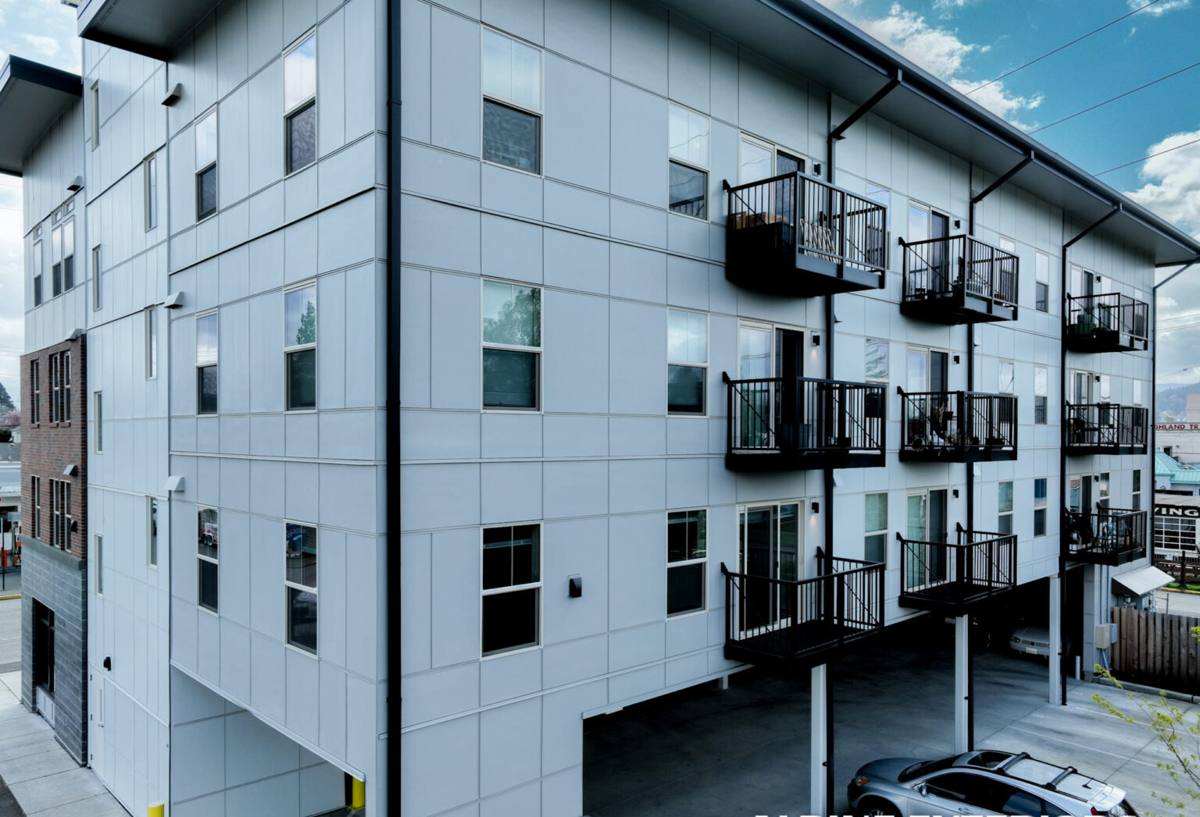
South Hill sits up above much of Bellingham, which means homes there catch weather that lower neighborhoods are partly shielded from. Wind off Bellingham Bay drives rain sideways into window walls, salt air works on hardware and finishes faster than it does further inland, and the long stretch of gray, wet months every year keeps moss and algae established on anything that stays damp. None of that is unique to South Hill, but the elevation and exposure make it more pronounced than in a sheltered valley lot a mile away.
Windows take the brunt of that. A window is the weakest point in an exterior wall by design — it's a manufactured assembly set into a hole cut in the siding, sealed with materials that degrade over time. When the surrounding climate is mild and dry, a mediocre installation can survive for years without showing problems. In South Hill's combination of wind-driven rain and near-constant damp, mediocre work fails faster, and it fails in ways that aren't always visible from inside the house until the damage has spread into the framing.
What "Custom" Actually Means Here
Older Homes and Non-Standard Openings
A lot of South Hill's housing stock predates modern window sizing standards. Original openings are often slightly out of square after decades of settling, framed for window styles that aren't made anymore, or sized in dimensions that don't match a stock off-the-shelf unit. "Custom" in this context usually doesn't mean an unusual shape — it means a window manufactured to fit the actual opening in your wall, rather than forcing your wall to fit a factory-standard size. That distinction matters more than most homeowners expect, because a window that's shimmed and packed to fit an opening it wasn't built for is a window with more places for water to find a path in.
Additions, Remodels, and Mixed Eras
Homes that have been added onto over the years — a bump-out, a converted porch, a second-story addition — often end up with two or three different window generations on the same house. Matching sightlines, sill heights, and trim profiles across an addition line takes measuring and product selection that a big-box replacement crew isn't set up to do. That's custom work too, even when every individual window is a standard shape.
Where Windows Fail First in This Climate
Before a window is visibly failing, it usually gives off warning signs. Knowing what to look for lets you catch a problem while it's still a window repair instead of a siding and framing repair.
- Fogging or a permanent haze between the panes — the seal on the insulated glass unit has broken and moisture is trapped inside
- Soft or discolored wood at the sill or bottom corners of the frame, often the first sign of a failed sill pan or flashing
- Dark streaking, green film, or moss growth on the sill or lower sash — a sign that water isn't shedding the way it should
- A noticeable draft at the frame edge even when the sash is fully latched
- Sashes that stick, drop, or won't stay up without a prop — usually a sign of frame movement or balance failure
- Corroded or stiff hardware — locks, cranks, and hinges exposed to salt-laden air wear out faster here than in drier inland climates
Any one of these on its own isn't an emergency. Several of them together, or any sign of soft wood, is worth having looked at before the next wet season.
What a Correct Installation Actually Involves
Most window failures we're called out to fix in this area aren't a bad window — they're a window that was installed without enough attention to how water moves around it. A correct installation treats the window as one part of a water management system built into the wall, not just a hole with a frame dropped into it.
- A sloped sill pan under the opening so any water that gets past the window drains back out, not into the wall cavity
- Properly lapped flashing tape integrated with the house wrap or building paper, in the right order, so water sheds downward and outward at every layer
- Backer rod and a compatible exterior sealant at the perimeter — not just a bead of caulk over a gap
- Capping or protecting any exposed wood trim and sills, since untreated wood in constant damp exposure is what starts most rot
- A clear weep path so the window itself can drain condensation and wind-driven moisture that reaches the sash track
- Correct shimming and fastening so the frame stays square and doesn't rack over time, which is what eventually breaks seals
Skipping any one of these steps might not show up as a problem for a year or two. In South Hill's weather, it usually does show up eventually, and by then the fix involves opening up the wall, not just the window.
Choosing the Right Frame Material
There's no single "best" window material — the right choice depends on the house, the exposure, and how much upkeep you want to take on. Here's how the common options compare for this climate specifically.
| Material | Moisture & Salt Air Behavior | Maintenance | Typical Lifespan |
|---|---|---|---|
| Vinyl | Doesn't rot or corrode; good baseline performance in wet, salty exposure | Low — occasional cleaning, no painting or sealing | 20–30+ years |
| Fiberglass | Very stable in temperature swings and moisture, minimal expansion/contraction | Low — paintable if you want a color change later | 30–40+ years |
| Wood-clad | Good performance if the cladding and seals are intact, but any breach exposes wood to rot risk | Higher — exterior cladding needs inspection, interior wood needs occasional finishing | 20–30 years with upkeep |
| Aluminum | Prone to condensation and corrosion in salt air unless thermally broken and properly finished | Moderate — hardware and finish need monitoring near the coast | 20–25 years |
We'll walk through these trade-offs against your budget and the look you're going for rather than steering you toward one product line. The honest answer is that installation quality affects long-term performance more than the brand name on the frame — a well-installed mid-range window will outlast a premium window installed poorly.
Our Process, Start to Finish
- On-site assessment — we look at your existing windows, the condition of the surrounding wall and trim, and how your specific exposure on the property affects wear
- Measuring and product selection — exact opening measurements, plus a walkthrough of material and glass options that fit the house and your budget
- Ordering and lead time — custom units are built to your openings, so we'll give you a realistic timeline rather than a best-case guess
- Installation — removal of the old unit, inspection of the framing underneath for hidden rot or moisture damage before anything new goes in, then flashing, sealing, and setting the new window correctly
- Interior and exterior finish work — trim, caulking, and touch-up so the new window looks intentional, not patched in
- Cleanup and walkthrough — we show you how the new hardware operates and answer questions before we consider the job done
Why a Crew That Already Works South Hill Matters
Window installation quality depends a lot on understanding the specific conditions a house sits in — and a hillside lot in South Hill behaves differently than a sheltered yard a few blocks down toward town. A crew that regularly works this neighborhood already has a feel for how wind-driven rain hits certain wall orientations harder, how much moss pressure a shaded north side deals with compared to a sun-exposed south wall, and what the older housing stock in this part of Bellingham typically has going on behind the trim once you open it up.
That familiarity also means fewer surprises during the job. We're not guessing at how Whatcom County's inspection and permitting process works for window replacements, and if something needs a follow-up visit after the first hard rain of the season, we're not driving in from across the county to take care of it.
Keeping New Windows Performing Year After Year
Even a correctly installed window benefits from a little seasonal attention in this climate. A short annual check catches small issues before the wet season turns them into bigger ones.
- Clear debris and moss from sills and tracks before fall rains start
- Check exterior caulk lines each spring for cracking or separation
- Test locks and cranks for smooth operation — stiffness can mean early hardware corrosion
- Look for condensation between panes, which signals a seal failure worth addressing before it worsens
- Keep gutters and downspouts clear so roof runoff isn't sheeting down over upper-floor windows
- Trim back vegetation that keeps a window in constant shade and dampness
If you're noticing drafts, sticking sashes, moss buildup, or you're just planning ahead for an older set of windows that are due, we're happy to come take a look. The estimate is free, there's no pressure attached to it, and you'll walk away with a straight answer about what your windows actually need — use the form below to get started.