 Bellingham Exterior
 Roof Repair Built for South Hill's Hillside Climate
South Hill sits up above the flatter parts of Bellingham, with mature tree canopy, older homes, and open exposure toward Bellingham Bay. That combination is great for views and shade — and hard on a roof. Salt-laden air off the water, driving rain that comes in sideways during winter storms, and a moss season that can run most of the year under tree cover all work on a roof at the same time. A repair approach that works fine in a drier, more sheltered part of Whatcom County often falls short here. This page covers what South Hill roofs specifically need, what a repair should actually include, and how our process works.
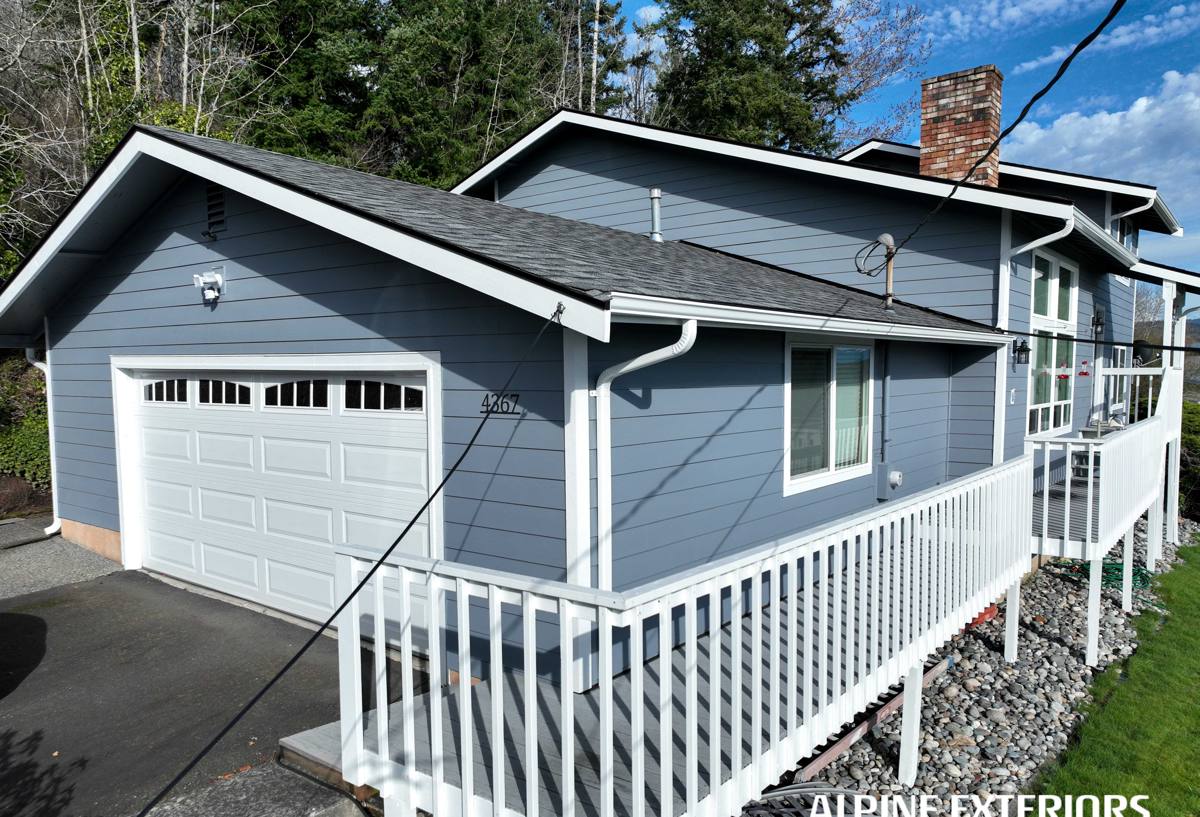
What South Hill's Climate Does to a Roof
Salt Air and Metal Components
Homes with a clear line toward the bay get a steady, low-level dose of salt-laden air. Over years, that accelerates corrosion on exposed fasteners, flashing, vent caps, and any bare metal on the roof. A nail head that rusts through, or a flashing seam that corrodes and opens up, is often where a slow leak starts — long before there's an obvious hole or missing shingle.
Driving Rain and Wind-Driven Water
Bellingham's winter storms don't always drop rain straight down. Wind off the water can drive it sideways and up under laps, seams, and flashing that would shed a normal vertical rain just fine. This is why leaks on South Hill so often show up at valleys, chimney flashing, and wall-to-roof transitions rather than in the open field of the roof — those are the spots wind-driven rain finds first.
Moss and Trapped Moisture
Shade from mature trees keeps roof surfaces damp longer after every rain, which is exactly what moss needs to take hold. Once moss establishes, it lifts shingle edges, holds water against the roofing material, and works its way under laps and around fasteners. On older homes with wood shake or aging composition roofing, moss is usually the single biggest driver of repair calls we see in this neighborhood.
Signs Your South Hill Roof Needs Repair, Not Replacement
Most roofs don't fail all at once — they show warning signs first. Catching a repair early is almost always cheaper and less disruptive than waiting for a full leak. Watch for:
- Moss or dark streaking concentrated on the shaded, north-facing slopes of the roof
- Granules collecting in gutters or at downspout outlets (a sign asphalt shingles are wearing thin)
- Lifted, curled, or cracked shingles, especially near valleys and roof edges
- Rust staining or visibly corroded flashing around chimneys, vents, or skylights
- Water stains or discoloration on interior ceilings, especially after a windy rainstorm
- Soft or spongy spots when walking the roof, which can mean the decking underneath is wet
- Daylight visible through the attic roof deck, or damp insulation below a specific section
Any one of these on its own is usually a repair, not a replacement. Several at once, especially on an older roof, is worth a full inspection before deciding which way to go.
What a Correct Repair Actually Involves
A repair that just adds a bead of roofing cement over a visible gap will usually fail again within a season or two, because it doesn't address why the leak started. A repair done right involves tearing back the roofing around the problem area, checking the decking underneath for rot or soft spots, and rebuilding the layers in the correct order — underlayment, flashing, then roofing material — so water sheds the way it's supposed to. Flashing gets reformed or replaced rather than just caulked, because caulk is a short-term seal, not a long-term one. Shingles or shakes get matched as closely as possible to the surrounding roof in type, profile, and where reasonable, color, so the repair blends in rather than standing out as a patch. If the decking is compromised, that gets replaced before anything goes back on top of it — covering over wet or rotten decking just hides the problem for a while.
Common South Hill Repair Types
| Issue | Typical Cause Here | What the Fix Involves |
|---|---|---|
| Moss-related shingle lift | Shade cover, long damp season | Remove moss and debris, replace damaged shingles, treat to slow regrowth |
| Valley or wall-flashing leak | Wind-driven rain, aging or corroded flashing | Tear back roofing, replace flashing, rebuild valley or step-flashing correctly |
| Corroded fasteners or vent boots | Salt air exposure over years | Replace fasteners and boots with corrosion-resistant materials |
| Soft or rotten decking | Long-term moisture intrusion under failed roofing | Cut out and replace decking, then rebuild roofing layers over it |
| Wind-lifted or missing shingles | Storm exposure on an unsheltered slope | Replace missing shingles, re-secure adjacent ones, check for hidden water entry |
Costs vary a lot based on how much of the roof is affected, how steep and accessible it is, whether the decking needs work, and how closely the existing material needs to be matched. A small, accessible spot repair might run a few hundred dollars; a repair involving flashing rebuild, decking replacement, or steep/hard-to-access roof sections can run well into four figures. We give an exact number after we've actually looked at the roof — not before.
Our Repair Process
- Inspection. We walk the roof (or use a ladder and binoculars where the pitch or condition makes walking it unsafe) and check the attic from below if accessible.
- Diagnosis. We tell you plainly what's actually wrong, what's causing it, and what happens if it's left alone — not just what's visible from the ground.
- Written scope and estimate. You get a clear description of the work and a price before anything starts, with no vague allowances buried in the fine print.
- The repair. We tear back to sound material, address the decking if needed, and rebuild flashing and roofing correctly rather than patching over the symptom.
- Cleanup and walkthrough. Debris and old material are hauled off, and we walk the finished work with you before we call it done.
Materials We Use for Repairs
We match repair materials to what's already on the roof wherever that's the sound decision, rather than pushing an upsell the roof doesn't need.
Asphalt Composition Shingles
Still the most common roofing on South Hill homes. For repairs, we use shingles that match the existing profile and weight as closely as possible, since mismatched shingles telegraph the repair location and can shed water differently than the surrounding roof.
Metal Roofing and Flashing
Where salt air has taken a toll on flashing or vent components, we use corrosion-resistant materials rather than replacing like-for-like with something that will corrode again on the same timeline. For full metal roof sections, seam and fastener condition get checked closely, since that's usually where a metal roof actually fails.
Wood Shake
Older South Hill homes sometimes still carry original or older shake roofing. Shake repair is more specialized — matching weathering and thickness matters, and moss control is a bigger part of ongoing maintenance than with composition roofing. We're upfront if a shake roof has reached the point where repair is throwing money at a roof that's better off replaced.
Moss Control Materials
Zinc or copper strips near the ridge let rain carry trace metal down the roof slope over time, which helps slow moss regrowth without chemical treatment. We'll walk you through this option alongside manual removal and treatment, since the right call depends on tree cover, roof material, and how much upkeep you want to do yourself.
Why a Crew That Already Works This Neighborhood Matters
South Hill's older homes, tight or sloped driveways, and mature landscaping change how a repair job gets staged — where a ladder can safely go up, how material gets moved to a steep or tree-covered roof section, and what the roof deck underneath is likely to look like on a house of that era. A crew that's repaired roofs on this hill before isn't guessing at any of that. We also know what South Hill's specific mix of salt air, wind-driven rain, and moss actually does to a roof over time, instead of treating every repair like a generic checklist. That's the difference between a repair that lasts and one that's back on the schedule in two years.
Keeping Moss From Coming Back Between Repairs
A repair fixes what's already gone wrong. A little regular upkeep keeps the same problem from coming back:
- Keep gutters and downspouts clear so water isn't backing up under the roof edge
- Trim back overhanging branches to cut down on shade and falling debris
- Have moss removed before it spreads, not after shingles start lifting
- Have the roof looked at after major windstorms, even if nothing looks obviously wrong
- Get a roof checked every couple of years if it's shaded or older, rather than waiting for a leak
None of this is complicated, but it's easy to let slide on a roof you don't see up close very often — and on South Hill, that's usually when small issues turn into repair calls.
If you've noticed moss buildup, a stain on a ceiling, or just want an honest look at where your roof stands, we're happy to come take a look. The estimate is free, there's no pressure, and you'll get a straight answer about whether it's a repair or something bigger — just fill out the form below.