 Bellingham Exterior
 Windows in York Take a Different Kind of Beating
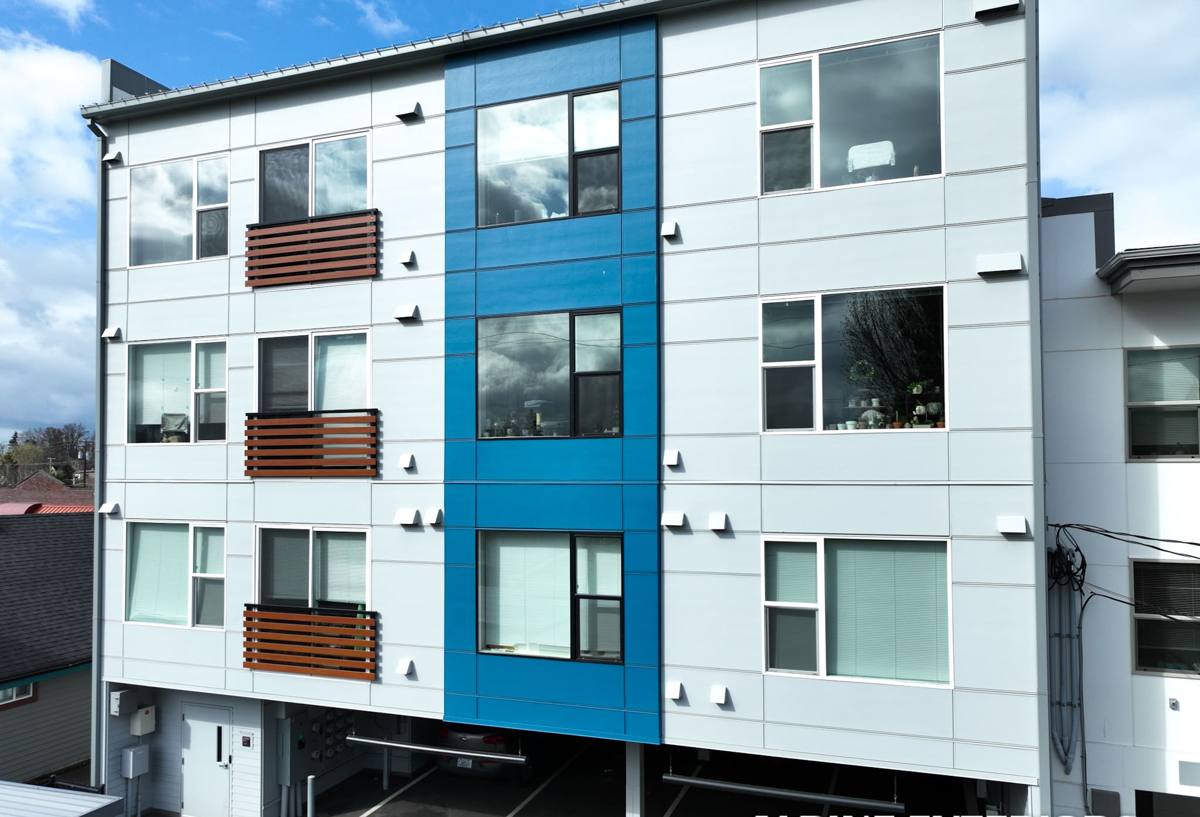
York is one of Bellingham's older, established neighborhoods, and that means a lot of the housing stock here was built well before today's window technology, flashing methods, or energy codes existed. Add in Whatcom County's climate — salt-laden air off Bellingham Bay, wind-driven rain that comes in sideways for weeks at a stretch, and a moss and algae season that runs most of the year on north- and west-facing walls — and you've got a recipe for windows that fail faster than they would almost anywhere else in the state.
None of that means York homes need something exotic. It means they need windows and installation details that actually account for how water moves, how wood ages when it stays damp, and how salt air treats metal hardware and fasteners over time. That's the whole focus of this page: what correct window installation looks like for this specific neighborhood, not a generic national checklist.
What the Local Climate Actually Does to a Window
Driving Rain and Wind-Loaded Water
Most window failures we see in this area aren't from rain falling straight down — they're from wind pushing water sideways and upward into gaps that were never sealed correctly in the first place. A window that would be fine in a drier climate can leak within a couple of seasons here if the flashing detail wasn't built to handle wind-driven moisture.
Salt Air and Hardware Corrosion
Homes closer to the water deal with airborne salt that slowly corrodes cheap fasteners, hinges, and locking hardware. It's a slow process, so it often gets blamed on "old age" when the real cause is hardware that was never rated for a marine-influenced environment.
Moss, Algae, and Trapped Moisture
Bellingham's long wet season keeps moss and algae active on shaded siding and window trim for much of the year. On older wood-framed windows, that constant dampness sitting against the frame is what starts rot — not one big storm, but months of low-grade moisture exposure that never fully dries out between rain events.
Signs a York Home's Windows Need Attention
Because failure here tends to be gradual, homeowners often don't notice until there's visible damage. Here's what we tell people to watch for between now and their next estimate:
- Fogging or a hazy film between panes of double-pane glass (a sign the seal has failed)
- Drafts you can feel near the frame even when the window is fully latched
- Soft, spongy, or discolored wood at the sill or lower frame corners
- Windows that stick, won't stay open, or need force to lock
- Visible gaps between the window frame and the siding or trim
- Green or black staining creeping onto the frame from nearby siding or trim
- Noticeably colder rooms near certain windows compared to the rest of the house
Any one of these on its own isn't an emergency. Several of them together, especially on the same wall, usually means water has been getting past the window for a while.
What a Correct Installation Actually Involves
Replacing a window is easy to do poorly and easy to describe well — the difference shows up years later, not on install day. The parts that matter most in this climate:
Removing the Old Window the Right Way
We open up the rough opening enough to actually see the condition of the framing, sheathing, and any existing flashing — not just pull the sash and drop a new unit in the same hole. This is where hidden rot from years of trapped moisture gets found and dealt with instead of sealed back up behind a new window.
Flashing Built for Wind-Driven Rain
The flashing sequence — sill pan, side flashing, head flashing, and how they layer with the weather-resistive barrier — is what actually keeps water out, more than the window unit itself. In a wind-driven rain climate, the sequence has to shed water downward and outward at every layer, with no reverse laps that let water track back in under pressure.
Sealing and Insulating Without Trapping Moisture
The gap around the window frame gets insulated and air-sealed, but not with anything that blocks the window's ability to drain or dry if a small amount of moisture ever does get in. A wall assembly that can dry out survives a lot longer than one that's sealed airtight but has nowhere for incidental moisture to go.
Hardware Rated for the Environment
For homes closer to the water, we pay attention to fastener and hardware material, not just the window brand's standard spec sheet. Cheap plated screws and hinges are a common source of premature hardware failure in salt-influenced air.
Comparing Frame Materials for This Climate
There's no single "best" window material — it depends on the home, the budget, and how much upkeep you want to take on. Here's how the common options actually perform in Whatcom County's wet, salt-influenced conditions:
| Frame Material | Moisture Resistance | Maintenance | Typical Fit for York Homes |
|---|---|---|---|
| Vinyl | Very good — won't rot, minimal expansion issues in our mild temperature swings | Low — occasional cleaning | Strong value option; wide color range now available for older homes |
| Fiberglass | Excellent — very stable in wet/dry cycling, resists warping | Low | Good fit where durability matters more than upfront cost |
| Wood-clad (exterior-clad, wood interior) | Good if the cladding and flashing details are correct; vulnerable if not | Moderate — interior wood may need occasional finishing | Popular for matching original character in older York homes |
| Aluminum | Poor thermal performance and prone to condensation in our climate unless thermally broken | Low | Generally not our recommendation here except specific commercial applications |
We don't push one material on every job. A lot of it comes down to whether you're trying to preserve a home's original look, how exposed the wall is to wind and rain, and how much long-term maintenance you're willing to take on.
Our Installation Process
- On-site assessment: We look at each window individually — not just the glass, but the surrounding trim, siding, and any signs of past water intrusion.
- Honest scope and estimate: You get a clear picture of what's actually needed, including if hidden framing repair is likely once we open things up.
- Removal and inspection: Old units come out carefully so we can inspect the rough opening before anything new goes in.
- Repair if needed: Any soft or rotted framing gets addressed before a new window ever goes in — installing a good window over bad framing just hides the problem.
- Correct flashing and sealing: Built for wind-driven rain, not just a bead of caulk around the trim.
- Final adjustment and walkthrough: We make sure every window operates, locks, and seals the way it should before we consider the job done.
Why Hiring a Crew That Already Works in York Matters
A crew that regularly works this neighborhood already has a feel for its housing stock — the era of construction, common framing quirks, and how previous owners or contractors may have patched things over the years. That matters more than it sounds like it should. Knowing what's typically hiding behind the trim on a home from this area means fewer surprises, more accurate estimates, and fewer change orders once the wall is actually opened up.
It also means we're not guessing about how the local climate behaves. We're not designing for a drier region and hoping it holds up here — every flashing and sealing decision starts from what Whatcom County rain, wind, and salt air actually do to a wall assembly over time.
After Installation: Keeping New Windows Performing
New windows still need a little attention in this climate to get their full lifespan:
- Rinse salt residue off frames and hardware periodically if you're close to the water
- Keep gutters and downspouts clear so roof runoff isn't sheeting down across window heads
- Trim back vegetation that keeps a wall shaded and damp, since that's what feeds moss and algae growth
- Check exterior caulking at the trim line once a year and touch up if it's cracking or pulling away
- Operate every window a few times a season so hardware doesn't seize up from disuse
None of this is heavy maintenance — it's a few minutes a season that keeps water and salt from undoing a good installation.
Getting an Honest Look at Your Windows
If you're not sure whether your windows need full replacement, repair, or just some attention to the sealing around them, that's exactly what an estimate visit is for. We'll look at what's actually going on, explain it in plain terms, and give you a straightforward, no-pressure quote using the form below.