 Bellingham Exterior
 Ferndale's Roofing Climate: What Asphalt Shingles Are Really Up Against
Ferndale sits close enough to Bellingham Bay and the Strait of Georgia that homes here pick up salt-laden marine air on top of everything else Whatcom County weather delivers. That combination matters more than most homeowners realize. Salt air accelerates the breakdown of granule adhesive and metal flashing over time, wind-driven rain finds its way into laps and fastener lines that would stay dry in a calmer climate, and the long, wet, low-sun stretches from fall through spring create ideal conditions for moss and algae to take hold on north-facing slopes and anything shaded by trees. None of this means asphalt shingles are a bad fit for Ferndale — they remain one of the most practical, cost-effective roofing options available. It means the installation details that get treated as optional in drier climates are not optional here.
A roof that's correctly built for this area is doing three jobs at once: shedding wind-driven rain before it can work sideways under the shingles, staying dry and ventilated underneath so trapped moisture doesn't rot the deck, and resisting the slow biological growth that comes with shade and dampness. Get any one of those wrong and the shingles themselves — even good ones — won't reach their expected lifespan.
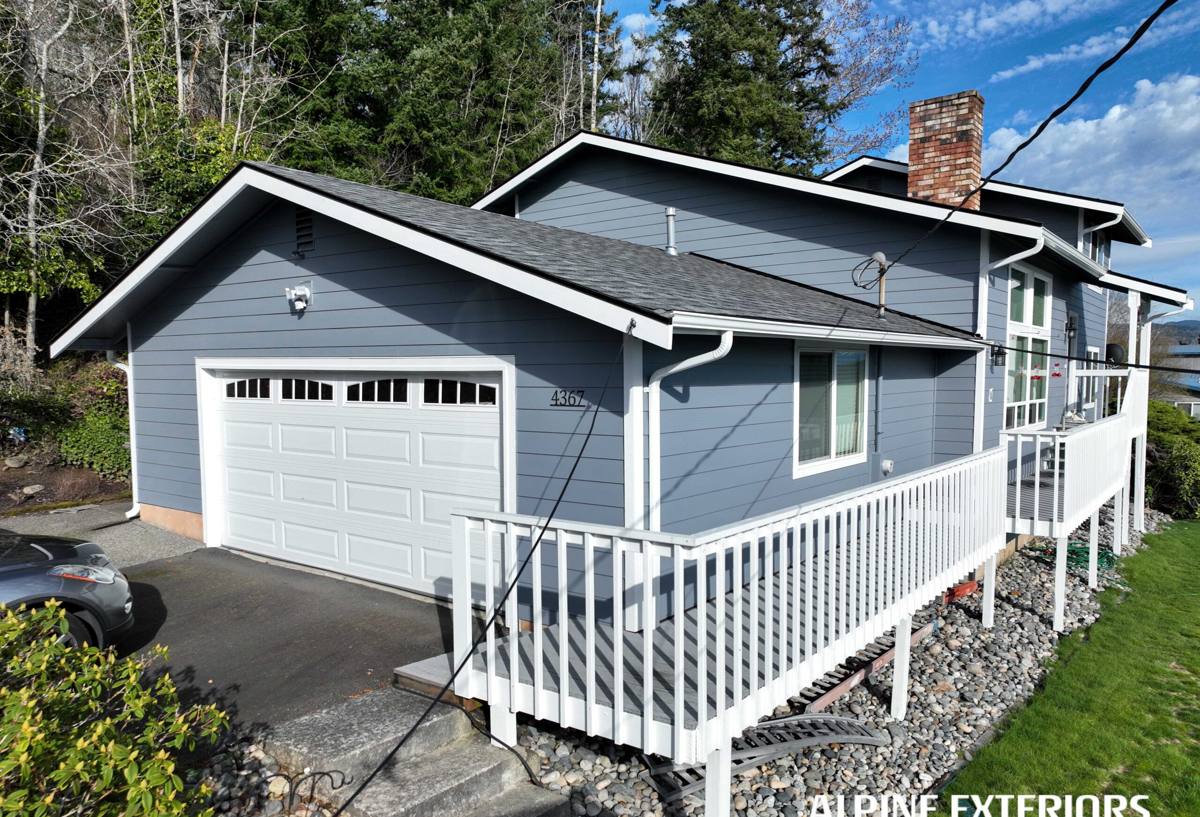
What a Correctly Installed Roof Needs in This Climate
Underlayment and Water Barriers
In a marine climate with driving rain, the underlayment is doing more work than people assume — it's the backup plan for the water that gets past the shingles during a sideways storm. We use synthetic underlayment across the full roof and install self-adhering ice-and-water membrane at the eaves, valleys, and any low-slope transitions, which are the spots where wind-driven rain most often finds a way in. This isn't an upgrade; on a Ferndale roof it's baseline.
Ventilation
A shingle roof needs balanced intake and exhaust ventilation to let moisture escape from the attic space. Without it, damp air condenses on the underside of the deck, which softens plywood, feeds mold, and shortens shingle life from underneath — a failure mode that has nothing to do with the shingles themselves and everything to do with what's happening below them. We check soffit intake, ridge or box venting, and attic airflow as part of every roofing job, not as an afterthought.
Flashing and Transitions
Chimneys, skylights, dormers, and wall-to-roof transitions are where most leaks actually start, not in the open field of shingles. Flashing has to be formed and stepped correctly, tied into the underlayment in the right order, and — in a salt-air environment — made of a metal that won't corrode prematurely. Reused or patched flashing is one of the most common shortcuts we see on older roofs, and it's usually the reason a roof leaks years before the shingles are actually worn out.
Moss, Algae, and Salt Air: The Three Slow Threats
Moss doesn't cause a leak on day one, but it holds moisture against the shingle surface, lifts tabs as it grows, and works its way toward the deck over a season or two if it's left alone. Ferndale's tree cover and shaded rooflines make north- and east-facing slopes especially prone to it. Algae shows up as dark streaking, usually where two roof planes meet or below vent stacks, and while it's mostly cosmetic, heavy growth does reduce a shingle's ability to shed water cleanly. Salt air is the quieter of the three — it doesn't show up as visibly, but it steadily degrades exposed metal fasteners and flashing faster than the same materials would wear inland. A roofing job built for this area accounts for all three from the start, rather than treating them as maintenance problems to deal with later.
Signs Your Ferndale Roof Needs Attention
Most roof failures don't happen suddenly — there are warning signs for months or years beforehand. Worth checking for, especially heading into the wetter months:
- Granules collecting in gutters or at downspout outlets, a sign shingles are wearing past their protective coating
- Moss visible on the roof surface, particularly on shaded or north-facing slopes
- Dark streaking across shingle faces, usually algae rather than dirt
- Curling, cracking, or cupped shingle edges, especially on older roofs
- Soft or spongy spots underfoot when walking a roof for inspection
- Water stains or discoloration on interior ceilings, especially near chimneys or skylights
- Daylight visible through the roof deck from inside the attic
- Flashing that looks rusted, lifted, or loosely sealed with visible caulk patches
Any one of these on its own isn't necessarily an emergency, but they're worth having a roofer look at before the next round of driving rain turns a small issue into a deck repair.
Choosing the Right Shingle for Coastal Whatcom County Conditions
Not every asphalt shingle handles this climate the same way. The biggest practical differences come down to wind rating, algae resistance, and how the shingle is built.
| Shingle Type | Typical Fit for Ferndale | Trade-Off to Know |
|---|---|---|
| 3-tab shingles | Lower upfront cost, adequate on simple, well-ventilated roofs | Lower wind rating and shorter service life in exposed, wind-driven-rain conditions |
| Architectural (dimensional) shingles | Better wind resistance and thicker construction; the common choice locally | Higher material cost than 3-tab |
| Algae-resistant shingles | Granules treated to resist the dark streaking common on shaded, damp roofs | Resistance fades gradually over the shingle's life rather than lasting forever |
| Impact-rated shingles | Worth considering on roofs exposed to falling branches from mature trees | Added upfront cost, though it can affect insurance in some cases |
For most Ferndale homes, an architectural shingle with algae-resistant granules is the practical middle ground — it holds up to wind-driven rain and shaded, damp conditions better than a basic 3-tab without moving into premium territory. We'll walk through the specific options and trade-offs for your roof's slope, sun exposure, and tree cover as part of the estimate, rather than defaulting to one product for every house.
Our Asphalt Shingle Roofing Process
The steps themselves aren't unusual — what matters is doing each one correctly for this climate rather than rushing past the parts that don't show up in a driveway photo.
- Roof and attic inspection. We check the deck, existing ventilation, flashing points, and any signs of moisture damage before quoting the job, so the estimate reflects what your roof actually needs rather than a generic package.
- Tear-off and deck check. Old roofing comes off down to the deck, which gets inspected for soft spots, rot, or damage that needs repair before new material goes down — covering a bad deck is how roofs fail early.
- Ice-and-water membrane and underlayment. Self-adhering membrane goes at eaves, valleys, and vulnerable transitions, followed by synthetic underlayment across the field.
- Flashing. New or properly reworked flashing at chimneys, skylights, walls, and valleys, tied in with the underlayment in the correct sequence.
- Shingle installation. Installed to manufacturer nailing and exposure specs, which is what keeps wind and warranty coverage intact — shortcuts here are invisible until the first real storm.
- Ventilation check. Intake and exhaust venting confirmed or corrected as part of the job, not left as a separate project.
- Cleanup and final walkthrough. Site cleared of debris and nails, and we walk the finished roof with you before calling it done.
What Affects the Cost of a Ferndale Roofing Project
Every roof is priced on its own specifics, but the same factors tend to move the number up or down on most jobs in this area:
| Factor | Why It Matters |
|---|---|
| Roof size and number of planes | More squares and more valleys or hips mean more material and labor time |
| Deck condition | Rotted or soft decking found at tear-off adds repair cost not visible from the ground |
| Pitch and access | Steep or hard-to-access roofs take longer and require more safety setup |
| Layers of existing roofing | Multiple old layers add tear-off labor and disposal cost |
| Shingle grade selected | 3-tab, standard architectural, and algae-resistant or impact-rated products carry different material costs |
| Ventilation and flashing work needed | Correcting inadequate venting or replacing old flashing adds scope but prevents early failure |
We give straightforward, itemized estimates so you can see what's driving the number rather than a single lump figure — and we'll flag anything we find at tear-off before proceeding, not after.
Why a Crew That Already Works Ferndale Matters
A roofer who works this specific area regularly knows things that don't show up in a generic training manual: which slopes in Ferndale tend to hold moss longest because of tree cover and sun angle, how Whatcom County's building department handles roofing permits and inspections, and what wind-driven rain actually does to a roof over a Bellingham-area winter rather than in theory. That experience shows up in small decisions — where to add extra ice-and-water membrane, which valleys need closer attention, how much ventilation a particular attic layout actually needs — that a crew passing through the area for a one-off job is less likely to catch. It also means we're still local when the job is done, which matters for warranty follow-up and honest answers if a question comes up later.
Keeping Your New Roof Performing for Its Full Lifespan
A correct installation is most of the equation, but a little regular attention keeps a Ferndale roof performing closer to its full expected lifespan instead of falling short of it:
- Clear overhanging branches that shade the roof and feed moss growth
- Keep gutters and downspouts clear so water isn't backing up under the eaves
- Have moss treated or removed gently before it spreads, rather than power-washing it off
- Schedule a roof check after major windstorms, not just when a leak shows up
- Have flashing and sealant points inspected every few years, since these fail before the shingles usually do
- Address small deck or attic moisture issues early, before they become a full re-roof
If you're noticing moss buildup, granule loss, or you're simply not sure how much life is left in your current roof, we're happy to take a look and give you a straight answer. Reach out for a free, no-pressure estimate using the form below — we'll assess your roof, explain what we find, and lay out your options without any pressure to decide on the spot.