 Bellingham Exterior
 Roofing for South Hill's Particular Climate
South Hill sits above the rest of Bellingham, which means more exposure to wind off Bellingham Bay, more direct rain during winter storms, and a longer stretch of shaded, damp roof surface during the fall and winter months than homes further inland enjoy. Add in the salt-laden air that drifts up from the water, and a roof here is working harder than the same roof would in a drier, landlocked part of Whatcom County. Asphalt shingles are still one of the most practical, cost-effective roofing materials for this kind of climate, but only when they're specified and installed with these local conditions in mind. A generic install done without attention to ventilation, underlayment, and moss resistance will show its age here faster than it should.
We've worked on enough South Hill roofs to know the pattern: it's rarely one catastrophic failure. It's slow moisture intrusion at a poorly flashed valley, moss holding water against a north-facing slope for months at a time, or granule loss from driving rain hitting shingles at the wrong angle year after year. Good roofing here is about managing water and moisture patiently, not just nailing down shingles and moving on.
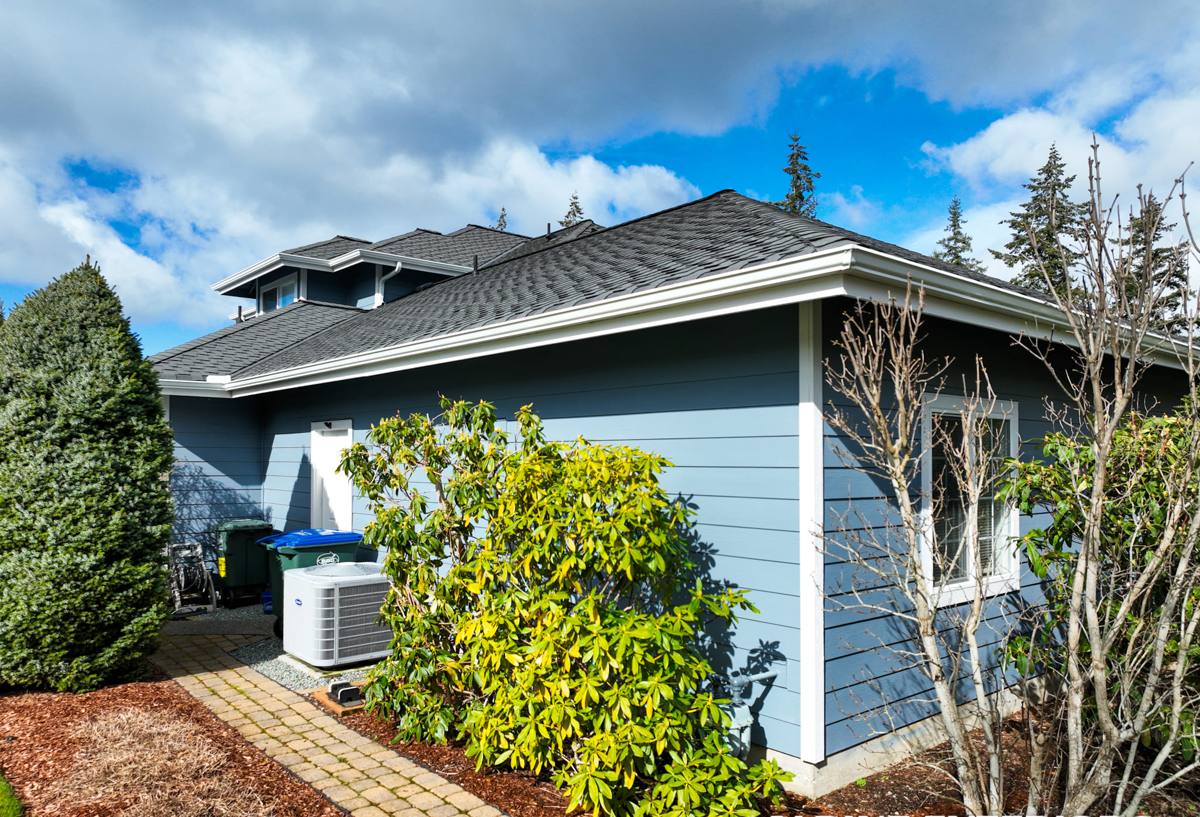
What Bellingham's Weather Actually Does to a Roof
Driving Rain
Storms coming off the water often bring rain sideways, not straight down. That pushes water up under shingle tabs and into any gap in flashing that a calmer climate might tolerate. Roofs here need tighter shingle nailing patterns, properly lapped underlayment, and flashing details that account for wind-driven moisture, not just gravity.
Salt Air
Salt air accelerates corrosion on exposed metal — flashing, nail heads, vents, and gutter hardware. Over years, cheap or exposed fasteners can rust and stain shingles, or worse, lose their grip. We favor corrosion-resistant fasteners and flashing on homes with more direct bay exposure.
Extended Moss Season
Whatcom County's wet season runs long, and shaded roof slopes on South Hill's tree-lined lots can stay damp for weeks at a stretch. That's exactly the environment moss and algae need to take hold. Left unchecked, moss lifts shingle edges, holds moisture against the roof deck, and shortens the life of an otherwise sound roof.
Signs a South Hill Roof Needs Attention
- Granules collecting in gutters or at downspout outlets — a sign shingles are losing their protective surface
- Dark streaking or green/black patches, especially on north-facing or heavily shaded slopes
- Curling, cupping, or lifted shingle edges, particularly along ridges and valleys
- Soft spots or sagging when walked on, which can indicate deck moisture damage underneath
- Rust staining near flashing, vents, or nail heads
- Daylight visible through the roof deck from inside the attic
- Interior water stains on ceilings after a heavy storm
Any one of these on its own isn't necessarily an emergency, but they're worth a professional look before the next wet season sets in.
What a Correct Installation Looks Like Here
A roof that's going to hold up on South Hill needs more than shingles rated for the region. It needs the whole system built to move water off the roof and keep moisture out of the deck below.
Underlayment and Ice/Water Protection
We use synthetic underlayment across the full roof and self-adhering ice-and-water membrane at vulnerable points — eaves, valleys, and roof penetrations — where wind-driven rain is most likely to find a way in.
Flashing Details
Valleys, chimneys, skylights, and wall intersections get new metal flashing, not a re-use of old material. This is where most leaks actually originate, and it's the detail that separates a roof that lasts from one that fails early.
Ventilation
Proper intake and exhaust ventilation keeps the attic temperature and moisture balanced, which matters year-round here — it prevents condensation build-up in winter and helps shingles last their full rated life by keeping deck temperatures more consistent.
Fastening
Shingles are nailed to manufacturer specification for wind exposure, with corrosion-resistant fasteners given the salt air. Under-nailing or using the wrong nail length is a common shortcut that causes blow-offs in the first big windstorm.
Choosing the Right Shingle for South Hill Conditions
Not every asphalt shingle product is a good fit for a shaded, damp, salt-exposed roof. We talk homeowners through the real trade-offs rather than just selling the top-tier option by default.
| Shingle Type | Best For | Trade-Offs |
|---|---|---|
| 3-tab asphalt | Budget-conscious re-roofs, simpler rooflines | Shorter lifespan, less wind resistance, fewer algae-resistant options |
| Architectural (laminate) | Most South Hill homes — better durability and appearance | Higher upfront cost than 3-tab, but longer service life offsets it |
| Algae-resistant (copper-granule) shingles | Shaded, north-facing, or tree-covered lots | Slight cost premium; the most effective option for the moss-heavy microclimates common on South Hill |
| High wind-rated shingles | Homes with more open exposure to bay winds | Requires specific nailing pattern to achieve rated performance — installation quality matters as much as the shingle itself |
For most South Hill homes with any tree cover or north-facing slopes, we recommend algae-resistant architectural shingles. The copper-infused granules actively discourage moss and algae growth, which directly addresses the biggest long-term maintenance issue in this climate rather than just treating the symptom after the fact.
Our Process, Start to Finish
- Inspection and honest assessment — we get on the roof, check the deck condition, flashing, ventilation, and document what we find with photos, including whether repair is a reasonable option versus full replacement.
- Written estimate — a clear scope of work and price, with product options explained, not just a single take-it-or-leave-it number.
- Tear-off and deck check — old roofing removed down to the deck, with any soft or damaged sheathing replaced before anything new goes down.
- Underlayment and flashing — synthetic underlayment, ice-and-water membrane at vulnerable areas, and new flashing at every penetration and valley.
- Shingle installation — installed to manufacturer spec for nailing pattern and exposure, with attention to ventilation intake and exhaust.
- Cleanup and final walk-through — magnetic sweep for stray nails, gutters cleared of debris, and a final review with the homeowner before we consider the job done.
Moss and Long-Term Maintenance
Even a well-installed roof needs some ongoing attention in this climate. We recommend a visual check each fall before the wet season sets in, and again in spring. Moss growth on a shaded slope isn't cause for panic, but it shouldn't be ignored for years either — gentle removal (not pressure washing, which can strip granules) and keeping gutters clear so water isn't backing up under the eaves go a long way toward protecting the investment. Homes with heavy overhead tree cover may also benefit from zinc or copper strips near the ridge, which release trace metals that discourage moss regrowth over time.
What Roofing Work Typically Costs
Every roof is different, and the only way to give an accurate number is to see the actual roof — its size, pitch, layers, deck condition, and complexity. In general terms, cost is driven by a few factors:
| Factor | Why It Affects Price |
|---|---|
| Roof size and pitch | More square footage and steeper slopes both increase labor time and material use |
| Number of layers to remove | Tear-off of multiple old layers takes longer and costs more in disposal |
| Deck condition | Rotted or soft sheathing found during tear-off requires replacement before new roofing goes on |
| Shingle tier chosen | 3-tab, standard architectural, and algae-resistant premium lines carry different material costs |
| Roof complexity | Valleys, dormers, skylights, and chimneys all add flashing work and labor time |
We're upfront that a repair is sometimes the right call and a full replacement isn't always necessary — we'll tell you which situation you're in rather than defaulting to the bigger job.
Why Hire a Crew That Already Works South Hill
A roofer who works across Whatcom County sees a lot of roofs, but a crew that regularly works South Hill's specific mix of tree cover, elevation, and bay exposure knows which slopes on a given street tend to hold moss, where wind-driven rain causes the most trouble, and which flashing details actually hold up here versus on paper. That local pattern recognition shows up in fewer callbacks and roofs that perform the way they're supposed to through their first few Bellingham winters, not just on a sunny install day.
If you're seeing early signs of wear, planning ahead of a sale, or just want an honest read on how much life is left in your current roof, we're happy to take a look. Fill out the form below for a free, no-pressure estimate — we'll walk the roof, explain what we find in plain terms, and give you real options.