 Bellingham Exterior
 Windows Built for Columbia's Coastal Exposure
The Columbia neighborhood sits close enough to Bellingham Bay that homes here take a different kind of weather beating than houses further inland in Whatcom County. Salt-laden air moves in off the water, wind-driven rain hits window assemblies at an angle instead of straight down, and the long gray stretch from October through April keeps wood, vinyl, and trim damp for weeks at a time. Custom windows for this area aren't just about picking a style you like from a catalog. They're about choosing frame materials, glazing, and installation details that hold up to salt corrosion, resist wind-driven water intrusion, and shed moisture instead of trapping it against your siding.
We've replaced and installed windows on homes throughout this part of Bellingham for years, and the failures we get called out to fix follow a pattern: hardware that corroded from salt exposure, frames that were never properly flashed and let water track into the wall cavity, and glazing that fogged prematurely because the seal wasn't rated for this climate. A correct custom window job here starts with understanding that pattern and building against it from the first measurement.
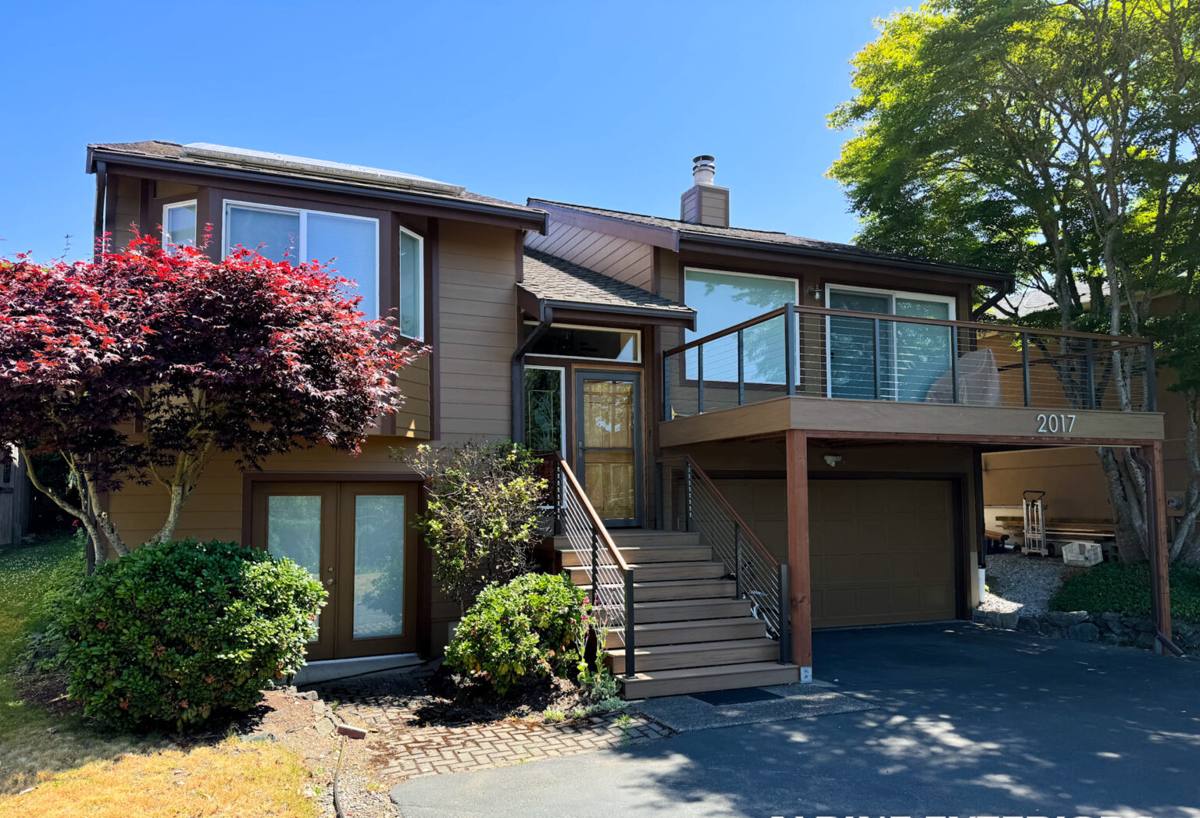
What Salt Air and Moss Season Actually Do to Windows
It helps to be specific about the mechanisms at work, because they drive real product and installation decisions.
Salt Air and Metal Hardware
Salt in the air accelerates corrosion on exposed metal — hinges, cranks, locks, and screws. Cheaper hardware finishes pit and seize up faster near the water than they would a few miles inland. This is a bigger factor in window selection here than in most of Whatcom County, and it's one of the first things we check when a homeowner asks why a set of windows from a big-box supplier is already sticking after a few years.
Driving Rain and Water Intrusion
Wind off the bay pushes rain sideways into window assemblies rather than letting it run straight down the glass. That means flashing details, sill pans, and the seal between the window frame and the rough opening matter more here than they would in a calmer inland location. A window that's watertight on a still day can still leak during a February storm if the flashing wasn't done right.
Moss, Algae, and Sustained Dampness
Bellingham's long wet season keeps north- and shade-facing exterior surfaces damp for extended stretches, which is exactly the condition moss and algae need to take hold. On windows, that shows up as green growth in frame corners, sills, and any horizontal trim ledge that holds water. It's mostly a maintenance and material issue rather than a structural one, but it affects which frame finishes and trim details we recommend, and it's a good early warning sign that water is sitting somewhere it shouldn't.
What a Correct Custom Window Job Involves
"Custom" doesn't mean exotic — it means the window is sized, built, and installed to fit your home's actual openings and exposure, rather than forced into a stock size with shims and extra caulk. For Columbia homes, that process has a few non-negotiable steps.
- Accurate measurement of the existing rough opening, including checking for square and level — older homes in this area have often settled slightly, and stock windows don't account for that
- Inspection of the existing sill and framing for hidden water damage or rot before anything new goes in
- Installation of a proper sill pan and flashing sequence so any water that does reach the frame drains back out, not into the wall
- Selection of frame material and hardware finish rated for coastal/salt-air exposure, not just standard residential grade
- Correct glazing package for the home's orientation — more solar gain protection on south and west exposures, better thermal performance on north-facing rooms that stay cold
- Sealing and insulating the gap between the frame and rough opening with the right materials, not just spray foam alone
- Final weatherproofing at the exterior trim and siding tie-in so water sheds away from the opening
Skipping any one of these steps is how a window that looks fine on installation day ends up with a soft, rotting sill three winters later.
Frame Material: What Actually Holds Up Here
There's no single "best" frame material for every home — it depends on your home's age, style, and how exposed it is to wind and salt. But some general trade-offs are worth laying out honestly.
| Frame Material | Salt Air Performance | Maintenance | Best Fit |
|---|---|---|---|
| Vinyl | Good — won't corrode, but check hardware quality | Low — occasional cleaning | Budget-conscious replacements, rental properties |
| Fiberglass | Very good — stable in temperature swings, resists warping | Low | Homes wanting long-term durability without wood upkeep |
| Wood (clad exterior) | Depends heavily on cladding and detailing quality | Moderate to high on any exposed wood | Historic or period-style homes where wood interior trim matters |
| Aluminum | Poor unless marine-grade and properly finished | Higher — prone to corrosion near the bay | Rarely our first recommendation this close to the water |
We don't push one material on every homeowner. What we will do is tell you plainly if a material you're considering is a poor match for how exposed your particular home is — for instance, an unclad wood window on a west-facing wall that catches the worst of the winter storms is going to need more upkeep than most people want to sign up for, and we'll say so before you buy rather than after.
Our Process for Columbia Window Projects
The steps below are the same ones we follow on every custom window job in this area, refined by having done this work up and down this stretch of Bellingham long enough to know where problems hide.
1. On-Site Assessment
We walk the home, look at each opening being replaced, and check for existing water damage, rot, or settling around the frames. This is also when we talk through your priorities — energy performance, noise reduction, appearance, or simply stopping a known leak.
2. Measurement and Product Selection
Each opening gets measured individually. We help you weigh frame material, glazing package, and hardware finish against your home's specific exposure and your budget, without steering you toward whatever happens to be easiest for us to install.
3. Removal and Opening Inspection
Old windows come out carefully so we can inspect the framing underneath. If there's rot or water damage from a prior installation, we address it before anything new goes in — installing a new window over a compromised sill just hides the problem for a few more years.
4. Flashing, Sill Pan, and Installation
This is the step that determines whether the window stays dry for the next twenty years. Proper sill pan flashing and a correct water management sequence around the frame matter more here than in drier parts of the county, given how much wind-driven rain this area sees.
5. Sealing, Insulation, and Exterior Finish
We seal and insulate the gap between frame and opening, then finish the exterior trim so it ties cleanly into your siding and sheds water rather than holding it.
6. Final Walkthrough
We walk the finished work with you, operate every window and lock, and make sure everything performs the way it should before we consider the job done.
Signs Your Current Windows Are Already Failing
Homeowners in Columbia often call us not because they're planning ahead, but because something's already gone wrong. Catching these signs early keeps a window problem from becoming a wall or framing problem.
- Fogging or moisture between panes — a sign the seal has failed and the insulating gas has escaped
- Soft or discolored trim and sill wood, especially on west- and north-facing walls
- Visible moss or algae growth in frame corners or on sills
- Drafts you can feel even with the window fully latched
- Hardware that's stiff, corroded, or won't lock smoothly anymore
- Peeling paint or bubbling finish on interior sills, which often means moisture is getting in from outside
- Visible daylight or gaps around the frame where it meets the siding
Energy Performance and Comfort
Beyond keeping water out, the right custom windows make a real difference in comfort and heating costs through Bellingham's long, damp winters. Rooms with older, single-pane or failed-seal windows tend to run noticeably colder and draftier, and homes near the water often deal with more wind pressure against glass than homes set further back from the bay. Choosing the right glazing package — and making sure the frame is properly sealed and insulated at installation — addresses both the comfort issue and the ongoing energy cost, not just the leak you called about.
Why Hire a Crew That Already Works in This Neighborhood
Window installation looks similar everywhere on the surface, but the details that keep a window performing for decades change with the site. A crew that's replaced windows throughout Columbia and the surrounding Bellingham waterfront knows which corners of a home take the worst of the wind, which frame finishes hold up against the salt air without needing constant upkeep, and which flashing details actually stop water in a driving Whatcom County rainstorm rather than just looking correct on installation day. That local pattern recognition is the difference between a window job that's still tight in ten years and one that's leaking again in three.
If you're weighing a window replacement or new custom windows for a home in Columbia, we're happy to come take a look, walk your specific openings, and talk through honest options for your home and budget. There's no pressure and no cost for the estimate — just a straightforward look at what your home actually needs.