 Bellingham Exterior
 Windows Built for Columbia's Waterfront Climate
The Columbia neighborhood sits close to Bellingham Bay, which means homes here take a different kind of weather beating than houses further inland in Whatcom County. Salt-laden air off the water accelerates corrosion on hardware and frames. Driving rain off the bay pushes moisture sideways into gaps that would stay dry on a calmer site. And the long Pacific Northwest moss season coats north-facing trim and sills with organic growth that holds water against wood and vinyl for months at a stretch. A window that's a fine choice in a dry inland climate can fail early here if it wasn't specified and installed with this environment in mind.
We work in Columbia regularly, and the pattern we see on older homes is consistent: it's rarely the glass that fails first. It's the flashing, the sealant, the sill pan, or a frame material that couldn't handle years of salt and moisture. Good window installation in this neighborhood is as much about water management as it is about the window unit itself.
What Columbia's Housing Stock Means for This Job
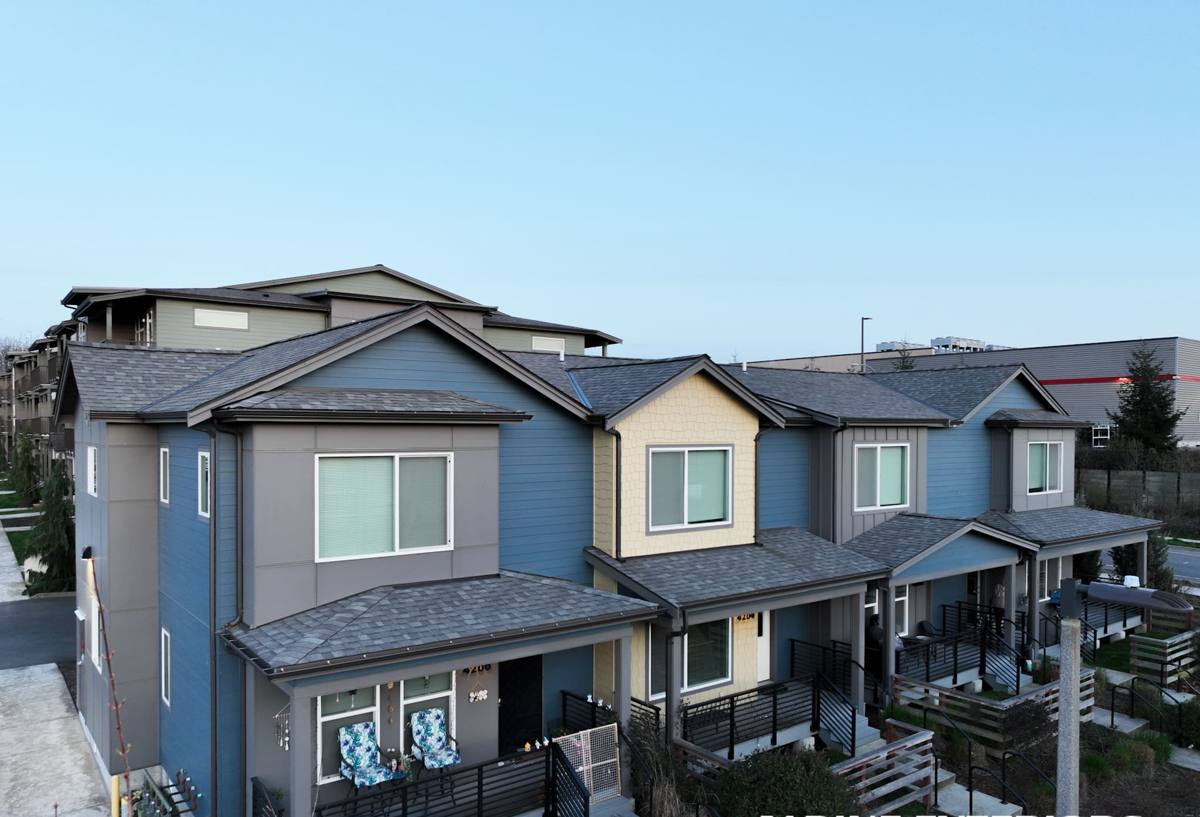
Columbia has a mix of older bungalows, mid-century homes, and updated properties, many with original or aging window openings. That mix matters because the right approach to installation depends heavily on what's already in the wall:
- Original wood-frame openings often have rot at the sill or jack studs that has to be addressed before a new window goes in, not papered over.
- Older aluminum windows from past updates are frequently single-pane and poorly flashed, and the openings around them may have been improperly sealed for decades.
- Previously replaced vinyl windows installed without proper flashing tape or sill pans are a common source of hidden water damage we find once we open up the wall.
- Additions and remodeled sections sometimes have non-standard rough openings that need shimming or trim work to accept a modern window correctly.
None of this means every job in Columbia is a major project. Plenty of openings are in solid shape and go quickly. But we don't assume that going in — every opening gets inspected before we quote or install, not just measured.
Why Salt Air Changes the Material Conversation
Within a mile or two of the bay, unprotected steel hardware, poorly coated aluminum, and lower-grade fasteners corrode faster than manufacturers' general specs assume. We factor that into what we recommend for Columbia homes — favoring corrosion-resistant hardware and fasteners, and being straightforward with homeowners about which lower-cost options will cost more in maintenance over time near saltwater.
What a Correct Window Installation Actually Involves
A window installation is really a sequence of smaller jobs stacked on top of each other. Skipping or rushing any one of them is where leaks and premature failures come from. Here's the order we follow:
- Remove the old window carefully to avoid damaging the rough opening framing.
- Inspect the opening for rot, soft wood, or existing water staining — and stop to repair it before moving forward if we find any.
- Install or repair the sill pan so any water that gets past the window drains back outside instead of pooling inside the wall.
- Apply flashing tape in the correct shingle-lap order (sill, then sides, then head) so water always sheds downward and outward.
- Set the window level, plumb, and square — even a slightly out-of-square window stresses the frame and can cause it to bind or leak over time.
- Shim and fasten according to the manufacturer's structural requirements, not guesswork.
- Insulate the gap between the frame and the rough opening with a material that stays flexible, not one that hardens and cracks.
- Seal and trim the interior and exterior with a sealant rated for this climate's moisture and temperature swings.
Every one of those steps matters more in a bay-adjacent neighborhood like Columbia than it would somewhere drier, because wind-driven rain finds any weak point in the sequence far faster.
Moss Season and Long-Term Window Health
Whatcom County's wet season runs long, and moss doesn't need much encouragement to take hold on north- and west-facing trim, sills, and anywhere debris collects. Left alone, moss holds moisture against the surface underneath it for weeks at a time, which is exactly the condition that breaks down caulk lines, degrades exterior trim, and — on wood-clad windows — invites rot. This isn't unique to Columbia, but the neighborhood's tree cover and proximity to the water make it a real factor in how a window installation should be detailed:
- Sills should be sloped correctly so water and debris don't sit on them.
- Trim materials and finishes should be chosen with the moss-and-moisture cycle in mind, not just appearance.
- Sealant lines should be inspected periodically — moss and algae growth on caulk is often the first visible sign it's due for attention.
Choosing the Right Window Material for This Neighborhood
There's no single "best" window material for every home — it depends on the house, the budget, and how much maintenance the homeowner wants to take on. Here's how the common options generally compare for a bay-adjacent Bellingham neighborhood like Columbia:
| Material | Salt Air / Moisture Behavior | Maintenance | Typical Fit |
|---|---|---|---|
| Vinyl | Handles salt air well; won't corrode or rot | Low | Most Columbia homes on a value-driven budget |
| Fiberglass | Very stable in temperature swings and moisture; strong long-term option | Low | Homes prioritizing longevity and lower expansion/contraction |
| Wood (clad exterior) | Needs a durable, well-sealed exterior cladding to keep moisture off the wood core | Moderate to high | Homes prioritizing a traditional interior wood look |
| Aluminum | Prone to corrosion near saltwater unless properly coated; also a poor thermal performer | Moderate | Rarely our recommendation for this neighborhood |
We're honest with Columbia homeowners about these trade-offs. Wood-clad windows can be beautiful, but they demand more upkeep near the bay — that's a maintenance-burden conversation, not a knock on the product. We'll always tell you what a given material means for your specific home rather than pushing one option across the board.
Our Process for Columbia Jobs
Because we already work in this neighborhood, we're not learning the local conditions on your dime. Here's what working with us typically looks like:
- Free on-site assessment — we look at your actual openings, not just a photo or a phone description, and check for hidden moisture or rot issues.
- Straightforward quote — broken down by opening, with material options explained in plain terms.
- Scheduling around weather — we plan installs to minimize the time an opening sits without a window in it, which matters a lot given how often Bellingham sees rain.
- Full flashing and sill-pan detailing on every install, not just the ones where it's convenient.
- Walkthrough at completion so you know what was done and what, if anything, to keep an eye on.
Signs Your Columbia Home May Need New Windows
Not every window problem is obvious from inside the house. Some of the most common signs we're called out for in this neighborhood include:
- Visible fogging or condensation between panes, meaning the seal has failed
- Drafts you can feel even with the window fully latched
- Wood trim that's soft, discolored, or has visible mold near the window
- Difficulty opening, closing, or latching the window smoothly
- Paint or finish that's peeling specifically around the window frame, not elsewhere on the wall
- Visible corrosion on hardware, hinges, or latches
Any one of these is worth having looked at. On their own they might be minor; together, or left unaddressed through another wet season, they tend to compound into bigger repairs.
Cost Factors Homeowners Should Understand
We won't quote a price without seeing the openings, but here's what generally moves the number up or down on a Columbia project:
| Factor | Why It Matters |
|---|---|
| Number and size of openings | More and larger windows mean more material and labor |
| Condition of the existing opening | Rot or framing repair adds time before the new window can go in |
| Material chosen | Vinyl, fiberglass, and wood-clad options carry different material costs |
| Access and site conditions | Upper-story or hard-to-reach windows take more setup time |
| Trim and finish work | Matching existing interior or exterior trim adds finish carpentry time |
We'd rather walk you through these factors honestly than quote a number that doesn't hold up once we're actually into the opening.
Why a Locally Experienced Crew Matters Here
Window installation isn't identical everywhere, even within the same county. A crew that mostly works drier, more inland parts of Whatcom County can still do competent general work, but they may not default to the sill-pan detailing, flashing sequence, and hardware choices that a bay-adjacent, moss-prone neighborhood like Columbia actually needs. We build those steps in as standard practice because we see what happens when they're skipped — not as an upsell, but because it's the difference between a window that lasts and one that needs attention again in a few years.
If you're weighing whether your Columbia home needs new windows, a repair, or just a closer look, we're happy to come take an honest look and walk you through what we find — no pressure, no hard sell, just a straight answer about what your windows actually need. Reach out for a free estimate using the form below.