 Bellingham Exterior
 Decking Built for South Hill's Wet Side of the Weather
South Hill sits up above downtown Bellingham with some of the best views in Whatcom County, but that elevation and proximity to Bellingham Bay come with a trade-off: wind-driven rain, salt-laden air off the water, and long stretches of shade under mature evergreens that never really dry out between October and May. A deck built here does a different job than one built inland or in a drier part of the state. It has to shed water fast, resist the slow creep of moss and algae, and hold up under fasteners and framing that stay damp for months at a time.
Composite decking is a strong fit for these conditions when it's installed correctly. The board itself won't rot, splinter, or need annual staining. But composite decking fails or disappoints homeowners almost every time because of what's underneath or around it — bad drainage, wrong fastener choice, or a substructure that traps moisture instead of shedding it. That's the part of the job that actually determines whether a deck looks good in year one and still looks good in year ten.
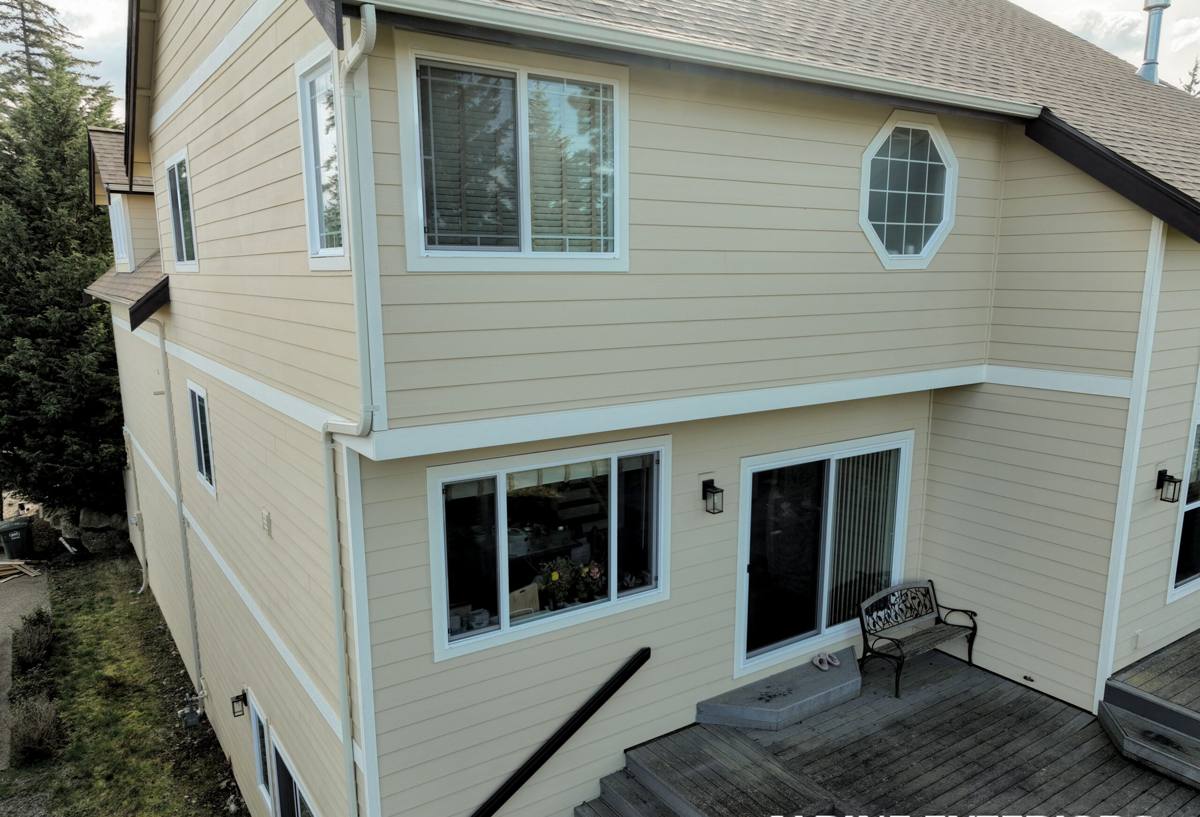
What Bellingham's Climate Actually Does to a Deck
Driving Rain and Standing Water
Whatcom County doesn't get the heaviest rainfall totals in the state, but it gets a lot of low-intensity, wind-driven rain that finds its way sideways under railings, into ledger connections, and along the edges of boards where end grain or cut edges are exposed. On a slope like South Hill, water that isn't given a clear path off the deck surface and away from the house will find the lowest point — often right at the band board or a support post.
Salt Air and Metal Fasteners
Being close enough to the bay to get salt in the air matters more for fasteners, flashing, and hardware than it does for the composite boards themselves. Standard hardware corrodes faster here than it would twenty miles inland. Anything holding the deck together — screws, joist hangers, post bases — needs to be rated for coastal exposure, not just treated-lumber compatibility.
Moss, Algae, and Shade
South Hill's tree cover is part of its character, but shaded, damp decking is exactly where moss and algae take hold fastest. Composite boards resist rot, but a slick, dark film of organic growth on the walking surface is a slip hazard and a homeowner's most common complaint about decks in this neighborhood, regardless of material. Board texture, gap spacing, and airflow underneath the deck all affect how fast that growth shows up.
What a Correctly Built Composite Deck Requires
Framing and Substructure
Composite decking is only as good as the frame under it. In our climate that means pressure-treated joists rated for ground contact where relevant, joist tape or a capillary break on top of every joist to stop water from wicking into the wood through fastener holes, and a ledger connection that's properly flashed against the house — not just bolted and caulked. We also pay attention to joist spacing; composite boards often require tighter spacing than wood (commonly 12" on center, sometimes tighter at angles or stair treads), and manufacturers will void warranties if that spec isn't followed.
Drainage and Airflow
A deck built tight to a hillside or a foundation wall on South Hill needs a real plan for where water goes once it passes between the boards. That means grading the ground underneath away from the house, keeping skirting vented rather than sealed, and, on lower decks, sometimes running an underdeck drainage system if the space below is finished or used for storage. Blocking airflow under a deck to make it look tidier is one of the most common ways we see moss and mildew problems get worse instead of better.
Fasteners and Hardware
We use hidden fastener systems or coated composite screws rated for coastal, high-moisture environments — not general-purpose deck screws. Every piece of structural hardware, from joist hangers to post anchors, gets a coastal-rated coating. It costs a little more up front and it's the difference between hardware that's still solid at year fifteen and hardware that's rusting through at year five.
Comparing Decking Materials for This Neighborhood
| Material | Moisture Behavior Here | Moss/Algae Resistance | Long-Term Upkeep |
|---|---|---|---|
| Capped composite | Won't absorb water or rot; core is protected by a polymer shell | Textured, capped surfaces resist staining and clean easily | Periodic washing; no staining or sealing |
| Uncapped composite | Can absorb moisture at cut edges over time | More prone to surface mildew in shaded spots | Occasional cleaning; edge sealing at cuts recommended |
| Pressure-treated wood | Absorbs and releases moisture constantly; prone to cupping and splitting | Grows moss readily in shade without regular treatment | Annual cleaning, staining, or sealing |
| Cedar | Naturally moisture-resistant but still an organic material | Needs regular treatment to resist moss in shaded areas | Regular sealing to maintain appearance and lifespan |
We install capped composite on the large majority of South Hill projects for exactly this reason — it's the product that best matches a climate where the deck spends half the year damp and often shaded. That's a judgment based on how these materials perform in this specific setting, not a knock on wood decks done well elsewhere.
Our Process for a South Hill Composite Deck
Site Visit and Design
We start on site, not over the phone. On a hillside lot, grade, drainage path, sun exposure, and how the deck ties into the house all shape the framing plan before we ever talk board colors. We'll walk the space with you, look at where water currently runs off the property, and talk through layout options that work with your lot instead of against it.
Permitting
Most deck work in Bellingham and unincorporated Whatcom County requires a permit, and the specifics depend on deck height, size, and proximity to property lines — details that matter more on South Hill's sloped lots than on flat ground. We handle the permit application and inspections as part of the job so you're not tracking that down yourself.
Demolition and Framing
If we're replacing an existing deck, we remove it fully rather than building over old framing — that's the only way to actually inspect the ledger connection and the condition of the framing it's tied to. New framing goes in with joist tape, flashing, and coastal-rated hardware from the start.
Decking Installation and Walkthrough
Boards go down with the fastening system specified for that product, gapped correctly for drainage and seasonal expansion, and finished with edge trim and any railing or stair work the design calls for. We walk the finished deck with you, cover basic care, and answer questions before we consider the job done.
Living With a Composite Deck in This Climate
One of the real advantages of composite decking is how little ongoing work it needs compared to wood — but "low maintenance" doesn't mean "no maintenance," especially with South Hill's shade and moisture. A simple seasonal routine keeps a composite deck looking like new for years:
- Sweep off leaves, needles, and moss debris regularly, especially in fall and under tree cover
- Rinse the deck surface and gaps between boards a few times a year to clear out trapped organic material
- Use a soft-bristle brush and a composite-safe cleaner for any moss or algae film rather than a pressure washer on high setting
- Keep gutters and downspouts near the deck clear so runoff isn't dumping directly onto the decking or framing below
- Check that skirting and under-deck vents stay open and aren't blocked by stored items or landscaping
- Have railings, stairs, and fastener points inspected every year or two, since hardware is what typically needs attention before the boards do
Why Local Experience on South Hill Matters
A lot of deck problems we get called out to fix weren't caused by bad composite board — they were caused by a crew that framed the deck the same way they would in a drier climate, or on flat ground, without accounting for slope drainage or salt exposure. Building decks around Bellingham and the rest of Whatcom County means designing for driving rain, planning airflow under shaded decks, and specifying hardware that won't corrode near the bay, as a default, not an upsell.
We're not guessing at what South Hill's weather does to a deck over ten or fifteen years — we've built and repaired enough of them here to know where the recurring problems show up and how to design them out from the start.
Get a Straight Answer on Your Deck
If you're weighing a new composite deck or replacing an aging one on South Hill, we're happy to come take a look, walk the site with you, and give you an honest read on what the job actually involves. Reach out for a free, no-pressure estimate using the form below.