 Bellingham Exterior
 Composite Decking Built for Cordata's Climate, Not Just Its Curb Appeal
Cordata sits in one of the wetter pockets of an already wet county. Between the marine air moving in off Bellingham Bay, the long stretch of gray months, and the shade thrown by mature Douglas fir and cedar on so many north Bellingham lots, a deck here works harder than a deck almost anywhere else in Washington. Homeowners who call us about composite decking in Cordata usually aren't chasing a trend — they're replacing a wood deck that finally gave out, or they've had enough of scrubbing moss off boards every spring. Composite decking, installed correctly, solves both problems. Installed poorly, it just delays them.
This page is about what "installed correctly" actually means for a deck in this specific neighborhood, and why that matters more here than in a drier climate.
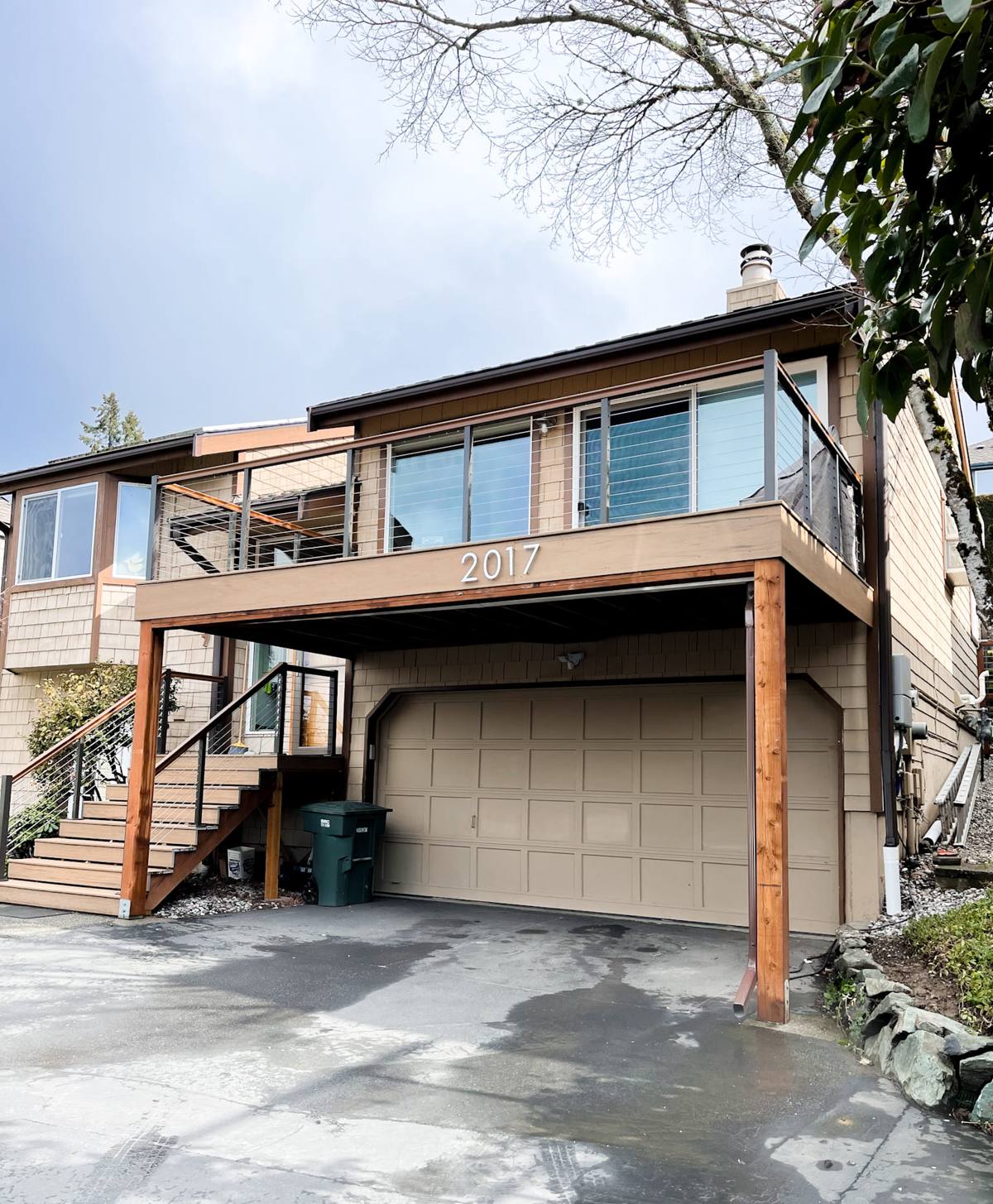
What Whatcom County's Climate Does to a Deck Over Time
Whatcom County gets a lot of rain, but it's the pattern of that rain — long duration, low intensity, spread across many months — that's hard on outdoor structures. A deck here rarely gets a chance to fully dry out between storms, especially from late fall through early spring. Add in the salt-laden air that moves inland off the bay and the moss spores that are simply part of the local ecosystem, and you get three compounding problems:
- Moisture that lingers. Boards, fasteners, and framing stay damp longer than in drier regions, which accelerates rot in untreated wood and corrosion in the wrong hardware.
- Moss and algae growth. Shaded, north-facing, or tree-covered decks in Cordata can develop a moss film within a single wet season if the surface holds moisture and doesn't get airflow.
- Salt air exposure. Even a few miles inland, metal fasteners, brackets, and railing hardware that aren't rated for coastal exposure will corrode faster than the manufacturer's spec sheet assumes.
None of this means composite decking is a silver bullet. It means the build has to account for all three from the ground up — not just the boards you can see, but the substructure underneath them.
Why This Hits Cordata Specifically
Cordata's mix of newer residential development and mature tree canopy creates a lot of partially shaded yards — decks that get filtered light most of the day rather than full sun. That's pleasant to sit on in July, but it's exactly the condition that keeps a deck surface damp longest and gives moss the head start it needs. A deck design that ignores drainage and airflow in a shaded Cordata backyard will grow moss faster than the same deck built in full sun a mile away.
Composite vs. Wood: What Actually Holds Up in This Climate
We install both, and we're honest with every homeowner about the trade-offs. Composite isn't "better" in the abstract — it's better suited to the specific stresses of a wet, shaded, moss-prone climate like Cordata's, provided it's built right.
| Factor | Pressure-Treated Wood | Composite Decking |
|---|---|---|
| Moss/algae resistance | Low — porous surface holds moisture, needs annual cleaning and sealing | Higher on capped boards — moisture doesn't soak into the board itself |
| Maintenance routine | Sanding, staining, or sealing every 1-2 years | Periodic washing; no staining or sealing required |
| Upfront cost | Lower material cost | Higher material cost |
| Long-term cost | Ongoing labor and materials for upkeep add up over 10-15 years | Lower ongoing cost, but higher failure cost if substructure was built wrong |
| Sensitivity to installation quality | Forgiving of minor drainage mistakes | Unforgiving — trapped moisture under composite causes hidden framing rot |
| Appearance consistency over time | Grays and weathers unevenly, especially in shade | Holds color more consistently, though uncapped boards can still fade or mildew |
That last row is the one we spend the most time on with clients. Composite boards themselves resist moisture, but they don't fix bad framing decisions. If the substructure underneath a composite deck can't shed water, you've just hidden a wood-rot problem under a surface that looks fine for years before it fails.
What a Correctly Built Composite Deck Involves in a Climate Like This
Manufacturer installation guides are written for a generic climate. In Cordata's conditions, a few details stop being optional:
Substructure and Framing
We use joists and beams sized and spaced for the specific composite board being installed — span tables vary by manufacturer and thicker or thinner boards need different joist spacing. We flash the ledger board where the deck meets the house, since ledger rot from trapped water against siding is one of the most common failures we find on older decks in this area.
Joist Protection
Every joist top gets covered with a waterproof joist tape before boards go down. This is the single biggest difference between a deck that lasts and one that develops hidden rot under a composite surface that still looks new. Skipping this step is one of the most common shortcuts we see on decks other crews built.
Drainage and Airflow Underneath
We keep the deck's underside ventilated and graded so water moves off the site rather than pooling under the frame — critical on the flatter lots common in Cordata's newer developments, where yard grading doesn't always give water anywhere obvious to go.
Fasteners and Hardware
Given the salt air moving inland off the bay, we use stainless steel or coated fasteners rated for coastal-adjacent exposure, along with hidden fastener clip systems where the board profile supports them. Cheaper galvanized hardware corrodes faster here than in a drier inland climate, and a rusted fastener under a composite board is a much bigger repair than a rusted screw in a wood deck you can simply re-drive.
Board Spacing
Composite boards expand and contract with temperature more than wood does. We set gap spacing to the manufacturer's spec for our seasonal temperature swing, not a generic rule of thumb, so boards don't buckle in a rare hot stretch or gap awkwardly in winter.
Choosing the Right Composite Board for a Shaded, Wet Yard
Not all composite decking is built the same, and the right choice depends heavily on how much shade and moisture a given Cordata yard actually gets.
| Board Type | Best For | Trade-off |
|---|---|---|
| Capped composite (full wrap) | Shaded, moss-prone, high-moisture yards | Higher cost, but strongest resistance to moisture absorption and staining |
| Capped composite (three-sided) | Moderate exposure, budget-conscious projects | Bottom edge is more exposed to moisture wicking if drainage isn't ideal |
| Uncapped composite | Full-sun, well-drained sites only | More prone to moisture absorption, fading, and mildew — we rarely recommend this for shaded Cordata lots |
We also talk with homeowners about color. Darker boards show less pollen and organic debris but can run noticeably hotter in the rare sunny stretch; lighter boards show dirt and mildew streaking sooner in a shaded, damp yard. Neither is wrong — it's a genuine trade-off worth thinking through before ordering material.
Our Process, Start to Finish
- On-site assessment. We look at sun exposure, tree cover, existing drainage, and the condition of any current deck or ledger connection before quoting anything.
- Design and board selection. We walk through board type, color, and railing options based on how much shade and moisture the specific yard sees.
- Permitting. Deck projects above certain heights or sizes require permitting through the City of Bellingham or Whatcom County depending on the property's location — we handle this so nothing gets built that has to be torn back apart later.
- Demolition (if replacing an existing deck). We check the ledger and any framing we plan to reuse for hidden rot before building on top of it.
- Framing and joist protection. Ledger flashing, joist tape, and properly spaced, coastal-rated fasteners go in before a single composite board is installed.
- Board installation. Hidden fastener systems where possible, correct expansion gaps, and attention to drainage slope across the surface.
- Railing, stairs, and finish details. Matched to the board system and built to current code for guard height and baluster spacing.
- Final walkthrough. We go over the maintenance routine specific to the board we installed before we consider the job done.
Maintenance: What Cordata Homeowners Actually Need to Do
Composite decking cuts maintenance dramatically compared to wood, but "low maintenance" doesn't mean "no maintenance," especially in a climate that grows moss on almost anything left damp and shaded.
- Rinse or lightly power-wash the surface a couple of times a year, more often on heavily shaded sections, to keep organic buildup from taking hold.
- Sweep leaves and fir needles off the deck through fall rather than letting them sit and trap moisture against the boards.
- Trim back overhanging branches where possible to let more light and airflow reach the surface — the single biggest factor in how fast moss returns.
- Check railing hardware and fastener heads once a year for early corrosion, especially on decks closer to the bay.
- Clear debris from under the deck periodically so the ventilation the framing was built for actually works as intended.
- Address any standing water on or under the deck promptly — it's usually a sign a drainage detail needs a look, not something to ignore.
Why Hiring a Crew That Already Works in Cordata Matters
A composite deck built to a generic national spec will survive a dry climate just fine and still fail early in Whatcom County if the crew didn't account for how much moisture this area actually sees. We work throughout Bellingham and Cordata regularly enough to know which yards need extra attention to shade and drainage, which fastener specs actually hold up against the salt air off the bay, and which board systems handle a long moss season without turning into a maintenance headache two years in. That's not something a crew passing through on a one-off job usually gets right on the first try — and a composite deck is expensive enough that you don't want it to be a learning project.
We're also familiar with local permitting requirements for the City of Bellingham and unincorporated Whatcom County, which keeps a project from stalling out over paperwork nobody caught early.
Let's Talk About Your Deck
If you're weighing composite decking for a home in Cordata — whether you're replacing a tired wood deck or building new — we're happy to take a look and walk through what your specific yard needs. Use the form below to request a free, no-pressure estimate, and we'll give you a straight answer about what a correctly built deck looks like for your property.