 Bellingham Exterior
 Ferndale Decks Face a Different Kind of Weather Than Most Builders Plan For
Ferndale sits close enough to the water that salt-laden air is a real factor in how a deck ages, not just a talking point. Add Whatcom County's long wet season, the driving rain that comes sideways off winter storms, and the shade many Ferndale lots get from mature trees and fences, and you have conditions that push decks toward rot, corrosion, and moss faster than they would in a drier inland climate. A deck built to a generic national spec — the kind you'd see in a big-box how-to guide — often starts showing problems within a few years out here: rusting fasteners, soft spots around posts, black-green streaking on boards that never quite dries out.
We build decks for this specific climate, not a theoretical average one. That means different fastener choices, different attention to drainage and ventilation under the deck, and a maintenance conversation with the homeowner before we ever cut a board. This page walks through what that actually looks like for a Ferndale project.
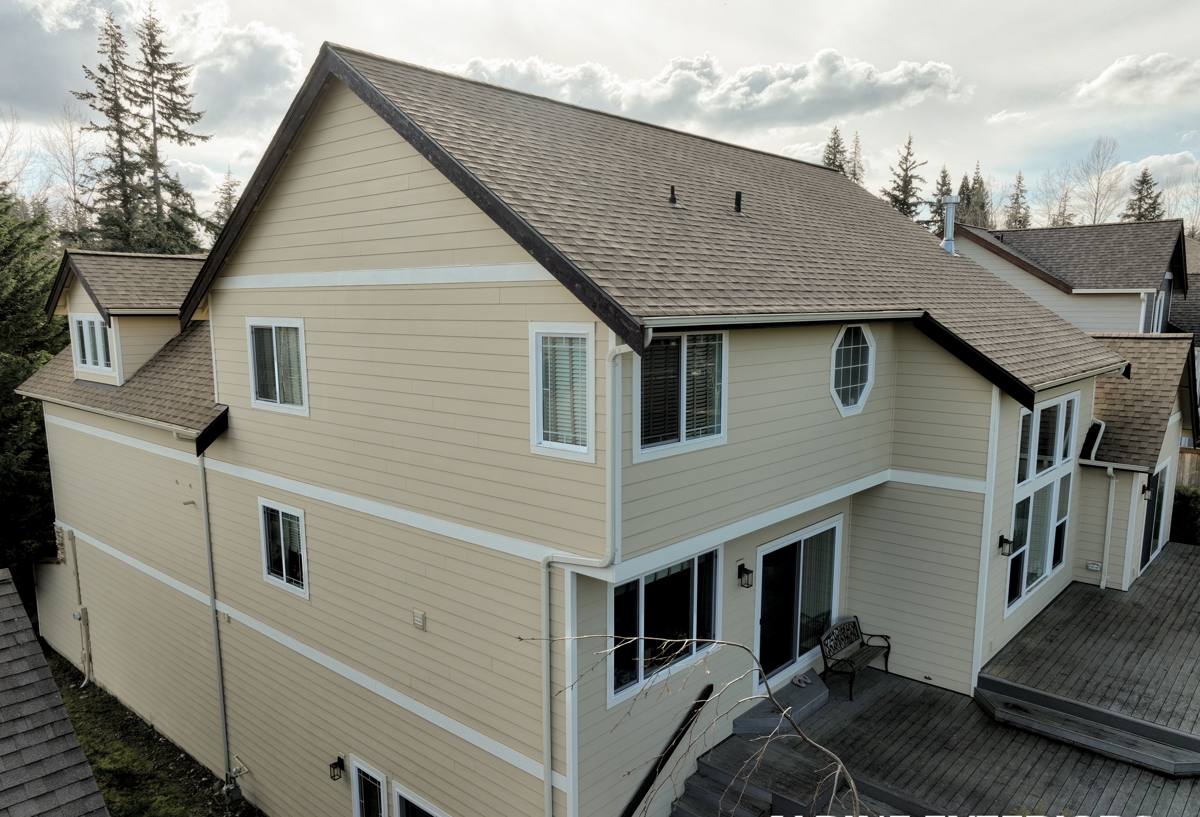
What Salt Air, Rain, and Moss Actually Do to a Deck
It helps to understand the failure points before talking about the fix.
Salt Air and Corrosion
Proximity to the Strait of Georgia and Bellingham Bay means airborne salt travels further inland than most homeowners expect, especially on exposed or elevated sites. Salt accelerates corrosion in fasteners, brackets, and any exposed metal hardware. Standard electro-galvanized screws and joist hangers can start rusting and staining the wood around them within a couple of seasons in a salt-exposed spot. Once a fastener rusts, it loses holding strength — which is a structural issue, not just a cosmetic one.
Driving Rain and Moisture Intrusion
Rain that comes in at an angle finds its way into every gap, seam, and end cut that isn't properly sealed or flashed. The most common failure point on decks we're called to repair in this area is the ledger board connection — where the deck attaches to the house — because that's where water gets trapped against the structure if flashing wasn't installed correctly the first time.
Moss and Algae
Whatcom County's long wet season, combined with shade from trees and neighboring structures, creates ideal moss and algae conditions on any deck surface that doesn't dry out quickly. Beyond looking bad, moss holds moisture against the decking material and makes surfaces genuinely slippery — a real safety issue on stairs and near doorways.
Building for This Climate: Materials and Fasteners
The right materials depend on the homeowner's budget, how much sun or shade the site gets, and how much upkeep they actually want to do. We lay out the honest trade-offs rather than pushing one product.
| Decking Material | Upfront Cost | Maintenance in Our Climate | Typical Lifespan Here |
|---|---|---|---|
| Pressure-treated lumber | Lowest | Needs re-staining/sealing every 1-2 years to resist moss and moisture | 10-15 years with upkeep |
| Cedar | Moderate | Natural rot resistance but still needs periodic sealing in shaded, damp spots | 15-20 years with upkeep |
| Composite decking | Higher | Low — periodic cleaning to prevent surface algae, no staining | 25+ years |
| PVC decking | Highest | Lowest — fully moisture resistant, easiest to keep moss-free | 25-30+ years |
In shaded, moisture-heavy yards common around Ferndale, we lean toward recommending composite or PVC decking specifically because they don't absorb water the way wood does, which starves moss and mold of what they need to take hold. That said, plenty of well-maintained wood decks in this area still look great — it comes down to whether the homeowner wants the lower upfront cost and is willing to keep up with sealing on schedule.
Framing and Fasteners
Underneath the visible decking, we standardize on stainless steel or heavy-duty coated fasteners and hardware rated for coastal/marine-adjacent exposure, not the basic galvanized hardware that's fine in drier inland climates. Joist hangers, ledger bolts, and post connections get the same treatment. It costs more up front than standard hardware, but it's the difference between a deck that's structurally solid at year 15 and one that needs a hardware overhaul at year 6.
Design Choices That Matter on Ferndale Lots
Ferndale's mix of rural, semi-rural, and newer residential lots means we see a wide range of site conditions — open, wind-exposed yards on one end and heavily treed, shaded lots on the other. Both call for different design decisions.
- Board spacing and gapping — proper gaps between boards let water shed through instead of pooling, which matters more under tree cover where drying time is longer.
- Under-deck ventilation — low decks or those built over grade need enough airflow underneath to keep the framing dry; blocked or buried under-deck space is a common cause of hidden rot.
- Railing and post placement — wind-exposed sites need railing systems rated for the loads they'll actually see, not just code minimums.
- Stair and landing drainage — stairs collect runoff from the whole deck surface, so we grade and detail them so water sheds off rather than sitting on treads.
Our Process, Start to Finish
Every Ferndale deck project follows the same sequence, whether it's a small replacement deck or a larger custom build:
- Site visit and honest assessment — we look at sun/shade exposure, existing structure (if replacing a deck), drainage, and access before quoting anything.
- Design and material walkthrough — we go through the material trade-offs above with you and settle on a plan and budget before ordering anything.
- Permitting — we handle the permit application and inspection scheduling with Whatcom County or the City of Ferndale as applicable.
- Demo (if replacing an existing deck) — we remove old decking and inspect the framing and ledger connection underneath, since that's often where hidden damage lives.
- Framing and structural work — posts, footings, joists, and the ledger connection get built first and inspected before decking goes down.
- Decking, railing, and finish work — final surface, railings, stairs, and any lighting or built-ins.
- Final walkthrough — we go over maintenance expectations for the specific material you chose so there are no surprises down the road.
Permits and Local Requirements
Most new decks and many deck replacements in Whatcom County require a building permit, particularly if the deck is elevated, attached to the house, or above a certain size. Ledger attachment to the home is one of the details inspectors pay close attention to, for good reason — it's the connection point most likely to fail if it's not flashed and fastened correctly. We pull the necessary permits and schedule inspections as part of the project rather than leaving that step to the homeowner, and we build to the structural requirements those inspections check for, not just to what's visible on the surface.
Keeping a New Deck Ahead of Moss and Weather
A well-built deck still needs some seasonal attention in this climate. Here's a realistic maintenance checklist we walk homeowners through:
- Sweep leaves and debris off the deck surface regularly in fall — trapped organic matter is what feeds moss and algae growth.
- Rinse the deck surface a few times a year, more often in shaded areas, to keep spores from establishing.
- Check and clear gaps between boards so water keeps draining through rather than pooling.
- For wood decking, re-seal or re-stain on the schedule recommended for the product — skipping a cycle is the most common reason wood decks fail early here.
- Inspect railings and stair connections annually for looseness, especially after a hard winter.
- Keep an eye on the area where the deck meets the house — any staining, soft wood, or gaps in flashing there should get looked at promptly.
Repairs We Commonly See on Existing Ferndale Decks
When we're called out to look at an older deck, the same handful of issues show up repeatedly: rusted fasteners staining the wood around them, soft or spongy framing near the ledger board, moss buildup thick enough to hold moisture against the surface, and railings that have loosened because posts weren't anchored deep enough or with hardware rated for this climate. Most of these are avoidable with the right build approach from the start, which is exactly why we treat fastener selection and ledger flashing as non-negotiable details rather than places to cut cost.
Why It Matters That We Already Work in Ferndale
Building decks that last in this climate isn't about following a national average spec — it's about knowing what actually fails on decks in this specific area and building around it. We've seen how salt-tinged coastal air, Whatcom County's rain totals, and heavy shade play out on real decks over years, not just at the moment they're finished. That local track record shapes what hardware we spec, what materials we recommend for a given lot, and how we detail drainage and flashing — decisions that are easy to get wrong if you're building to a generic standard instead of the conditions Ferndale homes actually sit in.
If you're planning a new deck or replacing one that's showing its age, we're happy to come take a look and talk through honest options for your property. Estimates are free, there's no pressure, and you'll get a straight answer about what your site and budget call for.