 Bellingham Exterior
 Why Decks in Ferndale Wear Out Faster Than the Manual Says
Most decking products are rated and warrantied based on generic national averages, not on what a deck actually faces sitting a few miles from Bellingham Bay. Ferndale homes deal with a specific combination: salt-tinged air moving off the water, long stretches of driving rain through fall and winter, and a moss season that can run from October well into spring. None of that shows up on a manufacturer's spec sheet, but all of it shows up in the substructure of a ten- or fifteen-year-old deck once you pull the boards.
Salt Air and Metal Fasteners
Salt-laden air accelerates corrosion on anything metal — nails, screws, joist hangers, post bases. Once a fastener starts rusting, it loses holding strength long before it looks obviously bad from above. On a lot of the decks we've opened up in this area, the boards look fine and the frame underneath is the problem.
Moss, Shade, and Standing Water
Whatcom County's tree cover keeps a lot of yards shaded most of the day, which sounds pleasant until you realize shade plus rain equals moss, and moss holds moisture against wood and composite decking alike. Moss on a deck surface isn't just a slip hazard — it's evidence that water isn't shedding and drying the way it should.
Freeze-Thaw and the Short Dry Season
Bellingham-area winters aren't brutally cold, but the freeze-thaw cycles that do happen work on any wood or connection that's already holding moisture. Add a short true "dry season" for materials to fully off-gas moisture, and it's easy to see why decks here age faster than the same deck would in a drier climate.
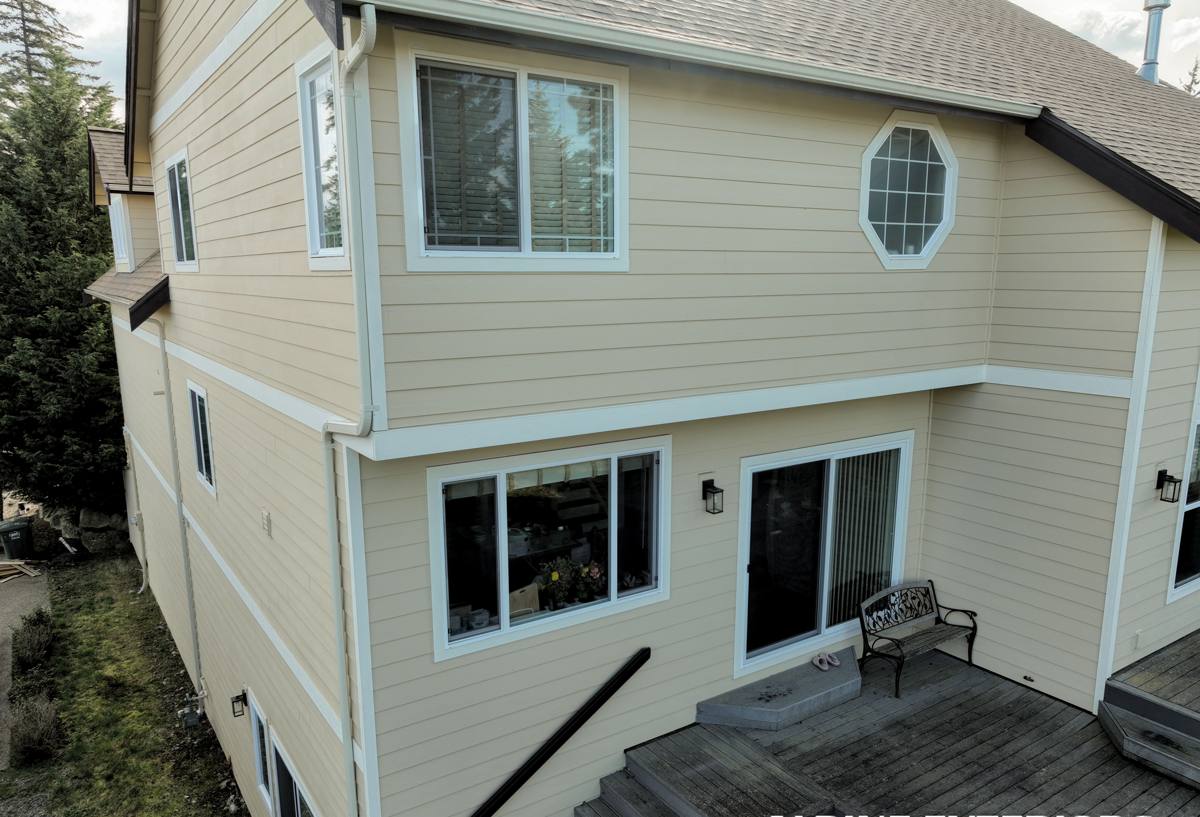
Signs Your Deck Needs Replacement, Not Just a Repair
Repair makes sense when a problem is isolated. Replacement becomes the honest answer when the issues are structural, repeated, or clustered around the parts of the deck that are hardest to inspect. A few signs worth taking seriously:
- Boards that feel spongy, springy, or soft underfoot, especially near the house
- Visible rot or discoloration at the ledger board where the deck meets the house
- Rust streaking down from fasteners or joist hangers
- Posts that feel loose or show soft wood near ground contact
- A noticeable bounce or sway when several people walk across it
- Guardrails or baluster spacing that wouldn't meet current code
- You've patched the same three or four spots more than once in the last few years
Any one of these on its own might be repairable. Several at once, especially involving the ledger or the framing, usually means the deck has reached the point where patching costs more over time than a clean rebuild.
What a Correct Deck Replacement Actually Involves
A deck replacement done right is mostly about what you don't see once the decking boards go down. The visible surface is maybe a third of the job.
The Substructure
Footings need to sit below frost depth and bear on solid, undisturbed soil — not just get poured against whatever was there before. Posts, beams, and joists should be sized to actual load and span, not just matched to what was there previously, since old decks are sometimes under-built by today's standards. Hardware matters as much as lumber: in a coastal, high-moisture climate like this one, hot-dip galvanized or stainless connectors and fasteners are worth the modest upcharge over standard coated hardware, which corrodes faster here than it would inland.
The Decking Surface
Once the frame is sound, the decking itself — wood, composite, or PVC — gets fastened with a spacing and pattern that accounts for drainage and expansion. Board gaps that are too tight trap debris and moisture; gaps that are too wide are uncomfortable and can be a code issue depending on the railing and guard details involved.
The Ledger Connection: Where Driving Rain Causes the Most Failures
If there's one detail that separates a deck that lasts from one that rots out early in this climate, it's the ledger board — the piece that bolts the deck to the house. Water driven sideways by wind-blown rain, which this area gets plenty of, finds any gap in the flashing at this connection and works its way behind the siding and into the rim joist. Once that starts, the damage is hidden until it's significant.
A correct ledger installation uses proper flashing that integrates with the house's water-resistive barrier — not just caulk over the top — along with structural screws or through-bolts rated for the load, and a gap or flashing detail that keeps water from sitting against the house. On a replacement, this is a chance to fix a detail that may have been done poorly the first time, since older decks in this area very often were not flashed correctly at all.
Choosing Decking Material for This Climate
There's no single "best" decking material — there's a best fit for your budget, how much upkeep you want to do, and how much shade and moss exposure your particular lot gets. Here's how the common options actually compare once you factor in Whatcom County's wet, mossy conditions:
| Material | Upfront Cost | Maintenance | Moisture & Moss Behavior | Typical Lifespan |
|---|---|---|---|---|
| Pressure-treated wood | Lowest | Annual cleaning, periodic sealing/staining | Absorbs water; needs airflow to dry out between rain events | 10–15 years |
| Cedar | Moderate | Regular sealing to hold color and resist rot | Naturally rot-resistant but still needs to dry out; moss grows on the surface like any wood | 15–20 years |
| Capped composite | Higher | Occasional washing, no sealing/staining | Resists rot and swelling; moss can still grow on the surface film and needs washing off | 25–30 years |
| PVC | Highest | Occasional washing only | Fully synthetic core, best moisture resistance of the group; surface still needs cleaning to prevent moss buildup | 25–30+ years |
Note that "resists moisture" doesn't mean "moss-proof." Moss is an organic growth on the surface, and it will find a foothold on any material if a section of deck stays shaded and damp long enough — composite and PVC just don't rot underneath it the way wood can.
Our Deck Replacement Process
The steps don't change much from job to job, but the details we pay attention to at each step are shaped by what we've learned building and replacing decks in this specific climate.
- On-site assessment — we check the existing framing, posts, and ledger connection to understand what's actually failing and why, not just what's visible from the top
- Design and material selection — sizing the new structure to current load requirements and walking through decking, railing, and hardware options against your budget
- Permitting — pulling the correct permit for the jurisdiction the property sits in before any demo starts
- Demolition — full removal of the old decking and, where needed, the framing, with a check on the ledger area and any hidden water damage to the house itself
- Substructure rebuild — footings, posts, beams, joists, and a properly flashed ledger connection, built to code and inspected before decking goes down
- Decking, railing, and stairs — installed per the manufacturer's fastening and spacing specs, with attention to drainage and airflow underneath
- Final walkthrough and cleanup — site cleared of debris, hardware and fastener check, and a walk through the finished deck with you
Permits and Code in Ferndale and Whatcom County
Ferndale is its own incorporated city, so permitting for a deck replacement there typically runs through the city rather than unincorporated Whatcom County — the two don't always follow identical review timelines or submittal requirements. Regardless of jurisdiction, most deck rebuilds touch a handful of common code points:
- Footing depth relative to frost line and soil bearing
- Guardrail height and baluster spacing on any deck above a certain height off grade
- Stair rise, run, and handrail requirements
- Ledger attachment method and flashing
- Beam and joist spans matched to the actual decking load
We handle the permit submittal and inspection scheduling as part of the job, so you're not the one chasing down which office to call or what form is needed.
What Drives the Cost of a Deck Replacement
Two decks that look similar in size can land at very different price points once the framing is opened up. The table below covers the factors that most often move the number, without pretending to give an exact quote sight unseen.
| Cost Factor | Why It Matters |
|---|---|
| Square footage | More area means more framing, decking, and labor hours, in a fairly direct relationship |
| Substructure condition | Hidden rot at the ledger, posts, or joists found during demo can add scope that wasn't visible during the initial walk-through |
| Decking material | Material cost per square foot varies widely between pressure-treated wood, composite, and PVC, as shown above |
| Railing style | Basic wood or metal balusters cost less than cable, glass, or composite railing systems |
| Stairs and levels | Multi-level decks or added stair runs bring extra framing, footings, and labor |
| Site access | Decks with tight side-yard access or significant grade change take longer to build safely |
Why a Crew That Already Works in Ferndale Matters
A lot of what makes a deck last here isn't exotic — it's judgment calls that come from having built and replaced decks on this same soil, under this same tree cover, through this same weather pattern. Knowing which lots need extra footing drainage because of how water moves through the yard, recognizing a moss-prone north side before it becomes a rot problem, and understanding the local permitting office's actual process rather than guessing at it all come from doing this work in the area repeatedly, not from a general contracting background applied to a new zip code.
Scheduling matters too. Framing and footing work goes better in the drier windows of the year, and a crew that's used to working around Whatcom County's wet season plans the sequence — demo, footings, framing, decking — to keep exposed lumber and open connections covered as little time as possible.
Caring for Your New Deck
Even a well-built deck needs a little seasonal attention to hit its full lifespan in this climate. A short list covers most of it:
- Sweep or rinse off moss and organic debris before it has a chance to sit and hold moisture
- Check exposed fasteners and hardware once a year for early rust or corrosion
- Confirm gutters and downspouts are directing roof runoff away from posts and footings
- Reseal or restain wood decking on the schedule the product calls for — don't wait until it looks obviously dry
- Keep planters and anything that traps standing water off the deck surface itself
If you're weighing whether your current deck needs a repair or a full replacement, or you're ready to plan a rebuild that's actually built for Ferndale's weather, we're happy to take a look and walk through it with you. The form below gets you a free, no-pressure estimate.