 Bellingham Exterior
 Why Metal Roofing Makes Sense for Ferndale Homes
Ferndale sits close enough to Bellingham Bay and the Salish Sea that salt-laden air is a daily reality for anything on your roofline, not an occasional nuisance. Add in Whatcom County's driving winter rain and a moss season that can stretch for months under the region's tree cover and cloud, and you have a climate that is genuinely hard on roofing materials. Metal roofing holds up well against all three of those pressures when it's specified and installed correctly for this area — but "metal roofing" covers a wide range of products and installation quality, and not all of it is suited to a coastal Whatcom County home.
Salt Air and Coastal Corrosion
Airborne salt accelerates corrosion on any exposed metal, including fasteners, flashing, and panel edges. It doesn't have to be a beachfront lot to matter — wind carries salt-laden moisture well inland, and Ferndale's proximity to the water means most homes here get some exposure. The panel material, the coating system, and even the type of fastener used all affect how well a roof resists that slow corrosion over the decades.
Driving Rain and Wind
Storms coming off the water bring rain sideways as often as straight down. That matters more for roofing than people expect, because wind-driven rain finds its way into laps, seams, and fastener penetrations that would stay dry in a calmer climate. A metal roof's water resistance depends almost entirely on how the seams and flashings are detailed, not just on the fact that the material itself is metal.
Moss, Shade, and Slope
Much of Ferndale and the surrounding county has enough tree cover and cloudy, damp weather to grow moss on almost any roofing surface, especially on north-facing slopes and low-slope sections that stay shaded and damp longer after a rain. Metal sheds moss growth far better than shingles because there's no granulated, porous surface for spores to take hold in, but panel seams, valleys, and areas where debris collects can still hold enough moisture and organic material to get moss started if they aren't kept clear.
What a Correct Metal Roof Installation Involves
The material is only part of the equation. Most metal roof problems we get called out to inspect trace back to installation shortcuts, not the panels themselves.
Underlayment and Water Protection
Metal roofs still need a full underlayment system underneath the panels. In a climate with this much rain, that generally means a high-temperature synthetic or self-adhered membrane, with extra ice-and-water protection at eaves, valleys, and any low-slope transitions where water sits longer before draining.
Fastening and Panel Attachment
Panels are either mechanically seamed together (standing seam) or attached with exposed fasteners through the face of the panel. The fasteners themselves, and any washers or gaskets sealing them, need to be rated for the panel material and for coastal exposure — mismatched metals or the wrong fastener coating is one of the more common ways a roof starts corroding early.
Flashing Details at Valleys, Walls, and Penetrations
Every place where the roof changes plane, meets a wall, or gets penetrated by a vent, chimney, or skylight is a place water can get in. Flashing has to be custom-fit and properly lapped in the right sequence with the panels and underlayment — not caulked over as a substitute for correct layering. This is the detail work that separates a roof that performs for decades from one that leaks within a few years.
Choosing the Right Panel and Finish for This Climate
There isn't one "best" metal roofing product for every home. The right choice depends on your roof's exposure, slope, and how long you plan to own the house. Here's how the common options compare for a coastal Whatcom County property.
| Option | Salt Air Resistance | Moss/Rain Performance | Trade-offs |
|---|---|---|---|
| Standing seam steel (coated) | Very good with a quality coating system | Excellent — smooth, few horizontal seams | Higher upfront cost; needs correct panel-to-fastener matching |
| Exposed-fastener steel panels | Good, but fastener seals need periodic checking | Very good | More economical; fasteners are a long-term maintenance point |
| Aluminum panels | Excellent — naturally resists salt corrosion | Excellent | Softer material, more prone to denting; typically costs more |
| Uncoated or bare metal finishes | Poor near the water without a protective coating | Good once weathered | We generally steer coastal clients away from this for maintenance reasons |
For most Ferndale homes with real salt air exposure, we lean toward coated steel or aluminum with a quality factory finish (a baked-on paint system, such as a PVDF-based coating, holds color and resists chalking far longer than a basic painted finish). It's a judgment call based on your specific site, and we'll walk through the trade-offs with you rather than push one product on every roof.
Our Installation Process
- On-site assessment — we walk the roof and attic, check slope, ventilation, and existing damage, and note exposure to wind and salt air.
- Product and panel selection — we go over panel type, gauge, and finish options based on your roof's exposure and your budget.
- Tear-off and deck inspection — the old roofing comes off and we check the deck underneath for rot or soft spots before anything new goes down.
- Underlayment and ice/water protection — installed to spec at eaves, valleys, and low-slope areas most exposed to driving rain.
- Panel installation — panels are set, seamed or fastened per manufacturer specification, with attention to expansion allowance so the metal can move with temperature changes without stressing the seams.
- Flashing and trim — custom-fit at every valley, wall, and penetration.
- Final walkthrough — we review the finished roof with you, including what maintenance to expect and what's covered under warranty.
Maintenance After Installation: Moss and Salt Air
A correctly installed metal roof needs far less maintenance than shingles, but "far less" isn't "none." In Whatcom County's climate, the two things worth staying ahead of are moss and debris buildup in valleys or around penetrations, and periodic checks of fastener seals and flashing sealant, since salt air and repeated wet-dry cycles are what eventually wear those out. Keeping gutters and valleys clear of needles and leaves goes a long way toward preventing the damp, shaded conditions moss needs to establish in the first place.
Cost Factors for Metal Roofing in Ferndale
Exact pricing depends on your roof's size, pitch, and complexity, but these are the factors that move the number most:
| Factor | Why It Matters |
|---|---|
| Panel material and finish | Aluminum and premium coatings cost more upfront than basic coated steel |
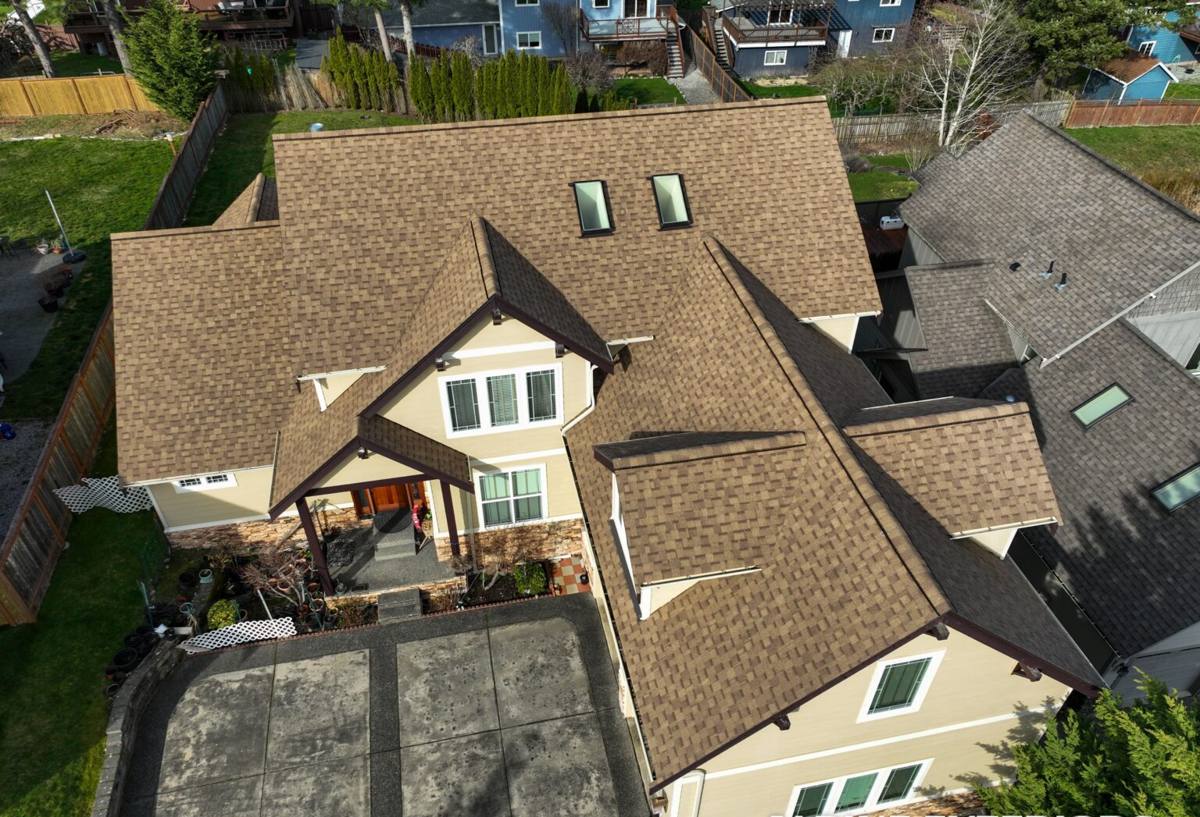
| Roof complexity | Valleys, dormers, and multiple planes mean more custom flashing labor |
| Tear-off and deck repair | Rot or soft decking found during tear-off adds to the scope |
| Slope and access | Steep or hard-to-access roofs take longer and require more safety setup |
| Panel style | Standing seam generally costs more installed than exposed-fastener panels |
Metal roofing typically costs more upfront than asphalt shingles, but it's a longer-term investment — it's worth weighing against your plans for the home and how long you intend to own it.
What to Look for When Hiring a Metal Roofing Crew
Metal roofing rewards good installation and punishes shortcuts more than most roofing types, because a poorly detailed metal roof can look fine and still leak within a couple of years. Before hiring anyone, it's worth checking:
- Current Washington contractor license and liability insurance, verifiable through the state
- Manufacturer training or certification for the specific panel system being installed
- A written scope that specifies panel gauge, finish, underlayment type, and fastener spec — not just "metal roof"
- References or past work they can show you, ideally on homes with similar exposure
- A clear explanation of warranty coverage for both the material and the labor/workmanship
- Willingness to walk the roof with you and explain why they're recommending a specific product for your situation
Why a Crew That Already Works Ferndale Matters
A roofing crew that regularly works in Ferndale and the rest of Whatcom County already knows which panel finishes hold up to the salt air off the bay, which flashing details actually stop the wind-driven rain this area gets, and where moss tends to take hold first on a given roof orientation. That's not something you can fully substitute with a spec sheet. It shows up in the small decisions made on the roof — how a valley gets lapped, which fastener gets used, how much slope gets built into a transition — the decisions that determine whether a metal roof performs for its full lifespan or starts causing problems in year five.
If you're weighing metal roofing for a home in Ferndale, we're happy to take a look and walk you through what makes sense for your roof, with no pressure and no obligation. Reach out using the form below to set up a free estimate.