 Bellingham Exterior
 Ferndale sits close enough to the water and the Nooksack lowlands that its roofs take a different kind of beating than roofs twenty miles inland. Salt-laden air off the Strait, long stretches of driving rain through fall and winter, and a moss season that never really ends put specific, predictable stress on shingles, flashing, and fasteners. A roof repair here has to account for all three, not just patch the spot that's leaking. This page covers what Ferndale homes actually need from a roof repair, what a correct job looks like, and how our process works for homeowners in this part of Whatcom County.
Why Ferndale Roofs Wear Differently
Roof repair isn't one-size-fits-all across the county. A roof in Ferndale faces a slightly different combination of exposure than one further south in Bellingham proper, and it's worth understanding why before you decide what kind of repair you actually need.
Salt Air and Metal Fasteners
Proximity to Puget Sound and the Strait means airborne salt reaches roofing hardware, flashing, and fasteners well before it reaches paint or siding. Galvanized nails and lower-grade flashing corrode faster here than the same materials would twenty miles inland. When we're diagnosing a leak on a Ferndale roof, corroded fasteners and pitted flashing are near the top of our checklist, even on roofs that aren't especially old.
Driving Rain and Wind-Driven Water
Storms coming off the water don't just drop rain straight down — wind pushes it sideways, up under shingle tabs, and into laps in flashing that would stay dry in a calmer climate. This is why so many "mystery leaks" in this area trace back to lap joints, valleys, and penetrations rather than open holes in the shingle field itself.
Moss and Trapped Moisture
Western Whatcom County's mild, wet climate is close to ideal for moss growth on north-facing slopes and shaded roof sections. Moss doesn't just look bad — it holds moisture against the shingle surface and lifts tabs as it grows, which is exactly the kind of damage that turns into a leak the next time it rains hard.
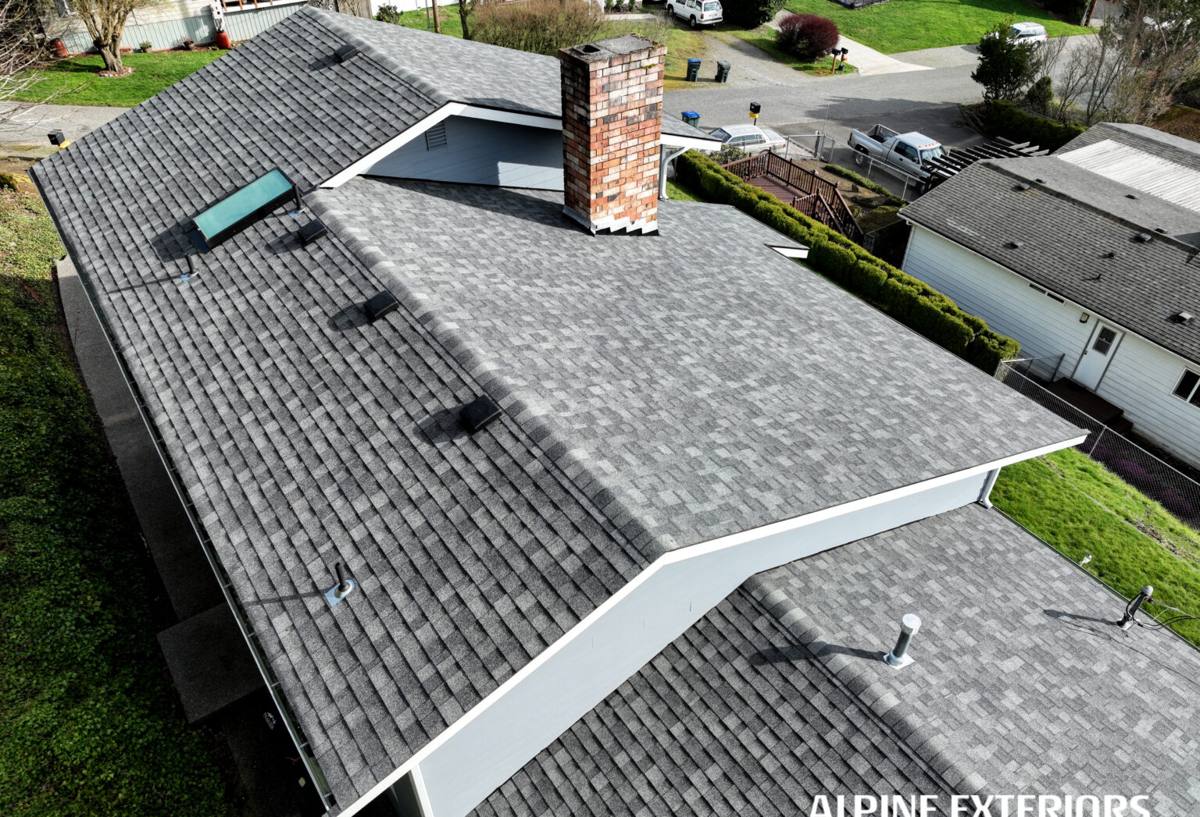
Common Roof Repair Issues We See in Ferndale
- Cracked or lifted shingle tabs along moss-affected slopes, usually the north or shaded side of the roof
- Corroded step flashing or counter-flashing around chimneys, walls, and dormers
- Failed pipe boot seals — the rubber collar around plumbing vents dries out and splits, letting water in during driving rain
- Valley leaks where two roof planes meet and debris or moss slows drainage
- Nail pops and exposed fastener heads that rust and back out over time
- Soft or spongy decking discovered only once a shingle repair is opened up
What a Correct Roof Repair Actually Involves
A quick patch and a correct repair often start out looking the same from the ground. The difference shows up in what happens underneath.
Diagnosis Before Any Work Starts
We trace the leak to its actual source rather than assuming the water is entering where it's showing up inside. Water can travel along the underside of decking or down a rafter for several feet before it drips somewhere visible, so an accurate repair depends on getting the diagnosis right first.
Checking the Decking, Not Just the Surface
Any time we open up a repair area, we check the sheathing underneath for soft spots or rot before re-covering it. Replacing shingles over compromised decking is a short-term fix that fails again, usually within a season or two.
Matching Materials and Technique to What's There
Flashing details, underlayment type, and fastening method all need to match — or reasonably upgrade — what the rest of the roof is doing. A repair that uses the wrong flashing profile or the wrong nailing pattern can create a new leak path even while it fixes the original one.
Proper Flashing and Sealant Work
Sealant has a place in roof repair, but it's a backup, not a strategy. Correct step flashing, counter-flashing, and pipe boot replacement do the actual waterproofing; sealant fills small gaps around the edges of properly installed metal, not the other way around.
Our Repair Process
- Inspection. We walk the roof (weather permitting) and check the attic or interior ceiling where the leak is showing, looking for the actual entry point and any secondary damage.
- Diagnosis and options. We explain what's failing, why, and whether a targeted repair is the right call or whether the roof is telling us something bigger is coming.
- Written scope. Before work starts you get a clear description of what will be repaired, with what materials, and what it costs — no surprises once the work is underway.
- The repair itself. Old or damaged material comes off, decking gets checked, new flashing and shingles or roofing go in matched to the surrounding roof.
- Cleanup and check. Job site is cleared of old material and debris, and we walk the repair with you before we consider it done.
Repair or Replace? How We Help You Decide
Not every leak means a new roof, and not every roof past a certain age needs to be torn off. The honest answer usually comes down to a handful of factors.
| Factor | Leans Toward Repair | Leans Toward Replacement |
|---|---|---|
| Roof age | Under 15-20 years, or recently replaced in sections | Nearing or past its material's expected service life |
| Extent of damage | Isolated to one flashing detail or a small shingle area | Spread across multiple slopes or repeat leaks in different spots |
| Decking condition | Solid sheathing found once opened up | Soft, rotted, or repeatedly wet decking |
| Moss and granule loss | Light moss, shingles still holding granules well | Heavy moss coverage with visible granule loss and curling |
| Repair history | First repair, or first in several years | Third or fourth repair to the same general area |
What Drives Roof Repair Cost
Pricing a roof repair honestly means looking at more than just square footage. A short list of factors explains most of the range you'll see between one repair job and another.
| Cost Factor | Why It Matters |
|---|---|
| Roof access and pitch | Steep or high roofs take longer and need more safety setup |
| Extent of decking replacement | Rotted sheathing found under the damage adds material and labor |
| Flashing complexity | Chimneys, skylights, and multiple valleys mean more custom metal work |
| Material match | Matching discontinued or specialty shingles can add cost and lead time |
| Moss and debris removal | Heavy moss buildup needs careful removal before the repair area can be assessed |
Because of these variables, an honest roof repair quote in Ferndale is generally in the low hundreds for a small, straightforward flashing or shingle fix and climbs from there with decking damage, access difficulty, or larger affected areas. Anyone quoting a firm number sight unseen is guessing.
Signs You Need a Roof Repair Now, Not Later
- Water stains on interior ceilings or upper walls, especially after a windy rainstorm
- Visible moss buildup on north-facing or shaded roof slopes
- Shingle granules collecting in gutters or downspouts
- Curling, cracked, or missing shingle tabs visible from the ground
- Rusted or lifted flashing around chimneys, vent pipes, or dormers
- A musty smell in the attic, which often shows up before a visible stain does
Why a Crew That Already Works Ferndale Matters
Roof repair is a trade where local familiarity actually changes outcomes. A crew that regularly works Bellingham and the surrounding Whatcom County towns, including Ferndale, already knows which flashing details tend to fail first in this climate, how aggressively moss needs to be dealt with on shaded slopes, and what wind-driven rain does to valleys and laps near the water. That's not a marketing point — it's the difference between a repair that gets diagnosed correctly the first visit and one that takes two or three tries to find the real leak. It also means faster response when weather turns, since we're not routing a crew in from somewhere with a very different roofing climate.
Questions to Ask Before Hiring for a Roof Repair
- Will you check the decking underneath, or just replace the visible shingles?
- What flashing will you use, and does it match or upgrade what's already there?
- Do you carry liability insurance and workers' compensation coverage?
- Will I get a written scope of work before you start?
- How do you handle moss removal, and will you treat the cause, not just clear the growth?
If you're dealing with a leak, moss buildup, or damaged flashing on a Ferndale roof, we're happy to take a look and give you an honest read on what it needs. Reach out for a free, no-pressure estimate using the form below.