 Bellingham Exterior
 Ferndale Sits in a Tough Spot for Siding
Ferndale takes a particular kind of weather beating. It's close enough to the water to catch salt-laden air off Bellingham Bay and the Strait of Georgia, exposed enough to take driving rain straight off the Pacific systems that roll through Whatcom County most of the year, and shaded enough in older, tree-lined lots to grow moss on just about anything that holds moisture for more than a day or two. None of that is dramatic on its own. But layered together, year after year, it's exactly the combination that wears siding down faster than homeowners expect — and faster than siding in drier parts of the state.
Siding repair in a climate like this isn't just cosmetic patchwork. Done right, it's diagnostic work: figuring out where water actually got in, why the siding failed there and not somewhere else, and whether the fix needs to address the siding itself or the moisture path behind it. Done wrong, it's a new coat of caulk over a problem that comes back in two years.
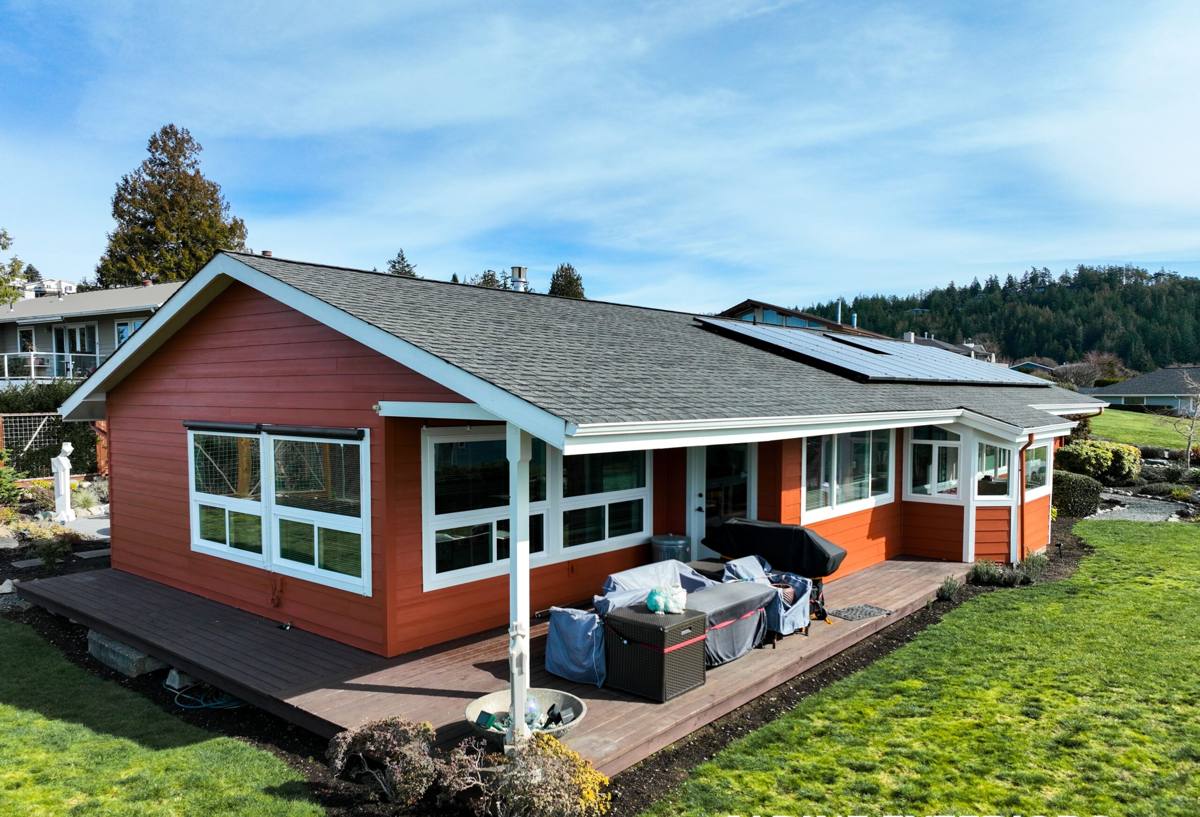
What Ferndale's Climate Does to Siding Over Time
Salt Air
Airborne salt doesn't just affect boats and hardware. It accelerates corrosion on fasteners, trim flashing, and any exposed metal components tied into a siding system. Over years, corroded fasteners loosen their grip on siding panels, which opens small gaps that let water behind the cladding — often long before anyone notices a problem from the ground.
Driving Rain
Wind-driven rain doesn't behave like a gentle shower. It gets pushed sideways and upward into laps, seams, and butt joints that were never designed to shed water from that angle. Homes on more exposed lots — open yards, corner lots, anything facing the prevailing weather — take the brunt of it, and it's usually those same walls where we find the earliest repair needs.
Moss and Sustained Moisture
Whatcom County's long wet season means siding, especially on north-facing walls and under tree canopy, can stay damp for extended stretches. Moss and algae take hold in that environment, and once established they hold even more moisture against the surface. On siding that isn't moisture-tolerant, that sustained dampness is where rot, swelling, and paint failure start.
Signs a Ferndale Home Needs Siding Repair
Most siding problems give warning signs well before they become structural. Homeowners who catch these early save real money:
- Soft or spongy spots when you press on the siding, especially near the bottom courses or around windows
- Visible moss or dark algae streaking, particularly on shaded or north-facing walls
- Paint that's peeling, bubbling, or chalking unevenly across a wall
- Gaps opening up at seams, corners, or where trim meets siding
- Rust streaks below fasteners or metal flashing
- Warping, buckling, or panels that no longer sit flat against the wall
- A musty smell or visible staining on interior walls that back up to exterior siding
- Increased pest activity — soft, moisture-damaged siding is an easy target
What a Correct Siding Repair Actually Involves
A repair that just replaces the damaged board and calls it done is a coin flip. If the underlying cause — a failed flashing detail, a gap in the water-resistive barrier, a fastener pattern that never should have been used in this climate — isn't addressed, the same failure shows up again in the same spot within a few seasons.
A repair we stand behind includes:
- Diagnosis before demolition: tracing the moisture path back to its actual entry point, not just the visible damage
- Checking what's behind the siding: sheathing condition, house wrap or building paper integrity, and whether prior water intrusion has already caused hidden damage
- Correcting the detail, not just the material: if flashing, kick-out details, or fastener spacing caused the failure, those get fixed as part of the repair — not just the board
- Matching the replacement material and finish: new siding should integrate with the existing wall, not create a visible patchwork of mismatched panels or paint sheens
- Sealing and finishing to spec: proper caulking at seams, correct fastener type and spacing, and paint or factory finish that matches manufacturer guidelines
Repair vs. Replacement: How We Decide
Not every damaged section needs a full re-side, and not every home is a good candidate for spot repair. The right call depends on how widespread the damage is and what's causing it.
| Situation | Repair Usually Makes Sense | Full Replacement Usually Makes Sense |
|---|---|---|
| Extent of damage | Isolated to one or two walls or sections | Spread across most elevations of the home |
| Root cause | Localized flashing or fastener failure | Systemic moisture barrier failure or original installation errors |
| Siding material | Sound material elsewhere, good color/finish match available | Discontinued product, faded finish that won't match, or material we don't stand behind long-term |
| Age of siding | Well within its expected service life | Nearing or past the end of its realistic lifespan |
| Underlying sheathing | Sound, dry, structurally intact | Rotted, delaminated, or showing widespread moisture damage |
Our Process for Ferndale Repair Calls
1. On-Site Inspection
We start by walking the exterior with you, looking at the specific areas of concern and checking the rest of the home for early-stage issues you may not have noticed yet — particularly on shaded or weather-exposed walls.
2. Diagnosis
Where damage is present, we open it up enough to see what's actually happening behind the siding: sheathing condition, moisture barrier integrity, and the likely entry point. This step is what separates a repair that lasts from one that doesn't.
3. Straight Answer, Written Down
You get a clear explanation of what we found, whether repair or replacement is the right call for that section, and why — along with a written scope before any work starts.
4. The Repair Itself
We correct the underlying cause first, then replace damaged material with a properly matched product, sealed and finished to spec.
5. Walkthrough
We go over the completed work with you and flag anything else on the home worth keeping an eye on, given how this climate treats siding over time.
Why We Only Stand Behind Hardie Fiber Cement
When a repair calls for new siding material — whether it's a few boards or a full section of wall — we install James Hardie fiber cement, and that's it. We don't install vinyl, LP SmartSide, primed wood, or other fiber cement brands, and in a climate like Ferndale's, that's not a brand preference — it's a standard built around what actually holds up.
Vinyl siding softens the picture on moisture: it doesn't rot, but it also isn't a moisture-managed system in the way Hardie is, and it can warp or crack with age and temperature swings. Wood-based products like LP SmartSide use engineered wood, which performs well when maintained but is inherently more vulnerable to sustained moisture exposure than a cement-based product — a real consideration on shaded, damp walls that hold water longer through a Whatcom County winter. Hardie's fiber cement is non-combustible, holds its factory ColorPlus finish far longer than field-applied paint, and is engineered in HZ product lines specifically for moisture and humidity exposure. When we repair a home with mismatched or failing legacy siding, transitioning that section — or eventually the whole home — to Hardie is what we recommend, and we'll always tell you honestly whether that's worth doing now or waiting until a larger project makes sense.
Moss, Algae, and Long-Term Maintenance
Even the best siding repair doesn't eliminate Ferndale's moss problem — it just gives you a clean surface to manage going forward. A few habits go a long way:
- Keep gutters clear so water isn't sheeting down walls it shouldn't be
- Trim back vegetation and tree cover that keeps specific wall sections shaded and damp
- Rinse visible moss and algae growth before it takes hold rather than after
- Have caulking and seams checked periodically, especially on walls facing prevailing weather
- Address small paint or finish failures early — they're cheap fixes now and expensive ones later
Why Hiring a Crew That Already Works Ferndale Matters
Siding repair isn't generic work. A crew that repairs homes across a wide range of climates might miss what's specific to this one: which walls in this area tend to fail first, how local moisture patterns behave differently than they would twenty miles inland, and what permitting or code details apply in Whatcom County. A crew that already works Ferndale regularly has seen the same failure patterns on other homes nearby, knows what correct flashing and fastening looks like for this exposure, and isn't learning the local climate on your home. That familiarity shows up in fewer surprises during the job and a repair that's built for the conditions it actually has to survive.
If you're seeing early signs of siding trouble — or you're just not sure whether what you're looking at is a simple repair or something bigger — we're happy to take a look. Reach out for a free, no-pressure estimate using the form below.