 Bellingham Exterior
 James Hardie Siding for Columbia Homes
Columbia is one of Bellingham's older, closer-in neighborhoods, and that comes with an exterior maintenance reality a lot of newer subdivisions don't share: mature tree canopy, a mix of home ages and siding generations, and lots with less setback and airflow than a home built on an open lot further out. Add in Whatcom County's steady diet of salt air, driving rain, and a moss season that runs long into the year, and Columbia's housing stock tends to show exterior wear earlier than homeowners expect, especially on walls that stay shaded for most of the day.
We install James Hardie fiber cement siding exclusively, and we work in Columbia and the surrounding Bellingham neighborhoods regularly enough to know which parts of a given property are going to take the hardest hit from this climate before we ever put a ladder up.
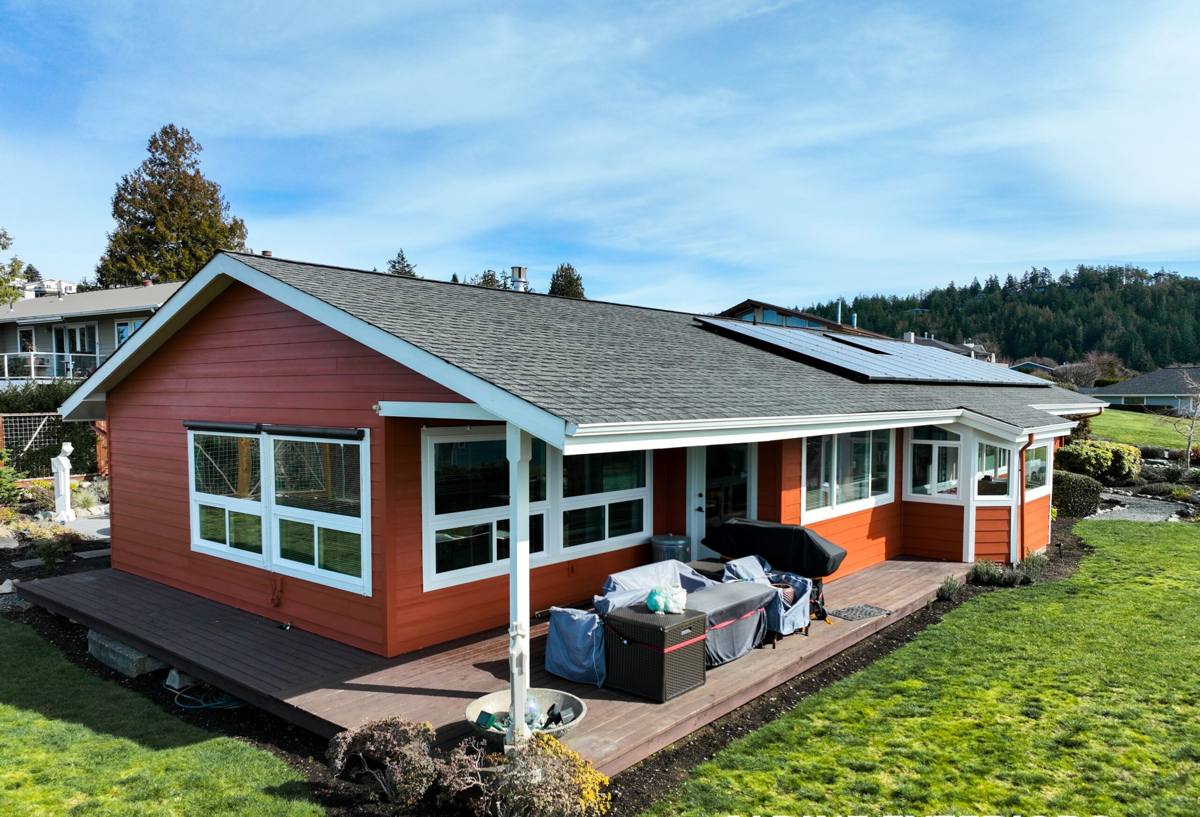
What Columbia's Setting Does to Siding
Bellingham sits close enough to the water that salt-laden air is a factor on nearly every exterior job in the area, and Columbia is no exception. Salt air keeps painted and coated surfaces damp longer than they'd stay in a drier inland setting, and it speeds up corrosion on any exposed fastener or piece of hardware that isn't built to resist it. On its own that's a slow process, but it compounds year over year on a material that isn't engineered to shed it.
Driving rain adds a second layer of pressure. Rain that comes in at an angle rather than straight down gets forced into seams, laps, and fastener points that a fair-weather installation wouldn't need to account for. In a neighborhood like Columbia, where many homes have close neighbors and mature trees limiting how quickly a wall dries out after a storm, that wind-driven moisture has more time to find its way into any gap that wasn't detailed correctly the first time.
Moss rounds out the picture, and it's often the most visible sign of trouble to homeowners. Shaded walls, north-facing exposures, and anything under tree cover stay damp through fall, winter, and much of spring, which is exactly the environment moss needs to take hold. On a wood-based or wood-look product, that ongoing dampness isn't just cosmetic — sustained moisture against an absorbent material eventually leads to softening, swelling, and rot at the edges.
Why Columbia's Tree Cover Matters More Than People Expect
Older neighborhoods with mature trees are attractive for a lot of reasons, but shade and reduced airflow are exactly the conditions that let moisture linger on a wall instead of drying out between rain events. A wall that gets afternoon sun dries out faster after a storm than one that stays shaded most of the day. When we walk a Columbia property, we're looking at that wall-by-wall, not treating every side of the house the same.
Why We Install Only James Hardie Fiber Cement
We don't install vinyl siding, LP SmartSide, primed spruce, cedar, or other fiber cement brands. That's a professional standard, not a limitation on what we're capable of doing. In a climate like Bellingham's, the products that tend to struggle share a common weakness: they absorb moisture directly, depend on a coating that has to be maintained indefinitely to keep water out, or expand and contract enough with temperature and humidity swings that seams gradually work loose.
James Hardie fiber cement is engineered specifically against that kind of exposure. It's non-combustible, it doesn't swell, rot, or feed moss the way wood-based products can, and its ColorPlus factory finish is baked on under controlled conditions and warrantied against the fading and chalking that constant moisture and UV cycling cause over time. Hardie also builds climate-specific HZ formulations rather than one generic board, which matters in a region that sees this much sustained dampness. Combined with a strong transferable warranty and installation done to the manufacturer's actual specifications, it's the system we trust to hold up through a full Whatcom County year, not just look good on install day.
None of this means the alternatives are bad products. Vinyl, engineered wood, and primed wood all have legitimate uses in the right climate and budget. But in a shaded, salt-air, high-rain environment like Columbia's, the maintenance burden on those materials tends to land back on the homeowner within a decade or two — recaulking, repainting, or panel replacement that a correctly installed fiber cement system simply asks for less often.
What a Correct Installation Actually Involves
James Hardie only performs the way it's engineered to when it's installed to spec. That means the right fastener type and spacing, correct clearance above grade and hardscape, properly lapped weather-resistive barrier underneath, and flashing detailed at every window, door, and penetration so water is directed out rather than trapped behind the cladding. Skipping or shortcutting any one of these steps undercuts the material's real-world performance no matter how good the product itself is.
On a Columbia lot specifically, that also means paying attention to how close a home sits to its neighbors and how much that affects drying time, checking siding clearance on older homes where grade may have shifted or landscaping has crept up over the years, and confirming that older trim and window details get flashed correctly when new siding goes in around them rather than just caulked over.
- Fastener type and spacing set to the manufacturer's specification, not a generalized default
- Correct clearance between the bottom siding course and grade, deck surfaces, or hardscape
- Weather-resistive barrier properly lapped and sealed before any siding goes on
- Flashing detailed at every window, door, and penetration, not just caulked
- Factory-finished ColorPlus color matched or planned around existing trim and features
- Ventilation gap maintained behind the siding on shaded or damp-prone walls
Comparing Siding Options Homeowners in Columbia Consider
Most homeowners weighing a siding project have already looked at a few material options before calling anyone, so it's worth laying out honestly how they compare in this specific setting.
| Material | Moisture Behavior in Columbia's Setting | Typical Long-Term Maintenance |
|---|---|---|
| James Hardie fiber cement | Non-combustible, doesn't absorb moisture or feed rot the way wood-based products can | Low — factory finish holds up well against sustained shade, damp, and salt exposure |
| Vinyl | Doesn't rot, but can warp or crack under temperature swings and sustained wind-driven rain | Low upfront, but replacement rather than repair once panels fail |
| LP SmartSide / engineered wood | Wood-based core is more moisture-sensitive at cut edges and seams, especially under shade | Moderate — edge sealing and coating upkeep matter more in a damp, tree-covered lot |
| Primed spruce or cedar | Natural wood absorbs moisture readily and is a preferred surface for moss growth | Highest — regular repainting, caulking, and moss treatment needed to keep pace |
This isn't a claim that every alternative fails on every home. It's why our own standard, for the climate and lot conditions we see every day in this part of Bellingham, is fiber cement installed correctly rather than a material that trades a lower upfront cost for a heavier maintenance load later.
Cost Factors on a Columbia Siding Project
Every property is different, but the same handful of factors tend to move the price on a Columbia siding job more than anything else.
| Factor | Why It Affects the Job |
|---|---|
| Substrate condition under the old siding | Older homes with hidden moisture damage may need sheathing or framing repair before new siding goes on |
| Number and complexity of window and door openings | Each opening needs full flashing detail, which adds labor beyond flat wall area |
| Access and lot tightness | Close-set older lots can limit scaffolding and material staging compared to open new-construction sites |
| Trim and color detailing | Matching or complementing an older home's existing trim profile can add planning and material cost |
| Siding profile selected | Lap, shingle, and panel styles carry different material and labor costs within the Hardie product line |
Signs a Columbia Home Might Need Exterior Attention
Most homeowners call because one specific thing caught their eye, not because they've been tracking their siding's condition closely. Worth knowing what to watch for before a small issue turns into an expensive one:
- Visible moss or green staining on shaded or north-facing walls
- Paint that keeps failing or peeling no matter how often it's redone
- Soft spots or slight give when pressing near window or door trim
- Siding that's cupping, warping, or separating at seams
- Rust streaks below fasteners or hardware
- Gaps or daylight visible around older trim and window casings
Any one of these on its own doesn't necessarily mean a full replacement is needed. But on an older Columbia home, they're worth having a professional look at directly, since moisture damage in this climate tends to compound rather than stay static, especially on walls that don't get much sun.
Why a Local Crew Matters in Columbia
A lot of what separates exterior work that holds up from work that doesn't comes down to details a generic, out-of-area crew tends to miss: which walls on a given lot actually stay damp longest given tree cover and neighboring structures, how much clearance older siding needs once grade and landscaping have shifted over the decades, and how flashing has to be layered so it sheds water through an entire wet season rather than just passing a dry-day look-over.
A crew that works Bellingham neighborhoods like Columbia regularly starts to recognize these patterns property to property — where a J-channel actually needs to sit, where caulk is appropriate versus where flashing is required, how an older home's trim details should be handled instead of just covered up. Homeowners rarely notice these decisions directly, but they're exactly what determines how the exterior performs over the next couple of decades.
Our Full Exterior Scope for Columbia Properties
Siding is usually the starting point of the conversation, but a home's exterior works as one connected system:
- Siding: James Hardie fiber cement installation and replacement, with flashing, fastening, and clearances set for this climate and lot type
- Roofing: Roof replacement and repair, with attention to how water sheds off the roofline onto the siding below
- Windows: Replacement windows installed with correct flashing so water can't track behind new siding at the openings
- Decks: Deck construction and repair built to hold up under sustained wet-weather and moss pressure
We treat these as connected work rather than separate line items, because well-installed siding paired with poorly flashed windows, or a roof that dumps water onto a wall below without proper drainage, just relocates the moisture problem instead of solving it.
What to Expect if You're Considering a Siding Project
Whether you're dealing with a specific problem or just planning ahead of one, an honest, no-pressure look at your Columbia home's current siding is the starting point before we make any recommendation. We'll walk the property, check the walls that take the most exposure, and give a straightforward read on whether replacement makes sense now or a targeted repair will hold for a while longer.
We're not going to recommend a full siding replacement when a repair will do, and we're not going to paper over a moisture problem that needs to be addressed at the source. That kind of honesty is part of what a crew with a long-term reputation in Bellingham has to protect, and it shapes every estimate we give.
If your Columbia-area home needs new siding, roofing, windows, decking, or just an honest second opinion on what's happening behind an aging wall, we're glad to take a look. Reach out using the form below to schedule a free, no-pressure estimate.