 Bellingham Exterior
 Building Decks That Hold Up in Lynden's Climate
Lynden sits in the heart of Whatcom County's farmland, but the same weather pattern that soaks the rest of the county reaches Lynden just as hard: long stretches of driving rain from fall through spring, heavy dew and fog off the surrounding fields, and a moss season that can run six months or more on any shaded or north-facing surface. A deck built here does a different job than a deck built in a dry climate. It has to shed water fast, dry out between storms, and resist the slow biological growth that thrives in our damp, mild winters. Decks that aren't built with that in mind don't fail dramatically — they fail slowly, with soft spots, black staining, and loose fasteners that show up two or three years in and get worse every winter after that.
We build and repair decks throughout Bellingham and Whatcom County, and Lynden jobs come with their own set of considerations: larger lots, more exposure to open wind and weather off the surrounding farmland, and in many cases decks that connect to older homes with framing and ledger attachments that were never built to current standards.
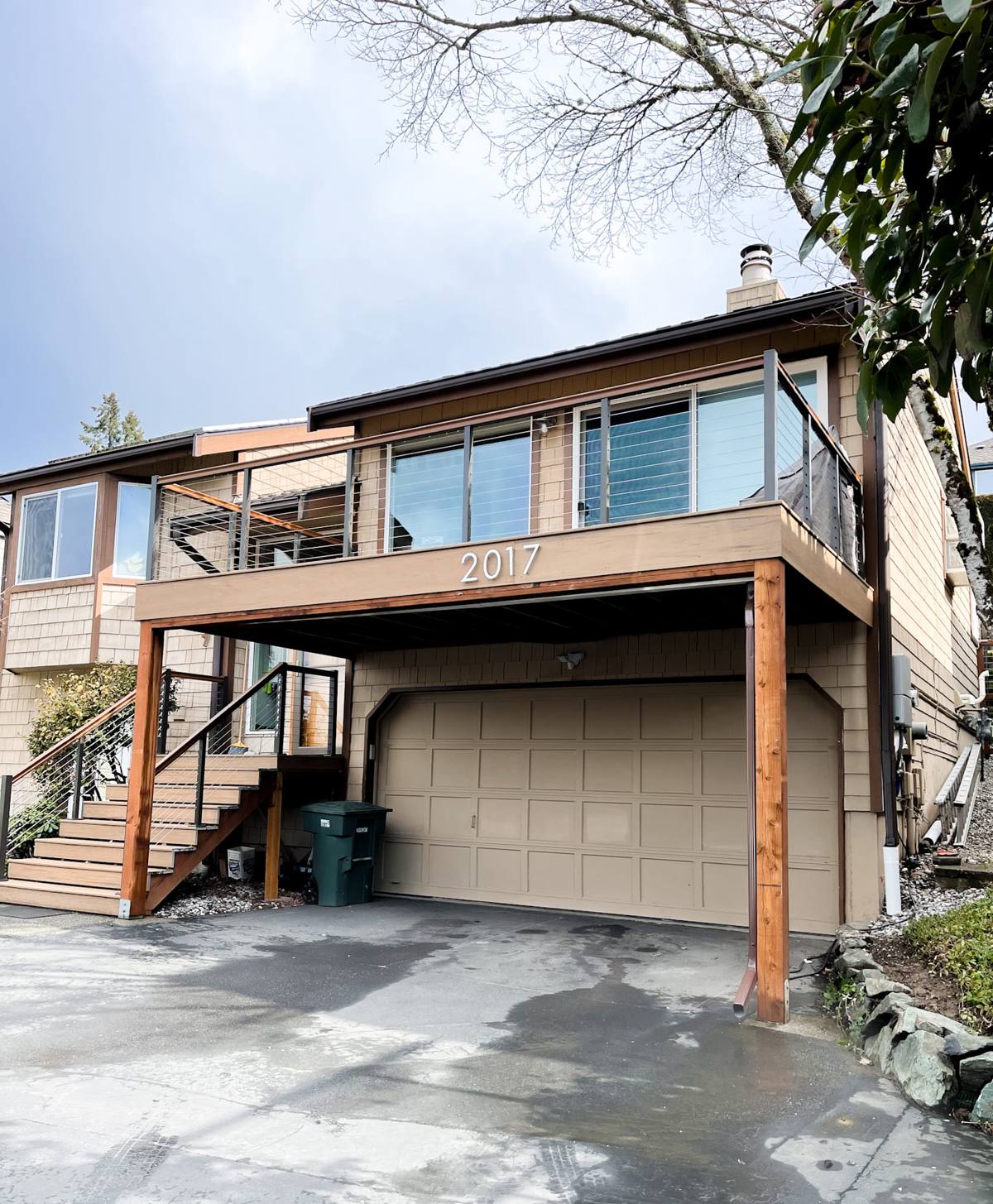
What Lynden Homes Typically Need From a Deck
Lot sizes in and around Lynden tend to run larger than in-city Bellingham lots, which usually means bigger decks, more open exposure to wind and rain, and less shade from neighboring structures. That's good for airflow — a deck that gets sun and wind exposure dries out faster after rain than one tucked into a shaded corner — but it also means more direct weather load on the structure and the decking surface itself.
We commonly see a few patterns on Lynden projects:
- Older decks attached to farmhouses or older ranch-style homes with ledger boards that were nailed rather than properly flashed and lag-bolted
- Ground-level or low-clearance decks where poor drainage keeps the substructure damp for days after a storm
- Decks shaded by mature trees or outbuildings that develop moss and algae faster than open, sun-exposed sections
- Homeowners wanting a deck that can handle both everyday family use and larger gatherings, since lots are bigger and outdoor space gets used harder
None of these are unusual problems, but each one changes how we approach the build. A deck plan that works fine on a small, sheltered city lot isn't automatically the right plan for an open, rural Lynden property.
Choosing the Right Decking Material
Material choice matters more here than in drier parts of the country, because the deciding factor usually isn't looks — it's how the material behaves under repeated wet-dry cycles and moss exposure over years, not months.
| Material | How It Handles Our Climate | Maintenance Reality |
|---|---|---|
| Pressure-treated wood | Affordable, structurally solid, but absorbs moisture readily and needs consistent sealing to resist rot and moss staining | Annual cleaning and re-sealing recommended; skipped maintenance shows up fast |
| Cedar | Naturally rot-resistant and handles moisture better than many woods, but still needs periodic finish maintenance to keep that resistance intact | Moderate — cleaning and finish renewal every 1-2 years |
| Composite decking | Doesn't absorb water the way wood does, resists rot, but can still grow surface mildew or moss film in shaded, damp spots without cleaning | Low — periodic washing, no sealing or staining required |
| PVC decking | Fully resists moisture absorption and rot; best option for low-clearance or heavily shaded areas prone to standing dampness | Lowest — occasional washing |
We don't push one material on every job. A cedar deck that's cleaned and re-oiled on schedule can look excellent for decades. A composite or PVC deck trades that upfront cost for a much lighter maintenance load, which matters if a deck sits in a shaded or hard-to-reach part of the property where upkeep is easy to put off. We'll walk through the honest trade-offs — cost, appearance, maintenance commitment — based on where your deck sits and how it's used, rather than defaulting to whatever's easiest to sell.
What We Steer Away From
We're cautious about certain lower-grade composite products and decking hardware that isn't rated for sustained wet exposure. It's not that these products can't work anywhere — it's that in a climate where a deck can stay damp for days at a stretch during winter storm cycles, marginal moisture ratings and inconsistent manufacturing become a real liability rather than a theoretical one. We'd rather spec a product with a track record in Pacific Northwest conditions than save a few dollars on something untested here.
Where Decks Actually Fail: The Substructure
Homeowners usually focus on the decking boards — the part they can see — but the framing underneath is where almost every serious deck failure starts. In our climate, the substructure takes on moisture from below (splashback, poor drainage, ground contact) as well as from above, and it rarely gets the airflow to dry out fully between rain events.
A correctly built deck substructure includes:
- Proper flashing at the ledger board connection to the house, so water is directed away from the wall framing instead of into it
- Joist tape or comparable moisture barrier on top of every joist, protecting the wood from standing water where the decking screws penetrate
- Structural hardware and fasteners rated for exterior, corrosion-resistant use — not general-purpose fasteners that will rust and weaken over a wet winter
- Footings and posts set to the depth and bearing requirements in the local building code, not just deep enough to look stable
- Adequate clearance and grading beneath the deck so air can move and water doesn't pool against posts or beams
Skipping any one of these doesn't cause an immediate problem. It causes a problem in year four or five, hidden under decking boards that still look fine from the top. That's the trap with a poorly built deck in this climate — the damage happens where you can't see it until it's expensive to fix.
Moss, Algae, and Long-Term Maintenance
Whatcom County's moss season is long, and Lynden's mix of open exposure and shaded, tree-lined lots means moss and algae growth patterns vary a lot from one deck to the next. A deck that gets consistent afternoon sun will stay largely moss-free with basic seasonal cleaning. A deck tucked under trees or on the north side of the house can develop a slick, green film within a single wet season if it's not addressed.
Beyond looking bad, moss and algae hold moisture against the decking surface, which accelerates rot in wood and can degrade some composite surfaces over time. Left unaddressed, moss growth also makes stairs and walking surfaces genuinely slippery — a real safety issue, not just a cosmetic one.
Design choices we make up front can reduce how much maintenance a deck needs long-term: board spacing that allows better airflow and drainage, avoiding designs that trap standing water in corners or against the house, and choosing decking material that matches how much shade and moisture the specific location will see.
Permits and Code Considerations
Deck permitting requirements — including guardrail height, stair specifications, footing depth, and ledger attachment methods — are set by local building code and vary depending on deck height, size, and attachment to the structure. We handle the permitting process as part of the job rather than leaving homeowners to sort out what applies to their specific project. Getting this right matters beyond passing inspection — proper guardrails and stair geometry are safety features, not paperwork, and correct footing depth is what keeps a deck stable through freeze-thaw cycles and years of wet ground.
Our Process for a Lynden Deck Project
Every deck project follows the same core process, adjusted for the specific property:
- On-site assessment of the deck location, exposure, existing structure (for repairs or replacements), and drainage around the area
- Material and design discussion based on how the deck will be used, how much shade and moisture exposure it will see, and your maintenance preferences
- Permit handling and code review specific to the project's size, height, and attachment method
- Build, with particular attention to ledger flashing, joist protection, and fastener quality — the parts that determine how the deck performs in five or ten years, not just how it looks on day one
- Final walkthrough covering how to maintain the specific materials used, so the deck actually gets the upkeep it needs
Why a Crew That Already Works in Lynden Matters
A deck built with a generic, one-size-fits-all approach can look identical to a properly climate-adapted deck on installation day. The difference shows up over years, not weeks. Working regularly in Lynden and across Whatcom County means we've seen how decks in this specific area actually age — which framing details hold up, which materials handle the moss and moisture load without excessive upkeep, and where older Lynden homes tend to have ledger or structural quirks that need to be addressed before a new deck goes on. That's the kind of judgment that comes from doing this work locally and repeatedly, not from a standard build sheet.
If you're planning a new deck, replacing a failing one, or want an honest read on whether your current deck is aging well, we're happy to take a look. Reach out for a free, no-pressure estimate — we'll walk the site, talk through material and design options that fit how you'll use the space, and give you a straightforward assessment with no obligation.