 Bellingham Exterior
 Lynden Roofs Face a Specific Kind of Wear
Lynden sits inland from Bellingham Bay, but that doesn't mean the roof over your head gets an easy ride. Whatcom County's weather pattern — wet Pacific air moving in off the water, cooling as it crosses the flats, and settling into long stretches of overcast, drizzly days — is hard on roofing in ways that are easy to underestimate until you're dealing with a leak. Salt-tinged air still reaches this far inland on a west wind, driving rain finds every gap in flashing and fasteners, and the region's mild, damp winters give moss more months to take hold than almost anywhere else in the state. None of that means your roof is doomed. It means repairs here have to be done with those specific stressors in mind, not with a one-size-fits-all approach borrowed from a drier climate.
This page is about roof repair specifically for homes in and around Lynden — not a full tear-off, not a generic overview of roofing in general, but the targeted work that fixes leaks, storm damage, and wear before they turn into structural problems.
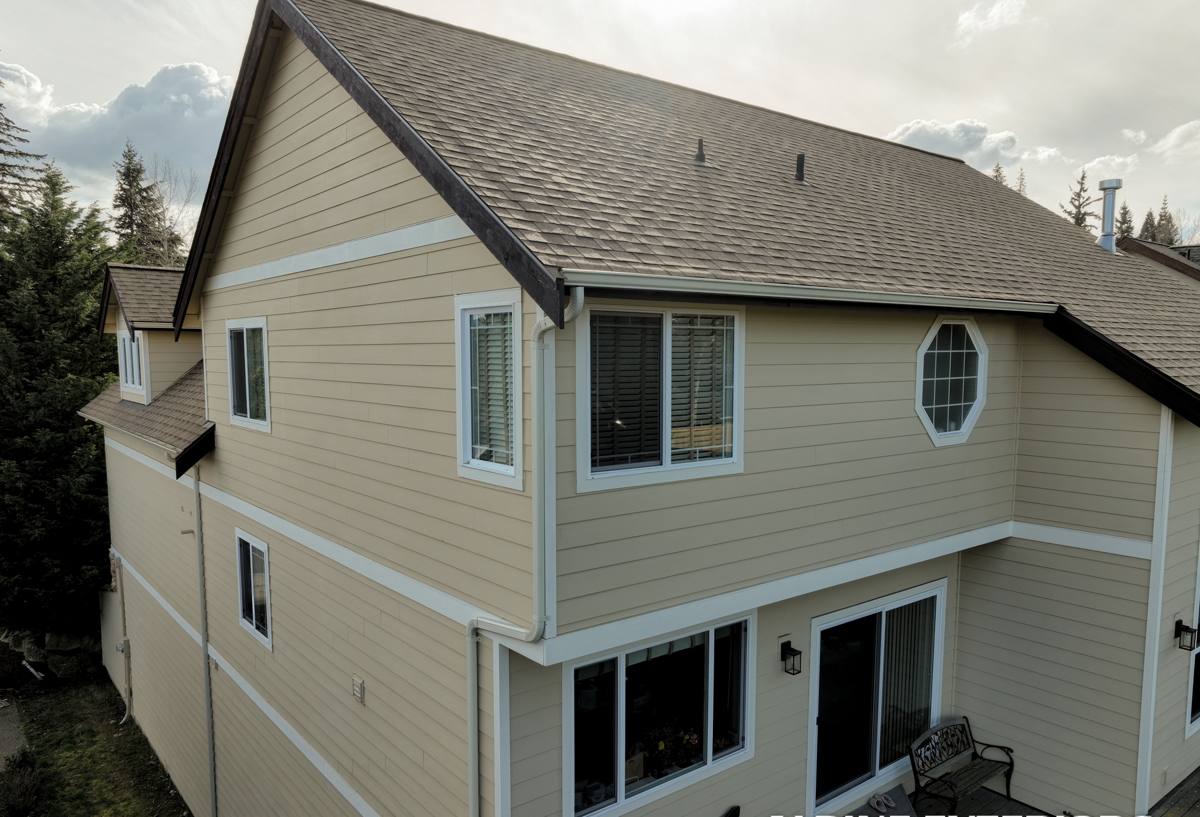
What Local Homes Actually Need From a Roof Repair
A repair in this climate has to do three things at once: stop the water, hold up to the next round of wind-driven rain, and not create a new weak point somewhere else on the roof. That last part trips up a lot of quick patch jobs. A poorly matched shingle, a bead of sealant instead of proper flashing, or a repair that doesn't account for how water actually moves across this roof in a sideways storm — all of those can look fine for a season and then fail right when you need them most.
Driving Rain and Wind-Blown Water
Storms coming off the water don't just drop rain straight down — they push it sideways and upward under shingle edges, around vent boots, and behind poorly sealed flashing. A repair that only addresses the visible gap and ignores how water travels underneath the roofing material tends to fail again within a year or two.
Moss and Sustained Moisture
Whatcom County's moss season runs long — mild temperatures and consistent moisture give it far more time to establish than in drier parts of the state. Moss holds water against the roofing surface, works its way under shingle tabs, and can lift edges just enough to let water in during the next rain. Any repair that doesn't also address nearby moss growth is only solving half the problem.
Salt Air and Metal Fatigue
Even away from the immediate waterfront, salt-laden air corrodes exposed fasteners, flashing, and metal roof components faster than an inland climate would. Over time this shows up as rust streaking, loosened nails, and flashing that's thinned enough to fail at the seams.
Common Signs You Need a Repair, Not a Full Replacement
Most homeowners call us because of one of two things: an active leak, or damage they noticed after a storm. Here's what typically points to a repair rather than a larger project.
Inside the House
- A water stain on the ceiling that appears after heavy rain and dries out afterward
- Peeling paint or a musty smell in an upstairs closet or attic space
- Daylight visible through the roof deck when viewed from inside the attic
- A sudden increase in attic humidity or visible condensation on rafters
Outside the House
- A handful of missing, cracked, or curling shingles rather than widespread wear
- Visible moss concentrated in one area, especially on north-facing slopes that stay shaded and damp
- Lifted or rusted flashing around chimneys, skylights, or roof-to-wall transitions
- Granules collecting in gutters after a windstorm — a sign of localized shingle damage
If what you're seeing matches this list and the rest of the roof still has reasonable life left, a targeted repair is almost always the right call — both for your budget and for avoiding unnecessary tear-off waste.
What a Correct Repair Actually Involves
A roof repair done right isn't just swapping a shingle and calling it done. It's a diagnostic process first, then a fix that matches how the rest of the roof is built.
Finding the Real Source
Water rarely shows up directly below where it entered. It travels along the underlayment or roof deck before finding a gap in the ceiling. A correct repair starts by tracing the leak back to its actual entry point — often flashing, a vent penetration, or a nail hole — rather than patching wherever the stain happens to be.
Matching Materials and Fastening Method
Shingles fade and weather over time, and mismatched replacement material stands out and can behave differently in wind and rain. We match shingle profile, color, and fastening pattern as closely as possible so the repair blends in and performs the same as the surrounding roof.
Flashing Gets the Same Attention as Shingles
In this climate, flashing failure is behind a large share of the leaks we see — more often than the shingles themselves. Any repair around a chimney, skylight, dormer, or roof valley gets flashing inspected and, where needed, replaced or resealed with proper technique, not just caulk over the old metal.
Addressing the Cause, Not Just the Symptom
If moss contributed to the failure, we clear it and treat the area so it doesn't immediately return. If ventilation issues are trapping moisture in the attic and accelerating deck rot, we'll flag that too — a repair that ignores the underlying cause is a repair you'll be paying for again.
Repair vs. Replacement: How We Decide
Not every roof problem calls for a repair, and not every roof needs a full replacement. Here's the general framework we use to talk homeowners through that decision honestly.
| Factor | Points Toward Repair | Points Toward Replacement |
|---|---|---|
| Age of roof | Under 15–20 years, or a newer roof with isolated damage | Near or past the end of its expected lifespan |
| Extent of damage | Localized to one slope, valley, or penetration | Widespread wear, curling, or granule loss across most of the roof |
| Moss and moisture history | Isolated patches, deck still sound underneath | Recurring moss with soft or rotted decking found on inspection |
| Number of past repairs | First or second repair on this roof | Repeated patches in different spots over a few years |
| Underlying deck condition | Solid, dry sheathing under the damaged area | Soft spots, delamination, or visible rot in the deck |
We'll always tell you plainly which side of this table your roof falls on. If a repair is the honest answer, that's what we'll recommend — a bigger job isn't a better job if it isn't the one your roof actually needs.
Our Repair Process
Every repair follows the same sequence, whether it's a single shingle or a full valley rebuild.
- Inspection and diagnosis. We get on the roof, trace the water path, and check attic-side conditions where accessible.
- Straight assessment. We explain what's actually wrong, what caused it, and whether repair or replacement makes more sense — in plain terms, no upsell pressure.
- Written scope and estimate. You know exactly what's being done and roughly what it will cost before any work starts.
- The repair itself. Matching materials, correct flashing technique, and attention to how water moves across your specific roof design.
- Cleanup and check. Debris cleared, gutters checked for granule buildup, and a final look to confirm the fix holds under the roof's actual conditions.
What We Bring on a Repair Call
| Situation | Typical Approach |
|---|---|
| Isolated shingle damage after wind | Shingle and underlayment replacement matched to existing roofing |
| Chimney or skylight flashing leak | Flashing removal and proper re-flash, not just resealing over old metal |
| Moss-related lifting shingles | Moss removal, gentle cleaning, shingle reset or replacement, and preventive treatment |
| Valley leak during heavy rain | Valley flashing inspection and rebuild if the metal or membrane has failed |
A Practical Checklist for Lynden Homeowners
Between visits from a roofer, a few habits go a long way toward catching problems early in this climate.
- Check the attic after a heavy storm for fresh stains, damp insulation, or a musty smell
- Look at north-facing and shaded roof slopes each fall — that's where moss tends to establish first
- Keep gutters and downspouts clear so water isn't backing up under the roof edge during heavy rain
- Watch for granules collecting in gutters, which often signal shingle wear before a visible leak appears
- Have flashing around chimneys, skylights, and vents checked every couple of years, since it fails before shingles usually do
- Don't ignore a small, intermittent stain — it's easier and cheaper to fix before it becomes a soft spot in the decking
Why It Matters That We Already Work in Lynden
A roof repair crew that regularly works in and around Lynden already understands how this specific stretch of Whatcom County behaves — how far salt air actually reaches inland on a west wind, which roof orientations hold moisture longest through the winter, and how driving rain off the water interacts with common roof designs in the area. That's not something you get from a crew that mainly works drier inland regions or coastal areas with a different rain pattern. It shows up in small decisions during a repair: how flashing is lapped, where extra attention goes on a valley, whether a shingle patch will actually blend and hold through the next winter's storms.
It also means a faster, more accurate diagnosis. When you've seen the same moss patterns and flashing failures repeatedly in this area, you spend less time guessing and more time fixing the actual problem.
When to Call Instead of Waiting
A small leak rarely stays small in this climate. Sustained moisture behind a shingle or under flashing keeps working at the roof deck through an entire wet season, and what starts as a quick patch job can turn into deck repair or a larger project if it sits too long. If you've noticed a stain, missing shingles after a storm, or moss creeping across a slope, it's worth having it looked at before the next round of heavy rain rather than after.
If you're not sure whether what you're seeing needs attention now or can wait, we're happy to take a look and give you a straight answer. We offer free, no-pressure estimates for roof repair work in Lynden and the surrounding Bellingham area — reach out using the form below and we'll get back to you with next steps.