 Bellingham Exterior
 Lynden's Climate Puts Real Demands on a Roof
Lynden sits inland from Bellingham Bay, but it doesn't escape the marine-influenced weather that defines Whatcom County. Moist air moves in off the Salish Sea and settles over the farmland and tree-lined lots around town, keeping humidity high for long stretches of the year. Add a wet season that can run from fall through spring, and a roof here is doing more work than a roof in a dry climate ever has to.
Two things stand out when we're up on a Lynden roof: how much moss has taken hold, and how much wear shows up at the flashing and edges rather than in the middle of the shingle field. Both are climate-driven, and both are preventable with the right materials and installation details.
Moss: More Than a Cosmetic Problem
Moss doesn't just make a roof look neglected. Once it establishes on a shaded, north-facing slope or in a valley that stays damp, it holds moisture directly against the shingle surface. Over time that moisture works shingle edges loose, accelerates granule loss, and can work its way under laps. A roof with heavy moss coverage is almost always aging faster than its neighbor with a clear roof, even if both were installed the same year.
Wind-Driven Rain and Flashing
Rain in this region rarely just falls straight down — storms push it sideways into valleys, against chimneys, and under the edges of anything that isn't lapped correctly. Shingles themselves shed water fine. It's the transitions — valleys, sidewalls, chimney flashing, pipe boots — where driving rain finds the gaps that a rushed or outdated installation left behind.
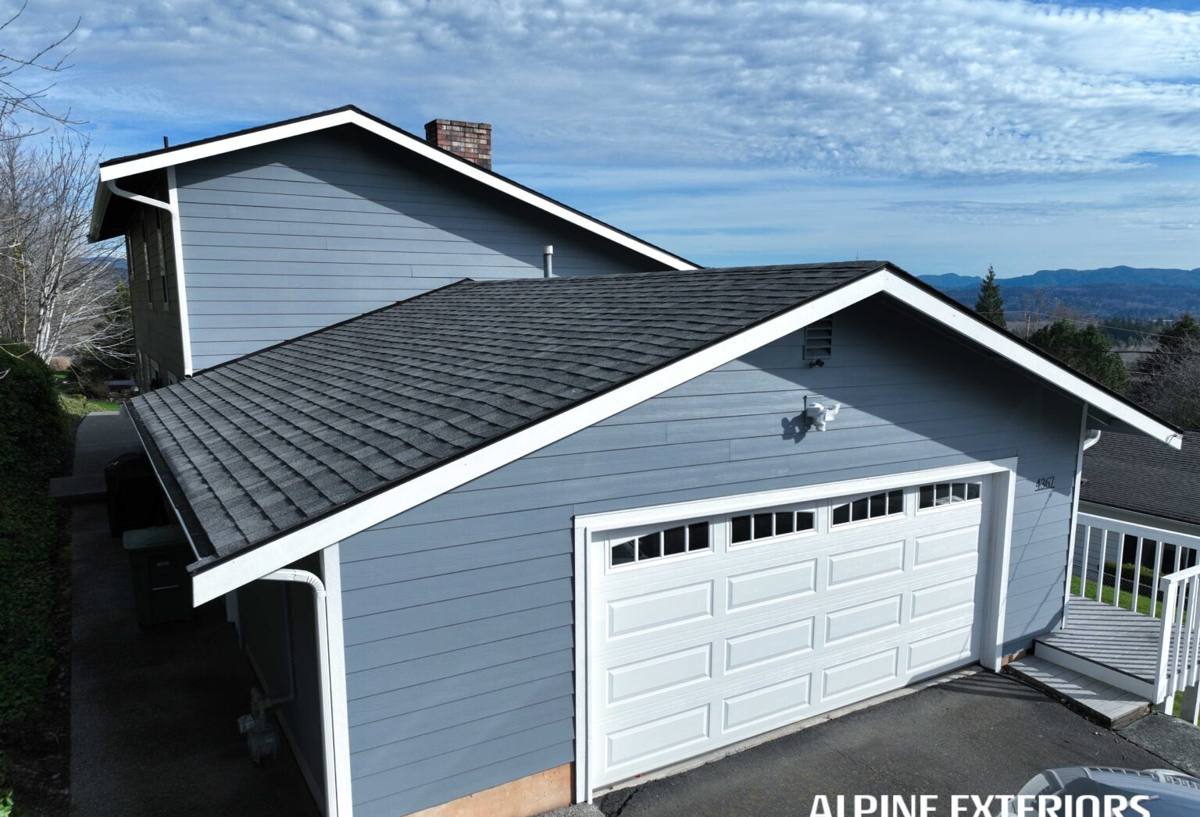
Signs a Lynden Home Is Due for a Roof Replacement
Roofs rarely fail all at once. Usually there's a stretch of small warning signs before a leak actually shows up inside the house. Worth checking for:
- Shingles that are curling, cupping, or losing granules in patches (look for bald spots that show darker underlayment)
- Moss or algae covering a significant portion of one or more slopes, especially shaded or north-facing areas
- Soft or spongy spots when walking the roof, which usually means the decking underneath has taken on moisture
- Daylight visible through the roof boards from inside the attic
- Water stains or discoloration on ceilings or in the attic, even faint ones
- Missing or torn shingles after a windstorm, especially repeated occurrences
- A roof approaching or past the manufacturer's expected service life for its material
- A pattern of repeated patch repairs instead of one fix that's held
Any one of these on its own might just need a repair. Several at once, or a roof that's simply reached the end of its expected life, usually means replacement is the more honest recommendation than another round of patching.
What a Correct Roof Replacement Involves
A roof replacement is more than swapping old shingles for new ones. Done right, it starts with a full tear-off — removing all existing layers down to the decking — rather than an overlay. Overlays hide the actual condition of the roof deck and trap moisture between layers, which is a poor trade-off in a climate that already gives moss and rot every advantage. Once the deck is exposed, any soft, delaminated, or rotted sheathing gets identified and replaced before anything new goes down. Skipping this step is one of the most common shortcuts in the trade, and it's the one most likely to cause problems within a few years.
Underlayment and Moisture Barriers
The underlayment is the roof's real waterproofing layer — the shingles are the weather shield, but the underlayment is what protects the deck if wind or ice ever gets water past them. In this climate, we pay particular attention to ice-and-water shield membrane at eaves, valleys, and around penetrations, paired with a quality synthetic underlayment across the rest of the field. Synthetic underlayment holds up better than old-style felt when it's exposed to humidity during installation, which matters on a roof that might not get a fully dry week to work with.
Ventilation
A roof that isn't ventilated correctly traps warm, moist air in the attic, which condenses on the underside of the deck and accelerates rot from the inside. It also keeps the roof surface warmer and damper than it should be, which is exactly the environment moss and algae prefer. Correct ventilation balances intake at the eaves with exhaust at the ridge so air actually moves, rather than just adding vents for the sake of it.
Flashing and Roof Penetrations
Step flashing at sidewalls, counter-flashing at chimneys, properly sized valley metal, and new pipe boots at every penetration are non-negotiable on a replacement. These are the details that determine whether wind-driven rain stays out or finds a way in, and they're also the details most likely to get reused or cut corners on by a crew trying to move fast.
Choosing the Right Roofing Material for a Lynden Home
There's no single "best" material — the right choice depends on the roof's slope, how much shade and moss pressure it gets, and how long the homeowner plans to stay in the house. Here's how the common options compare for a climate like this one:
| Material | Typical Lifespan | Moss/Moisture Resistance | Relative Upfront Cost |
|---|---|---|---|
| 3-tab asphalt shingle | 15-20 years | Fair — needs regular moss upkeep | Lowest |
| Architectural (dimensional) shingle | 25-30 years | Good, especially with algae-resistant granules | Moderate |
| Standing seam metal | 40-50+ years | Excellent — sheds moisture fast, little surface for moss to grip | Highest |
For most Lynden homes, an algae-resistant architectural shingle is the practical middle ground — meaningfully better moss and weather resistance than a basic 3-tab, without the upfront cost jump of metal. Metal earns its keep on steeper roofs, homes with heavy tree cover, or for owners planning to stay long enough to see the lifespan pay off.
Our Roof Replacement Process
- On-site inspection of the current roof, attic, and decking, with straight talk about what's actually needed
- Written estimate covering material options, scope of work, and timeline
- Material selection and scheduling, timed where possible around the weather forecast rather than fighting it
- Property protection — tarps and ground protection for landscaping, siding, and windows before tear-off begins
- Full tear-off to bare decking, with any damaged sheathing identified and replaced
- Installation of ice-and-water shield, underlayment, new flashing, and ventilation components
- New roofing material installed to manufacturer specifications
- Full site cleanup, including a magnetic sweep for stray nails
- Final walkthrough with the homeowner before we consider the job done
Why a Crew That Already Works in Lynden Matters
A roofing crew that spends most of its time in Whatcom County knows things that don't show up in a generic estimate: which permits and inspections the local jurisdiction requires, how to time a tear-off around a realistic dry window instead of hoping the forecast holds, and which roof orientations and tree-shaded lots in this area tend to develop moss fastest. That local pattern recognition shows up in fewer surprises mid-project and in a roof that's actually built for what this specific climate throws at it — not a generic install dropped in without adjustment.
It also matters after the work is done. A crew based nearby is easy to reach for a warranty question or a post-storm check, rather than a name that was here for one job and hard to track down afterward.
After the Replacement: Keeping Moss and Moisture at Bay
A correctly installed roof still benefits from basic upkeep in this climate. A short list that makes a real difference over the years:
- Keep gutters clear so water isn't backing up under the eave edge, especially during heavy fall rain
- Trim back overhanging branches to let more sun and airflow reach shaded slopes, which slows moss growth
- Have moss gently removed (not power-washed) before it spreads, rather than waiting until it covers a full slope
- Schedule a quick roof check after major windstorms to catch lifted or missing shingles early
- Have the roof looked at every couple of years even if nothing looks obviously wrong
What Roof Replacement Typically Costs in Lynden
Cost depends on roof size, pitch, how much decking needs replacing, how many layers of old roofing have to come off, and which material you choose. A straightforward asphalt shingle replacement on an average home is generally the most economical path, while metal roofing costs more upfront in exchange for a much longer service life. Rather than quote a number that doesn't reflect your actual roof, we walk the roof first and put together a written estimate based on what we actually find.
If your roof is showing its age or you just want an honest read on where it stands, we're happy to come take a look. The estimate is free, there's no pressure attached to it, and you'll walk away with a clear picture of what your roof actually needs — use the form below to get started.