 Bellingham Exterior
 Why Lynden Siding Takes More Punishment Than It Looks Like
Lynden sits inland from Bellingham Bay, but it doesn't escape the marine-influenced weather that defines this corner of Washington. The same damp, salt-tinged air that moves off the bay pushes east across Whatcom County as humidity, fog, and long stretches of driving rain. Add the region's tree cover and the shaded north- and east-facing walls common on farmhouses and newer subdivisions alike, and you get a near-permanent moss and algae season that runs from fall through spring most years. Siding here isn't just cosmetic — it's the one layer standing between that weather and a home's framing, insulation, and interior finishes.
Repair work in Lynden is rarely about a single dramatic problem. It's usually the slow accumulation of small failures: a cracked caulk joint that let water behind a board, a low corner that stays wet longer than the rest of the wall, a patch of moss holding moisture against the surface month after month. By the time it's visible from the driveway, the damage has often been developing for a year or more.
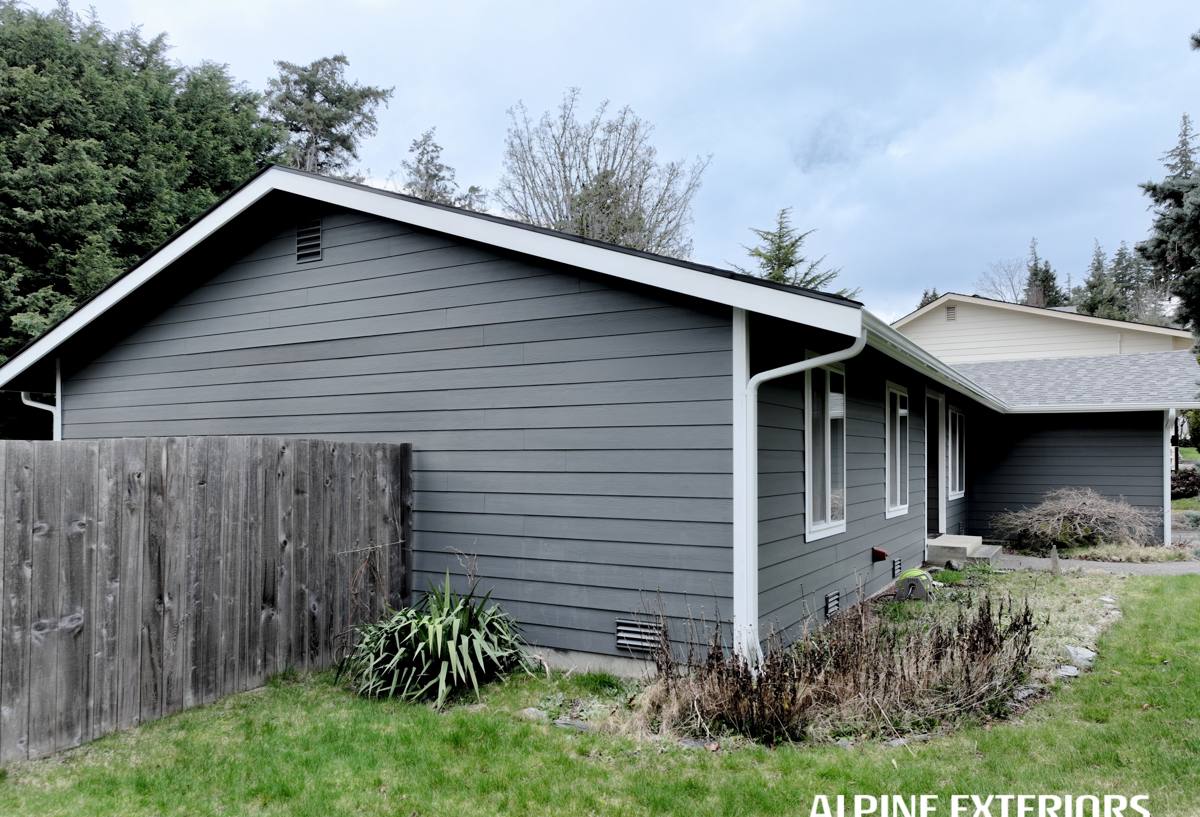
Signs Your Lynden Home's Siding Needs Repair
Most siding problems announce themselves quietly. Homeowners tend to notice the paint issue or the soft spot, not the moisture path that caused it. Walking the exterior once or twice a year — especially after the wet season — catches problems while they're still repairs instead of replacements.
- Soft, spongy, or crumbling siding when pressed, especially near the bottom of walls or below windows
- Paint that's peeling, bubbling, or repeatedly failing in the same spot even after repainting
- Visible gaps, cracks, or warping at board seams and butt joints
- Persistent moss, algae, or dark streaking that returns shortly after cleaning
- Swelling or delamination where panels meet trim, corners, or the foundation line
- Interior signs — musty smells, discolored drywall, or peeling interior paint on an exterior wall
- Siding that pulls away slightly from the wall or has visible fastener corrosion staining
What a Correct Siding Repair Actually Involves
A siding repair that just covers the visible damage is a repair that fails again within a few years. Done right, repair work starts with figuring out why that section failed in the first place — because in a climate like Whatcom County's, the cause is almost always moisture, and if the entry point isn't fixed, new siding over the same problem just buys a little time.
Diagnosis Before Demolition
Before any siding comes off, a correct repair traces the water path: is it a failed caulk joint, a flashing detail that was never installed correctly, a gutter or downspout dumping water where it shouldn't, or grade and landscaping pushing moisture up against the wall? Skipping this step is the single most common reason repairs don't last.
Checking What's Behind the Siding
Once the damaged section is opened up, the house wrap, flashing, and sheathing underneath need to be inspected — not just the siding itself. Wet or compromised sheathing has to be dried out or replaced before new siding goes back on, or the repair is cosmetic only.
Matching Material and Finish
Repairs should match the existing siding's profile, exposure, and finish as closely as possible. On a home already sided in James Hardie fiber cement, that means matching plank width and reveal and using the correct ColorPlus color match or a proper field-applied finish — not a close-enough substitute that stands out under different light.
Sealing and Flashing Details
The repair isn't finished when the new boards are up. Correct flashing at the top of the repaired section, proper caulking at joints designed to be sealed (and none at joints that shouldn't be), and attention to how water sheds off that section going forward are what keep the repair from becoming next year's callback.
Repair vs. Replacement: How We Help You Decide
Not every siding problem calls for a full re-side, and not every home benefits from patching one more time. The honest answer depends on how much of the wall is affected, what's underneath it, and how old the existing siding system is.
| Factor | Leans Toward Repair | Leans Toward Replacement |
|---|---|---|
| Extent of damage | Isolated to one wall or a few boards | Spread across multiple elevations |
| Sheathing condition | Dry, sound wood underneath | Soft, rotted, or repeatedly wet sheathing |
| Age of existing siding | Newer system, one localized failure | Original siding is decades old and failing broadly |
| Cause of damage | One identifiable, fixable source | Multiple recurring moisture sources |
| Material match | Close color/profile match available | Discontinued product, no reasonable match |
When a repair is the right call, we'll say so plainly — there's no upside for us or the homeowner in replacing siding that doesn't need it. When the damage points to something bigger, we'll walk through why, in plain terms, before any work starts.
Why We Only Repair and Install James Hardie
Bellingham Exterior Co installs and repairs one siding system: James Hardie fiber cement. We don't install or repair vinyl, LP SmartSide, Cemplank, Allura, or bare wood siding like primed spruce or cedar, and we're upfront about why.
In a climate defined by sustained moisture and moss growth, siding material matters as much as the installation. Fiber cement doesn't rot, doesn't feed moss and fungus the way untreated wood does, and doesn't expand and contract with moisture swings the way engineered wood products can when a seam or cut edge gets exposed. It's also non-combustible, which matters as wildfire smoke and dry-season fire risk have become a bigger part of Pacific Northwest summers. James Hardie's HZ5 product line is engineered specifically for climates like this one — freeze-thaw cycles, driving rain, and extended damp seasons — and its ColorPlus factory finish holds color and resists fading and moisture intrusion far better than field-applied paint on a cut edge.
That standardization means when we repair a Lynden home's siding, we're working with a product we understand completely — its fastening requirements, its clearances, its finish system — instead of guessing at how a less consistent material will behave once it's opened up. It also means repairs blend in properly, because ColorPlus colors are manufactured to a documented standard rather than mixed on site.
Our Siding Repair Process
- Inspection and diagnosis — we identify the actual cause of the damage, not just the visible symptom
- Written scope — a clear explanation of what's being repaired, why, and what it will take to fix it correctly
- Removal and inspection behind the siding — checking house wrap, flashing, and sheathing before closing anything back up
- Repair or replacement of damaged structure — any compromised sheathing or framing gets addressed, not covered
- Reinstallation with correct flashing and fastening — following James Hardie's installation specifications, not shortcuts
- Finish match — matching existing ColorPlus color and reveal as closely as the product line allows
- Final walkthrough — so you know exactly what was found, what was fixed, and what to watch for going forward
Why a Crew That Already Works in Lynden Matters
Siding repair is diagnostic work as much as it's construction work, and local experience shortens that diagnosis considerably. A crew that regularly works homes in Lynden and across Whatcom County has already seen how moss builds up on shaded north walls in this area, which older subdivisions were sided with products that are now discontinued, and how differently a home on an open lot weathers compared to one tucked under mature trees. That pattern recognition means fewer surprises once the siding comes off and a more accurate scope from the first estimate.
It also means accountability. A contractor based in and around Bellingham isn't a name from an out-of-town lead-generation site — we're back in Lynden regularly, which is part of why we stand behind repair work the way we do.
Maintaining Repaired Siding Through Whatcom County's Wet Season
A correct repair extends the life of the section it addresses, but ongoing care keeps the whole wall system performing the way it should.
- Rinse moss and algae growth off siding surfaces before it has a chance to hold moisture against the wall long-term
- Keep gutters clear so water isn't overshooting onto siding below rooflines
- Trim back vegetation that keeps walls shaded and damp longer than the rest of the house
- Re-caulk joints designed to be sealed if you notice cracking or gaps developing
- Walk the exterior after major fall storms and again in spring to catch new issues early
If you're seeing soft spots, recurring moss, or paint failure on your Lynden home's siding, we're happy to take a look and give you a straight answer on whether it's a repair or something bigger. Reach out for a free, no-pressure estimate — the form below gets you started.