 Bellingham Exterior
 Silver Beach's Roofing Challenges, Explained
Silver Beach is one of those Bellingham neighborhoods where the setting that makes it desirable — mature trees, close water, shaded lots — is the same setting that's hard on a roof. Homes here sit under heavy tree canopy for much of the year, which means shingles stay damp longer after every storm, gutters fill with needles and leaves faster than in more open parts of the city, and north-facing slopes barely see direct sun from November through February. That combination of shade, moisture, and organic debris is exactly what moss, algae, and slow rot need to get a foothold.
Add in the broader Whatcom County climate — the marine-influenced air that moves in off Puget Sound, long stretches of driving rain, and a moss season that can run most of the year in shaded spots — and you've got a roofing environment that punishes shortcuts. A roof installed the same way you'd install one in a dry inland climate won't last as long here. It needs different underlayment choices, different ventilation math, and more attention to the small details that keep water and moisture out of places they shouldn't be.
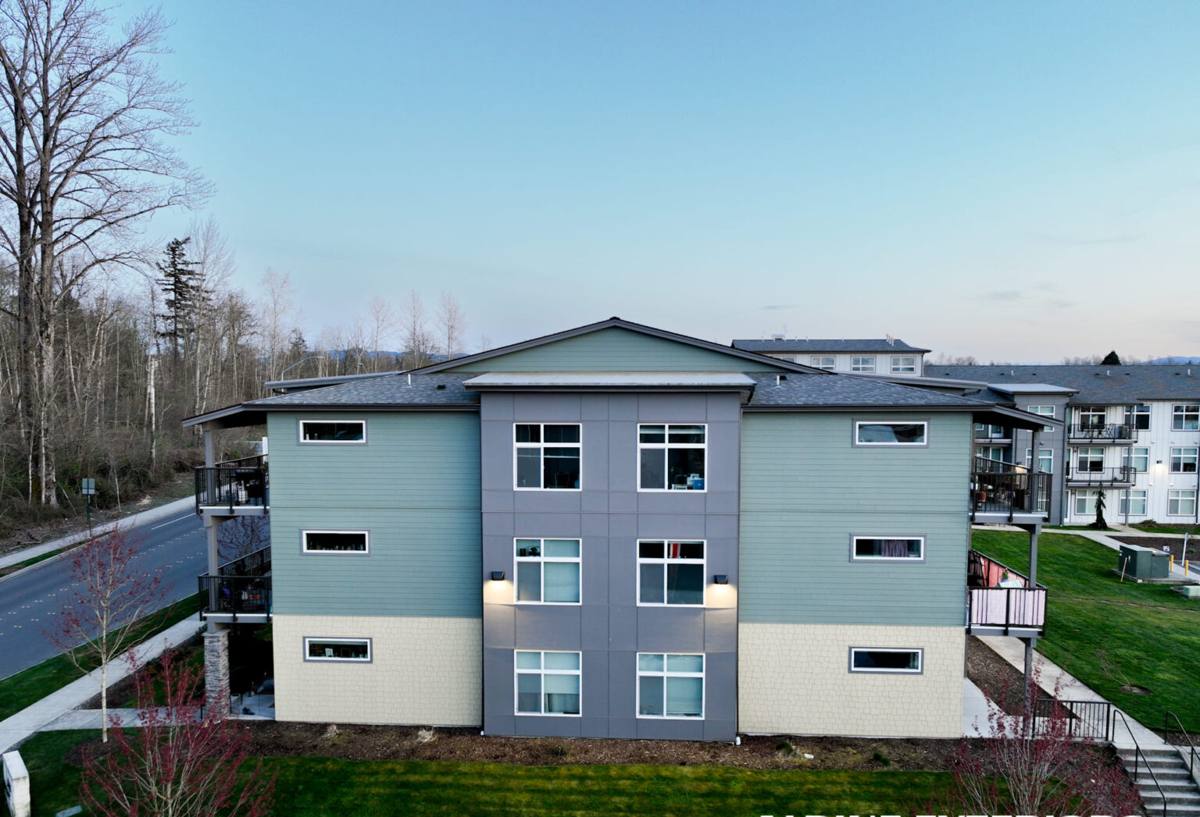
How Marine Air, Rain, and Moss Add Up Over Time
None of these factors destroy a roof overnight. They work slowly, which is part of why so many roofs get replaced later than they should — the damage is happening a layer at a time, underneath a surface that still looks fine from the ground.
Moisture that doesn't dry out
Shaded, tree-covered lots hold moisture against the roof surface longer than open ones. Wood shakes and older composition shingles both suffer for it — wood stays damp and starts to soften or cup, and shingle granules loosen faster when they're wet more often than they're dry. Over years, that moisture cycle is one of the biggest single drivers of early roof failure in this part of Whatcom County.
Moss and organic growth
Moss doesn't just sit on top of a roof — it grows into the seams between shingles or shakes, lifts edges, and holds water directly against the roofing material and the deck underneath. Once moss has established itself, pressure-washing it off can do more harm than good if it's not done carefully, because it can strip granules or loosen fasteners along with the growth.
Driving rain and wind-driven water
Whatcom County storms often bring rain sideways, not straight down. That matters at every penetration point — vents, chimneys, skylights, valleys — because flashing and underlayment that would be adequate in a calmer climate can let water track sideways underneath the shingles during a hard blow. This is one of the most common causes of hidden leaks in older Bellingham-area roofs.
Signs Your Silver Beach Roof Needs Replacing
Not every roofing problem means full replacement — but in a climate like this, several of these signs together usually do, especially on a roof already past 20-25 years old.
- Granules collecting in gutters or at downspout outlets, especially after a hard rain
- Shingles that look curled, cupped, or are missing their flat, uniform edge
- Moss or dark algae streaking that comes back within months of cleaning
- Soft spots or a spongy feel when walked on (a sign of deck moisture damage)
- Daylight visible through the roof deck from inside the attic
- Water stains on interior ceilings, especially near valleys, chimneys, or skylights
- Sagging rooflines or visible dips between rafters
- A roof that's simply reached the end of its rated lifespan, even if it looks okay from the street
If you're seeing two or more of these, it's worth getting an actual inspection rather than another patch repair. Patching a roof that's structurally near the end of its life often costs more over a few years than a properly planned replacement.
What a Correct New Roof Installation Actually Includes
A new roof is more than shingles nailed to a deck. In a climate that gets as much sustained moisture as Whatcom County, the parts you can't see after the job is done matter as much as the parts you can.
Tear-off and deck inspection
We remove the old roofing down to the deck rather than layering over it. That's the only way to actually see what's underneath — and on shaded, moss-prone lots like Silver Beach, it's common to find soft or rotted plywood or plank decking that needs to be replaced before anything new goes down. Installing over a compromised deck just hides the problem for a few more years.
Underlayment built for this climate
Underlayment is the roof's real waterproofing layer, and it's where a lot of cheap installs cut corners. For Silver Beach's shaded, rain-heavy conditions, that means synthetic or self-adhered underlayment in the field, and ice-and-water shield or peel-and-stick membrane at valleys, eaves, and any low-slope transitions — the spots most likely to see standing water or wind-driven rain.
Flashing at every penetration
Chimneys, skylights, plumbing vents, and roof-to-wall transitions all need properly formed, correctly lapped flashing — not just roofing cement smeared over a gap. Flashing failures are one of the most common causes of the leaks we get called out to fix on roofs that are otherwise only a decade or so old.
Ventilation and airflow
A new roof needs a balanced intake-and-exhaust system so moist air can actually leave the attic instead of condensing against the underside of the deck. This matters even more on tree-shaded lots, where less solar drying happens naturally.
Material Options for Silver Beach Homes
There's no single "best" roofing material for every house — the right choice depends on your roof's slope, how much shade it sits under, your budget, and how long you plan to stay in the home. Here's how the common options compare for this specific climate and setting.
| Material | How it handles moisture & moss | Typical lifespan here | Notes for shaded, tree-covered lots |
|---|---|---|---|
| Architectural asphalt shingles | Good, especially with algae-resistant granules | 25-30 years | Solid all-around choice; needs periodic moss removal on shaded slopes |
| Standard 3-tab asphalt | Fair — thinner profile, less resistant over time | 15-20 years | Lower upfront cost but shorter life in wet, shaded conditions |
| Metal roofing (standing seam) | Excellent — sheds water fast, discourages moss growth | 40-50+ years | Strong option under heavy tree cover; higher upfront cost |
| Cedar shakes | Poor to fair without diligent upkeep | 20-25 years with maintenance | Attractive but high-maintenance in shade; moisture-sensitive |
| Composite/synthetic shingle | Good — engineered for moisture resistance | 30-40 years | Worth considering where wood look is wanted without wood's upkeep |
We'll walk you through these trade-offs honestly for your specific roof — including where a lower-cost material genuinely makes sense and where it will just mean redoing the work sooner.
Our Installation Process
- On-site inspection and estimate. We look at your existing roof, attic ventilation, and any problem areas, and give you a clear, honest assessment — repair candidate versus replacement.
- Material selection. We go over options based on your roof's slope, shade exposure, and budget, without pushing a product that isn't right for your house.
- Scheduling around weather. We plan installs to work with Whatcom County's rain patterns, protecting the open deck if conditions turn during the job.
- Tear-off and deck repair. Full removal of old roofing, with any soft or damaged decking replaced before new materials go down.
- Underlayment and flashing installation. Moisture barriers and metal flashing installed at every valley, penetration, and transition point.
- Roofing material installation. Installed to manufacturer specifications, with attention to nailing patterns and exposure — details that directly affect how well a roof holds up to wind-driven rain.
- Ventilation check and final walkthrough. We confirm intake and exhaust airflow is balanced, clean up the site, and walk the finished roof with you.
Ventilation and Moss Prevention
A new roof is a good moment to get ahead of the moss cycle rather than just resetting the clock on it. Zinc or copper strips installed near the ridge can help suppress regrowth over time as rain carries trace minerals down the roof surface — a low-maintenance option worth discussing for shaded slopes. Beyond that, the biggest factor in how fast moss comes back is simply how much shade and organic debris a roof deals with, so keeping gutters clear and trimming back overhanging branches where practical makes a real difference.
Proper attic ventilation also plays a role most homeowners don't think about: an attic that's too warm and moist relative to the outside air encourages condensation on roof sheathing from underneath, which adds to the moisture problem moss and rain are already creating from above. Getting the intake-exhaust balance right is a small design detail with a big long-term payoff.
What Influences Cost
Every roof is different, so exact numbers depend on your specific project, but the main cost drivers on a Silver Beach re-roof are generally:
- Roof size and number of facets, valleys, and penetrations
- Pitch — steeper roofs take longer and require more safety setup
- Material choice, from standard asphalt up through metal or composite
- Deck condition — how much plywood or plank replacement is needed once the old roofing comes off
- Access — tree cover and tight lots can add setup and cleanup time
- Ventilation upgrades needed to bring an older attic system up to a proper balance
We'll break these down specifically for your roof during the estimate rather than quoting off a generic per-square number, since deck condition alone can shift a project significantly once tear-off starts.
Why a Crew That Knows Silver Beach Matters
Roofing crews that mostly work drier, more open parts of the county sometimes underestimate how much shade and moisture change the math on a job — how much extra deck repair to expect, how aggressive the ventilation needs to be, or how soon moss will return without preventive measures. Working regularly in neighborhoods like Silver Beach means we've already seen how these tree-lined, lake-adjacent lots behave over a full Whatcom County year, not just on the day of the estimate.
That familiarity shows up in practical ways: knowing which slopes on a given lot layout tend to hold moisture longest, planning installs around the area's rain patterns instead of guessing, and setting up ventilation that accounts for a shadier-than-average lot from the start. It's the difference between a roof that's installed correctly on paper and one that's actually built for where it sits.
If your Silver Beach roof is showing its age, or you just want an honest opinion on how much life it has left, we're happy to take a look. Reach out for a free, no-pressure estimate using the form below.