 Bellingham Exterior
 Building Decks for South Hill's Climate
South Hill sits above downtown Bellingham on sloped, tree-lined lots, many with partial views out toward Bellingham Bay. That elevation and tree cover is part of what makes the neighborhood desirable, but it also creates a specific set of conditions for anything built outdoors. Homes here deal with salt-laden air drifting up from the water, driving rain that comes in sideways off Puget Sound storms, and a moss season that can stretch from October well into spring under the neighborhood's mature tree canopy. A deck built without that combination in mind will show problems faster than a deck built for a drier, more open lot.
We build and repair decks throughout Whatcom County, and South Hill's older housing stock, sloped yards, and shaded lots come with their own patterns of wear. This page covers what a deck actually needs to hold up here, what a correct build looks like, and how we approach the work.
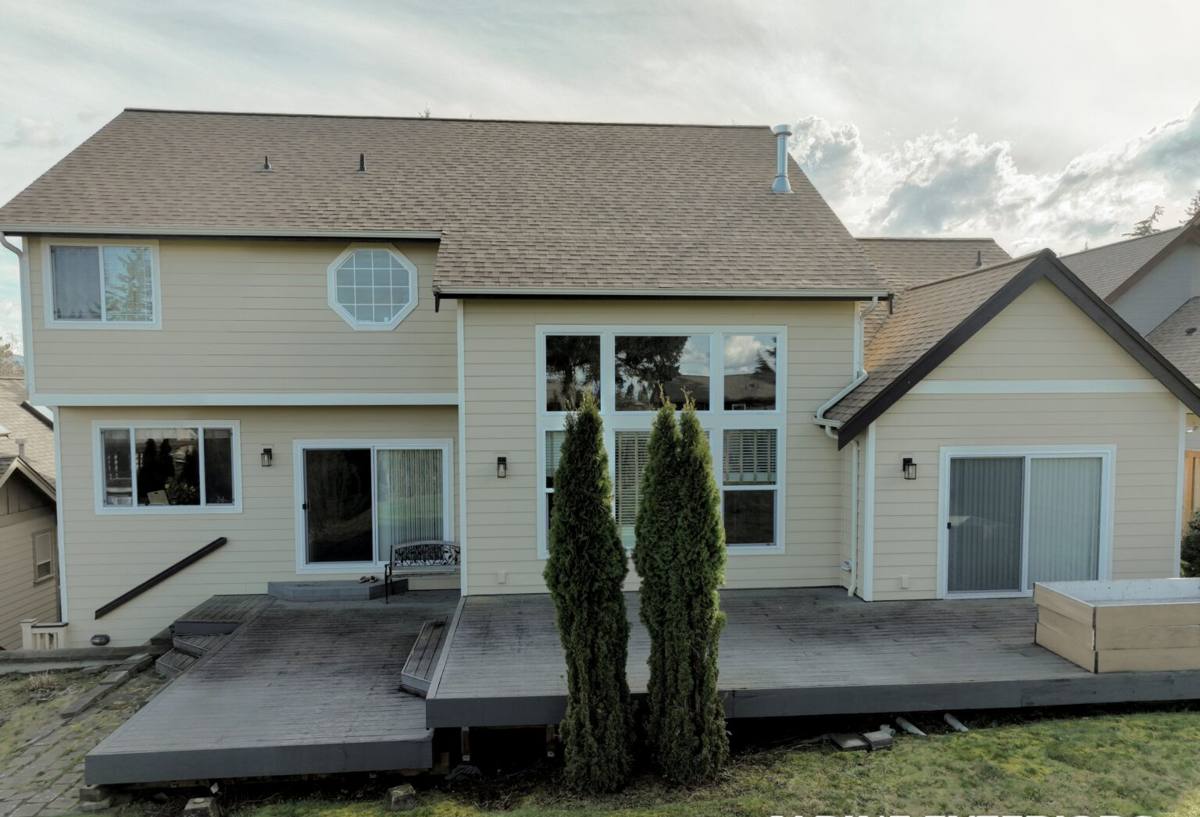
What South Hill Homes Need From a Deck
Three regional factors drive almost every deck problem we see in this part of Bellingham:
Salt Air and Corrosion
Even a few miles inland from the bay, airborne salt accelerates corrosion on fasteners, joist hangers, and any exposed metal hardware. Standard hardware that would be fine in a landlocked climate can start rusting within a few years here. Coastal-rated, corrosion-resistant fasteners aren't an upsell on a South Hill deck — they're a baseline requirement.
Driving Rain and Water Management
Bellingham's rain rarely falls straight down. Wind-driven rain gets pushed under railings, into ledger board connections, and along any horizontal surface that isn't properly flashed or sloped to shed water. Poor water management is the single biggest reason we get called out to repair decks that are only a decade or so old — not because the decking boards failed, but because water got into the structure underneath.
Shade, Moss, and Slow Drying
South Hill's tree cover is one of its best features, but it also means many decks stay shaded and damp for long stretches, especially on the north and east sides of a lot. Wood surfaces that don't get regular sun exposure hold moisture longer, which is exactly the environment moss, algae, and eventually rot need to take hold. A deck built without airflow underneath, or with tight board spacing, will grow moss faster than one designed to dry out between rains.
What a Correctly Built Deck Involves
A deck that holds up in this climate isn't about any single product — it's about how the whole system is put together. The parts that matter most, and that are also the easiest to shortcut, are underneath the decking boards where you can't see them once the project is done.
- Ledger board attachment and flashing: the connection to the house is the most common failure point on any deck; it needs proper flashing so water is directed away from the house framing, not into it.
- Footings sized for the soil and slope: South Hill's grade changes mean footing depth and placement often need to account for slope stability, not just frost line.
- Corrosion-resistant fasteners and hardware: hot-dip galvanized or stainless hardware rated for coastal exposure, used consistently — not just on the parts that are easy to reach.
- Joist spacing matched to the decking material: composite and PVC boards often require tighter joist spacing than wood; building to lumber spacing and switching materials later is a common mistake.
- Airflow underneath the deck: adequate ground clearance and, where the lot allows it, gaps that let air move under the structure so it can actually dry out between rains.
- Board spacing and drainage: gapping that lets water and debris pass through instead of collecting, which matters more under tree canopy than in open sun.
None of this is unusual or specialized — it's just easy to skip when a crew is trying to finish a job quickly. The difference shows up five to ten years later, in the form of soft framing, rusted-through hardware, or a ledger connection that's been slowly feeding water into the house.
Choosing the Right Decking Material
There's no single "right" material for every South Hill deck — it depends on how much sun the lot gets, how much upkeep the homeowner wants to do, and budget. Here's how the common options actually compare in this climate:
| Material | How It Handles Rain & Shade | Maintenance | Typical Lifespan |
|---|---|---|---|
| Pressure-treated wood | Needs sealing to resist moisture; shaded areas hold water longer and are more prone to graying and moss | Annual cleaning, resealing every 1-3 years | 10-15 years with upkeep |
| Cedar | Naturally rot-resistant but still needs finish maintenance in a wet, shaded climate | Regular cleaning and periodic staining or sealing | 15-20 years with upkeep |
| Composite decking | Doesn't absorb water like wood, but still needs airflow underneath to avoid mildew and moss buildup on the surface | Periodic washing; no sealing or staining | 25-30 years |
| PVC/capped composite | Most resistant to moisture absorption and moss staining; performs well in consistently shaded, damp spots | Occasional washing | 25+ years |
We don't push one product line over another. What we push is matching the material to the specific lot — a sun-exposed deck and a deeply shaded one under mature trees don't have the same needs, even on the same street.
Our Deck Building Process
The process for a South Hill deck starts the same way any deck project should, but with extra attention to two things: the slope of the lot and the amount of shade the finished deck will actually get through the year.
- On-site assessment: we look at grade, drainage patterns, sun exposure, and the condition of any existing structure before talking materials.
- Design and material selection: we walk through options based on how the space will be used, how much maintenance the homeowner wants long-term, and the realities of that specific lot.
- Permitting: most deck work in the City of Bellingham and unincorporated Whatcom County requires a permit, particularly for decks attached to the house or built above a certain height. We handle that process rather than leaving it to the homeowner.
- Structural build: footings, framing, ledger attachment and flashing, and hardware — the parts that determine how the deck performs, not just how it looks.
- Decking, railing, and finish work: installed to the spacing and fastening specs the chosen material requires, not a generic standard.
- Final walkthrough: we go over drainage, maintenance expectations, and anything specific to that deck's sun and shade pattern before we consider the job done.
Why a Crew That Already Works South Hill Matters
A deck built for a flat, sunny lot in a different part of Whatcom County doesn't automatically translate to a sloped, shaded South Hill lot. Crews unfamiliar with the neighborhood sometimes underbuild footings for the grade, skip the extra flashing detail a shaded ledger connection needs, or spec hardware that isn't rated for the salt exposure this close to the bay. We've done deck work across South Hill's mix of older homes and newer builds, and we design around the slope and tree cover that's already on the property rather than treating every lot the same.
That local familiarity also matters for permitting. Bellingham's permit requirements and inspection expectations aren't identical to every jurisdiction, and knowing what an inspector will look for on a hillside lot saves time and avoids rework.
Deck Maintenance in a Rainy, Shaded Climate
Even a well-built deck needs some seasonal attention in this climate. A short annual routine goes a long way toward preventing the moss, rot, and hardware corrosion that shorten a deck's life here:
- Sweep debris and leaf buildup out of board gaps regularly, especially in fall when tree cover sheds the most.
- Clean moss and algae off the surface at the start of spring before it has a chance to spread across shaded boards.
- Check railing posts and stair connections for movement once a year — loose hardware is often the first sign of a fastener starting to corrode.
- Confirm gutters and downspouts near the deck are directing water away from footings and ledger connections.
- For wood decks, reseal on the schedule the product calls for — shaded sections often need it sooner than sun-exposed sections of the same deck.
- Watch for soft spots or discoloration near the house connection, which can signal a flashing or ledger issue before it becomes a structural one.
What Affects the Cost of a South Hill Deck
Every deck project is different, but a few factors consistently move the price on South Hill lots specifically:
| Factor | Why It Matters Here |
|---|---|
| Slope and grade | Sloped lots often need taller footings, additional framing, or stairs, which adds material and labor |
| Access to the site | Narrower or steeper driveways and yards common on South Hill can limit equipment access and add labor time |
| Decking material | Composite and PVC cost more upfront than wood but reduce long-term maintenance costs |
| Railing style and code requirements | Height and guard requirements depend on deck elevation, which varies more on sloped lots |
| Existing structure condition | Replacing an old deck can cost less than a new build if the footings are sound, but more if they need to be redone |
We give a firm, itemized quote after seeing the site — not a rough number based on square footage alone, since the slope and access on a given South Hill lot can change the scope more than people expect.
Get a Straight Answer for Your Property
If you're planning a new deck or dealing with an aging one that's showing signs of moss, soft spots, or rusted hardware, we're happy to take a look and give you an honest read on what it needs. Reach out for a free, no-pressure estimate using the form below.