 Bellingham Exterior
 Why Silver Beach Roofs Take a Different Kind of Beating
Homes along the Silver Beach area on Lake Whatcom sit in a spot where several stressors stack up on a roof at once. The tree canopy is heavier here than in a lot of Bellingham neighborhoods, which means more needle and leaf litter collecting in valleys and behind chimneys after every windstorm. The terrain around the lake channels wind in ways that flatter, more open lots don't experience, so gusts can hit roof edges and ridge caps from unexpected angles. And because this is Whatcom County, the roof is rarely given more than a few dry weeks in a row to fully dry out between weather systems.
None of that means Silver Beach roofs are poorly built. It means they're worked harder than the manufacturer's warranty paperwork assumes, and storm damage here tends to show up as an accumulation of smaller failures rather than one dramatic event. A missing shingle after a windstorm is the obvious problem. The moss colony that's been quietly lifting shingle edges for two winters is the one that actually costs homeowners money.
The Salt Air and Moisture Factor
Bellingham's proximity to salt water adds a layer most inland roofing advice doesn't account for. Salt-laden air accelerates corrosion on exposed metal — flashing, fasteners, gutter hardware — faster than it would in a dry inland climate. Combine that with driving rain that gets pushed sideways under shingle tabs and ridge vents during a real storm, and you get failure points that don't announce themselves until water is already inside the attic.
What Actually Counts as Storm Damage
Not every problem a homeowner notices after a windstorm is storm damage in the insurance or repair sense, and it's worth understanding the difference before you call anyone out.
- True storm damage: shingles torn loose or missing, flashing bent or pulled away, a branch strike that cracked or punctured the roof deck, gutters ripped off the fascia, or a sudden active leak that started during or right after a specific weather event.
- Storm-revealed damage: a leak that only became visible during a storm but was actually caused by months or years of moss growth, worn flashing sealant, or aging underlayment. The storm didn't cause this — it just found the weak spot.
- Cosmetic wear: granule loss, minor moss staining, or algae streaking that looks bad but isn't letting water in yet.
This distinction matters because it changes both the repair scope and, often, whether an insurance claim makes sense. An honest inspection tells you which category you're actually in before any work starts.
Our Storm Damage Repair Process
1. Inspection, Not Guesswork
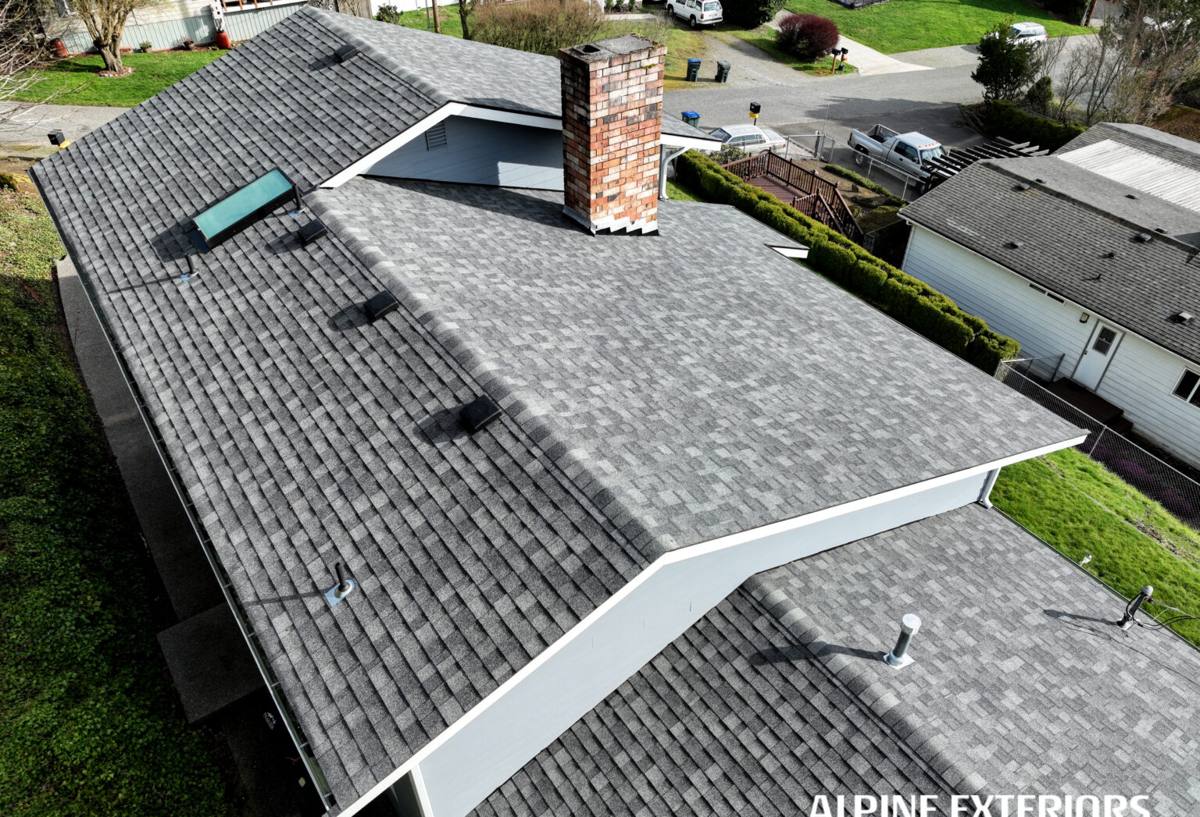
We walk the roof and the attic, not just the roof. A lot of storm damage assessments stop at "the shingles look fine from the ladder," but water intrusion often shows up first as staining on attic sheathing or insulation before it's visible from outside. We check flashing at every penetration — chimneys, vents, skylights — since these are the most common failure points in wind-driven rain events.
2. A Written Scope Before Any Work Starts
You get a clear explanation of what's damaged, what's simply aged, and what we recommend doing now versus what can reasonably wait. No pressure to replace a whole roof section when a targeted repair will hold.
3. Tarping and Stabilization When Needed
If there's active water intrusion and full repair can't happen immediately — waiting on materials, insurance documentation, or weather clearing enough to work safely — we stabilize the area first so the damage doesn't spread while things get sorted out.
4. The Repair Itself
Matching shingle repairs to existing roofing as closely as possible, replacing damaged flashing rather than just re-sealing it, and confirming underlayment integrity in the repaired zone before closing it back up. A repair that only addresses the visible shingle and ignores the flashing or underlayment underneath tends to fail again at the next storm.
5. Documentation
Photos and a written summary of what was found and what was done — useful for your own records and often necessary if you're filing an insurance claim.
Common Silver Beach Storm Repairs
| Damage Type | What Typically Causes It | Repair Approach |
|---|---|---|
| Missing or torn shingles | Wind gusts channeled off the lake and surrounding terrain | Section replacement matched to existing shingle line, with fastener pattern checked against current wind-rated standards |
| Lifted or cracked flashing | Salt air corrosion combined with wind flexing at joints | Full flashing replacement rather than caulking over the gap |
| Moss-lifted shingle edges | Heavy tree canopy and extended damp season | Moss removal, edge re-securing, and treatment to slow regrowth |
| Branch or debris impact | Storm winds through mature trees near the roofline | Deck inspection for cracking, targeted patch or section replacement |
| Gutter and fascia separation | Wind load plus water weight from clogged gutters | Re-securing or replacing damaged fascia, clearing and re-hanging gutters |
Insurance and Storm Damage: What to Know Before You Call Your Adjuster
Most homeowner policies cover sudden storm damage but not gradual deterioration, which is exactly why the distinction we described earlier matters. Before you file a claim, it helps to have an independent roofing assessment in hand — not from the insurance company's adjuster alone, but from a contractor who can document the actual cause of the damage in plain terms.
We won't tell you what your policy covers; that's between you and your insurer. What we can do is give you an honest, documented account of what happened to your roof so you're walking into that conversation with facts instead of guesses.
Moss and the Long Wet Season: Prevention After the Repair
Fixing storm damage without addressing why it happened is a short-term win. In Silver Beach's tree-heavy, lake-adjacent setting, moss and organic debris are the recurring threat between storms, not just during them. Moss holds moisture against the shingle surface for weeks at a time, which softens the shingle mat and works fasteners loose — exactly the kind of weak point that turns a moderate windstorm into a real leak.
After a storm repair, we look at the whole roof for moss pressure points: north-facing slopes, areas under heavy branch cover, and valleys where needle debris collects. Zinc or copper strip treatments, periodic gentle cleaning, and keeping overhanging branches trimmed back all reduce how much work the roof has to do to shed water on its own.
What to Do Immediately After a Storm
- Check the attic for water stains, damp insulation, or daylight coming through the roof deck — do this before you go up on the roof itself
- Photograph any visible damage from the ground: missing shingles, hanging gutters, debris on the roof
- Don't walk a wet or storm-damaged roof yourself — loose shingles and soft decking are a fall risk even for experienced homeowners
- Clear immediate water intrusion inside the home (buckets, moving items) but don't attempt DIY roof patches in bad weather
- Call a local roofer for an inspection before assuming the worst — or the best
- Hold off on major cleanup of roof debris until it's been documented, especially if you may file an insurance claim
Why a Crew That Already Works Silver Beach Matters
Storm damage repair isn't just a technical skill — it's a familiarity skill. A crew that regularly works the Silver Beach and greater Bellingham area already knows which flashing details tend to fail first on lakeside homes, how much moss pressure a given tree line creates, and what wind exposure actually looks like on this specific stretch of Lake Whatcom versus a roof a few miles inland in Whatcom County. That familiarity shows up as fewer surprises during the repair and a scope of work that's realistic from the first inspection, not revised twice after work has started.
It also matters for response time. After a widespread storm, roofing crews get busy fast, and a contractor already routing through your neighborhood can often get to an active leak faster than one dispatching from further away.
Getting Your Roof Assessed
If your Silver Beach home took a hit in the last storm — or you're just noticing moss and wear building up after another wet Whatcom County season — it's worth getting a straight answer on what's actually going on up there before it turns into a bigger repair. We offer free, no-pressure estimates: an honest look at your roof, a clear explanation of what we find, and a scope you can actually use to make a decision. Fill out the form below to get started.