 Bellingham Exterior
 Roof Replacement Built for Sunnyland's Conditions
Sunnyland sits close enough to Bellingham Bay to catch salt-laden air, and its tree-lined streets keep a lot of roofs shaded for much of the day. That combination is harder on a roof than most homeowners realize. Salt air accelerates corrosion on exposed metal fasteners and flashing. Shade from mature trees keeps roof decks damp long after a storm has passed, which is exactly the environment moss needs to take hold. Add in Whatcom County's long, wet fall-through-spring stretch of driving rain, and you have a roof that's working harder than one in a drier, more open part of the county.
When a roof in this neighborhood reaches the end of its service life, replacing it correctly means accounting for all three of those factors — not just swapping old shingles for new ones. This page covers what that actually looks like for a Sunnyland home.
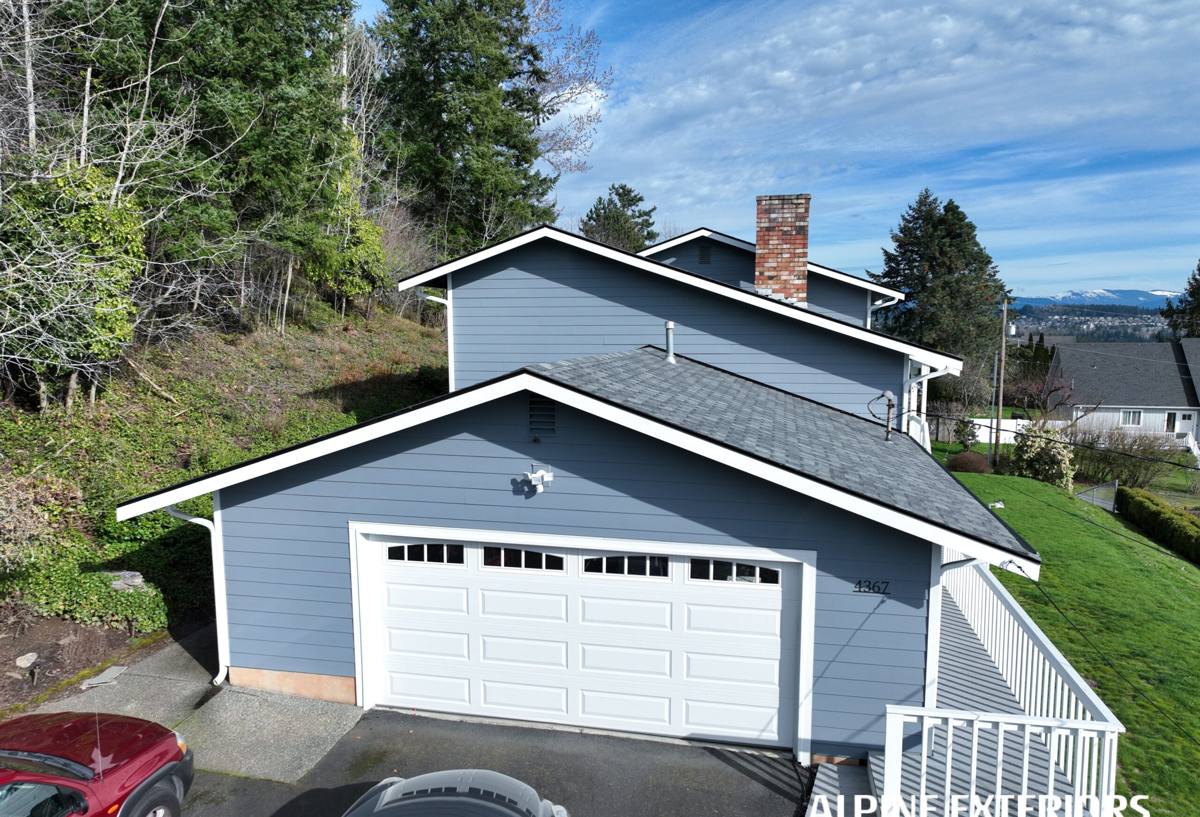
Signs a Sunnyland Roof Needs Replacing, Not Just Repairing
Not every roof problem calls for a full replacement, and a good contractor should tell you honestly when a repair will hold. But there's a point where patching stops making financial sense. Watch for:
- Granule loss heavy enough that you're finding asphalt granules collecting in gutters or at downspout outlets season after season
- Shingles that are cupping, curling, or cracking across large sections rather than in one isolated spot
- Moss that keeps coming back within a year or two of cleaning, even after treatment — a sign the shingle surface is degraded enough to hold moisture
- Soft or spongy decking felt underfoot in the attic, especially near valleys or eaves
- Daylight visible through the roof deck from inside the attic
- Multiple past repairs in different areas of the same roof, rather than one contained problem
- A roof approaching or past 20-25 years old (for architectural asphalt) with no major upgrades since installation
If a roof is showing two or more of these at once, replacement is usually the more honest recommendation than another round of patching.
What Bellingham's Climate Does to a Sunnyland Roof
Moss and Shade
Whatcom County's moss season runs long — moss growth doesn't fully stop even in the drier summer months if a roof stays shaded. On a tree-covered street like much of Sunnyland, north-facing slopes and areas under overhanging branches are the first to show moss, and moss holds water against the shingle surface. Over years, that constant moisture breaks down the granule layer and shortens the roof's life well before its rated age.
Driving Rain
Pacific storms here don't just drop rain straight down — wind-driven rain gets pushed sideways under shingle edges, around chimney flashing, and into valleys. A roof system with weak underlayment or poorly lapped flashing might shed rain fine in a light drizzle and still leak in a real windstorm. Replacement is the chance to correct underlayment and flashing details that a repair can't fully fix.
Salt Air
Proximity to Bellingham Bay means airborne salt reaches Sunnyland roofs, especially on exposed elevations. Salt accelerates corrosion on unprotected steel fasteners, cheap flashing, and lower-grade metal vents. It's one more reason material and fastener choice matters more here than it would inland.
Choosing the Right Roofing Material for This Neighborhood
There's no single "best" roofing material — the right choice depends on your home's structure, your budget, and how much long-term maintenance you want to take on. Here's how the common options stack up for Sunnyland's conditions specifically:
| Material | Moss Resistance | Salt-Air Durability | Typical Lifespan | Maintenance |
|---|---|---|---|---|
| Architectural asphalt shingle | Moderate (better with algae-resistant granules) | Good with corrosion-resistant fasteners | 25-30 years | Periodic moss/debris cleaning |
| Standing seam metal | High — sheds moisture quickly | Good with coated/coastal-rated panels | 40-50+ years | Low; occasional fastener check |
| Composite/synthetic shake | Moderate to high | Good | 30-40 years | Low to moderate |
| Cedar shake | Low without regular treatment | Moderate; needs sealed fasteners | 20-30 years with upkeep | High — regular cleaning/treatment required |
Cedar shake can still be the right call for homes where it matches the architecture, but we're upfront that it demands the most ongoing attention in a shaded, damp neighborhood like this one — regular cleaning and moisture management aren't optional, they're part of owning the material. For homeowners who want the lowest-maintenance option, standing seam metal or a quality architectural asphalt with algae-resistant granules tends to be the better fit here.
What a Correct Roof Replacement Involves
A roof replacement is only as good as what's underneath the new shingles. A rushed job that just layers new material over old problems will fail early, often exactly where the last roof did. A correct replacement includes:
Full Tear-Off
Removing the old roofing down to the deck, not overlaying. This is the only way to actually inspect the deck and catch rot, soft spots, or prior damage before it's covered up again.
Deck Repair
Any damaged or delaminated sheathing gets replaced before anything new goes down. Skipping this is the single most common shortcut that leads to early failure.
Ice-and-Water or Synthetic Underlayment
Especially at eaves, valleys, and around penetrations — the areas most exposed to wind-driven rain. This is a low-visibility upgrade that matters enormously in this climate.
Proper Flashing
New step flashing, counter-flashing, and valley metal — reusing old flashing is a common corner-cutting move that shows up as a leak within a year or two, especially with salt-air corrosion already at work on older metal.
Attic Ventilation Check
Balanced intake and exhaust ventilation keeps the deck dry from underneath and prevents the kind of moisture buildup that invites rot and mold — separate from, but just as important as, keeping rain out from above.
Corrosion-Resistant Fasteners and Metal
Given the salt air in this part of the county, using coated or stainless fasteners and coastal-rated metal components isn't an upsell — it's what keeps the roof from developing rust streaks and weakened attachment points years before it should.
Our Process
Every roof replacement we do in Sunnyland follows the same sequence:
- On-site inspection of the existing roof, deck access points, and attic ventilation
- Written estimate that spells out material, underlayment, flashing, and ventilation scope — no vague line items
- Material selection walkthrough based on your home, budget, and maintenance preference
- Permit pulled through the City of Bellingham before work starts
- Property protection — tarps and staging to protect landscaping and gutters during tear-off
- Full tear-off and deck inspection, with any repairs approved before covering
- Underlayment, flashing, and new roofing installed to manufacturer specification
- Ventilation check and final walk-through with photos of completed work
- Full site cleanup, including magnetic sweep for stray fasteners
Permits, Timeline, and Weather Windows
Roof replacement in Bellingham requires a permit through the city, which we handle as part of the job. Most straightforward residential replacements take one to three days on-site once work begins, depending on roof size and complexity. The bigger variable in this part of Whatcom County is weather — we plan installs around forecast dry windows and won't start a tear-off if a soaking system is inbound, since an open roof deck and driving rain don't mix. That sometimes means scheduling flexibility, especially in the wetter months, but it's the difference between a roof that's protected from day one and one that starts its life with water damage already built in.
Cost Factors for a Sunnyland Roof Replacement
Every roof is different, but the line items that move the price are consistent. Rather than quote a number that won't match your actual roof, here's what actually drives cost:
| Factor | Why It Matters |
|---|---|
| Roof size and pitch | More square footage and steeper pitches mean more material and labor time |
| Number of layers being removed | Tearing off two layers of old roofing costs more than one |
| Deck condition | Rotted or soft sheathing found during tear-off adds repair cost, and shaded Sunnyland lots see this more often |
| Material chosen | Asphalt, metal, and shake carry different material and labor costs |
| Roof complexity | Valleys, dormers, skylights, and chimneys all add flashing work and labor time |
| Access | Tree cover and tight lot access common in this neighborhood can affect staging and cleanup time |
We walk every roof in person before quoting so the estimate reflects your actual home, not a generic average.
Why Local Experience in This Neighborhood Matters
A contractor who works this specific part of Bellingham regularly knows which streets in Sunnyland sit under heavy tree canopy and need extra attention to moss and shade. They know how far the salt air reaches from the bay and which fastener and flashing upgrades are worth the small added cost here versus a drier inland neighborhood. And they know the county's permitting process well enough that it doesn't add delay to your project. That local familiarity doesn't replace craftsmanship — it just means fewer surprises and a roof system that's actually specified for the conditions it has to survive, not a generic install dropped into a coastal Pacific Northwest climate.
If your roof in Sunnyland is showing its age, we're happy to take a look and walk you through what we find — no pressure, no obligation. Fill out the form below for a free estimate.