 Bellingham Exterior
 Why Metal Roofing Makes Sense for York Homes
Homes in the York area of Bellingham deal with a specific mix of weather that wears on roofs differently than it does further inland. Proximity to the water means salt-laden air settles on every exposed surface, moss finds a foothold in shaded, damp corners for most of the year, and wind-driven rain off the Sound doesn't just fall straight down — it pushes sideways under poorly lapped flashing and worn-out shingle edges. A well-installed metal roof handles all three of those conditions better than most alternatives, which is why we get more calls about it in this neighborhood every year.
Metal isn't automatically the right answer for every house, and we'll say so plainly if it isn't. But for York homes with the typical exposure to marine air and heavy tree cover, it solves problems that asphalt shingles tend to struggle with long-term: moss colonization, granule loss from constant moisture cycling, and the slow, hidden water intrusion that happens when a shingle roof ages past its flashing's useful life.
What Whatcom County Climate Does to a Roof Over Time
It helps to understand the specific mechanisms at work, not just the general idea of "wet weather." Three factors drive most of the roofing failures we see in this part of Bellingham:
- Salt air corrosion: Airborne salt accelerates rust on unprotected or poorly coated metal fasteners and flashing, and it degrades the adhesive strips and granule coatings on cheaper asphalt shingles faster than manufacturers' published lifespans assume.
- Moss and organic growth: Bellingham's shaded, moisture-heavy microclimates let moss and moss establish in roof valleys, north-facing slopes, and anywhere debris collects. Moss holds water against the roofing surface for days at a time, which is exactly the condition that breaks down shingles and rots decking underneath.
- Driving, wind-driven rain: Storms coming off the water don't always fall vertically. Wind pushes rain sideways and upward under laps, ridge caps, and around penetrations that were only ever detailed to shed water moving straight down.
None of this is unique to York specifically, but the neighborhood's tree cover and closeness to open water put it on the harsher end of what we see across our Whatcom County service area.
Why This Matters More Than It Seems
The damage from these three factors is cumulative and often invisible until it's expensive. A roof that looks fine from the ground can have compromised decking, rusted fasteners, or moss-trapped moisture doing quiet damage for years. That's part of why we walk every roof in person before quoting anything — a look from the driveway doesn't tell you what's happening at the valleys or under the ridge cap.
What a Correctly Installed Metal Roof Actually Involves
"Metal roofing" covers a wide range of quality outcomes depending on materials and installation practice. A correct job for a York home in this climate includes several details that are easy to skip and hard to notice until something leaks:
- Proper underlayment rated for high-moisture exposure, not a minimal-code layer
- Corrosion-resistant fasteners and flashing matched to the panel material to avoid galvanic reaction between dissimilar metals
- Closed or properly vented ridge details that keep wind-driven rain from working its way in under the cap
- Valley and penetration flashing sized and lapped for sideways-driven rain, not just straight-down runoff
- Adequate attic or roof-deck ventilation, since metal roofs perform best when moisture isn't trapped underneath them
- Panel fastening patterns and clip systems appropriate for the wind exposure of the specific site
Skipping any one of these doesn't necessarily cause an immediate problem — that's what makes rushed metal roofing jobs risky. The failures show up two, five, or ten years later, usually at the worst possible time.
Panel Types We Discuss With York Homeowners
| Panel Type | Typical Fit | Trade-Offs |
|---|---|---|
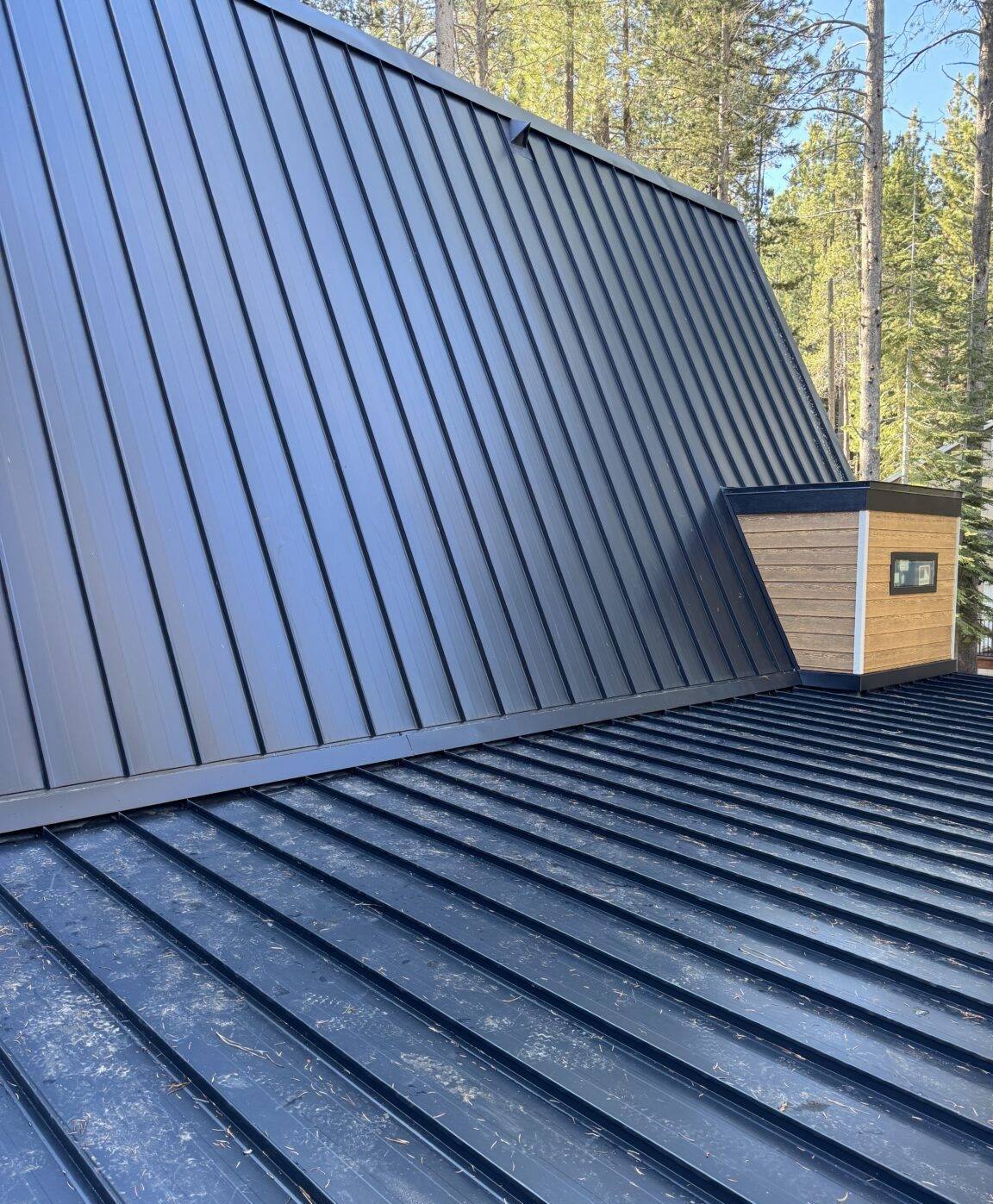
| Standing seam steel | Most homes wanting a clean, modern look with concealed fasteners | Higher upfront cost, excellent water-shedding, minimal maintenance |
| Exposed-fastener steel/screw-down panel | Budget-conscious projects, outbuildings, some residential re-roofs | Lower cost, but fastener gaskets need periodic inspection over time |
| Stone-coated steel | Homeowners who want a shingle or tile look with metal's durability | Heavier system, more installation labor, strong impact and wind resistance |
| Aluminum panel systems | Properties closest to the water with the highest salt exposure | Naturally corrosion-resistant, typically a premium price point |
We don't push one system on every roof. The right choice depends on the home's exposure, the roof's slope and complexity, and what the homeowner actually wants long-term — appearance, cost, or minimum maintenance, usually in some combination.
Our Process on a York Metal Roofing Project
Every project follows the same sequence, whether it's a full tear-off or a re-roof over existing decking (when that's structurally appropriate):
- On-site assessment: We inspect the existing roof, decking condition, ventilation, and any moss or moisture damage before quoting anything.
- Material selection: We walk through panel options, colors, and coatings suited to the home's exposure and the homeowner's budget and priorities.
- Tear-off and deck inspection: Old roofing comes off, and we check the decking underneath for rot or soft spots before anything new goes down — this is where hidden moss and moisture damage gets found.
- Underlayment and flashing: High-moisture-rated underlayment goes down first, followed by properly detailed flashing at every valley, penetration, and ridge.
- Panel installation: Panels go on with fastening and clip systems matched to the site's wind exposure and the manufacturer's specifications.
- Final walkthrough: We review the completed roof with the homeowner, point out anything they should know for maintenance, and confirm everything meets the standard we quoted.
Cost Factors Worth Understanding Up Front
We don't quote prices without seeing the roof, but homeowners deserve to understand what actually drives cost on a metal roofing project so estimates make sense:
| Factor | Why It Matters |
|---|---|
| Roof complexity (valleys, dormers, penetrations) | More flashing detail work means more labor hours, regardless of panel cost |
| Panel material and gauge | Aluminum and heavier-gauge steel cost more but resist salt corrosion and denting better |
| Decking condition | Rot or moss damage found during tear-off can require deck repair before installation continues |
| Tear-off vs. overlay | Full tear-off costs more upfront but lets us properly inspect and address underlying issues |
| Access and pitch | Steep or hard-to-access roofs require more safety equipment and time |
Be cautious of any quote that skips a physical inspection — that's usually a sign the estimate isn't based on your roof's actual condition.
Maintenance: What Metal Roofing Still Needs
Metal roofing significantly reduces maintenance compared to shingles, but it isn't maintenance-free, especially in a climate that grows moss on almost anything left damp and shaded.
- Clear debris from valleys and around penetrations at least once or twice a year
- Check gutters and downspouts for clogs that can back water up under lower panel edges
- Watch for any moss or algae establishing in shaded areas and address it before it spreads
- Have fastener and flashing seals checked periodically, especially on exposed-fastener systems
- After major windstorms, a quick visual check for lifted panels or displaced flashing is good practice
Why Hiring a Crew That Already Works in York Matters
A roofing crew that regularly works this specific stretch of Bellingham already knows what to look for: the shaded north slopes where moss takes hold first, the exposure patterns from wind coming off the water, and the flashing details that hold up against driving rain here versus a drier inland job. That local pattern recognition shows up in the quality of the tear-off inspection and the flashing decisions made on-site — the parts of the job that don't show up in a brochure but determine whether the roof performs for the next 30 to 50 years.
We're not going to tell you a roof from a crew unfamiliar with this coastline will fail. We're saying that familiarity with a specific area's failure patterns is worth something, and it's part of what you're paying for when you hire local.
Signs Your Current Roof May Be Telling You Something
Before committing to a metal roof, it's worth knowing what to watch for on your existing roof, whether it's asphalt or an older metal system:
- Moss buildup in valleys or on shaded slopes that keeps coming back after cleaning
- Granule loss showing up in gutters (a sign of accelerating shingle wear)
- Rust streaking near flashing, fasteners, or vent penetrations
- Water stains on interior ceilings, especially after wind-driven storms
- Visible sagging or soft spots when walked on decking areas
Any of these is worth a look before it becomes a bigger repair. Catching decking rot or flashing failure early is a lot less expensive than waiting for it to show up as an interior leak.
Get an Honest Look at Your Roof
If you're weighing a metal roof for a York-area home, we're glad to come take a look, walk you through what your specific roof needs, and give you a straightforward estimate — no pressure, no scare tactics, just what we'd actually recommend. Use the form below to request a free estimate.