 Bellingham Exterior
 Roof Repair for Columbia Homes: Built for Whatcom County Weather
Columbia is one of Bellingham's older, tree-lined neighborhoods, and that combination of mature tree canopy, proximity to Bellingham Bay, and a long wet season means roofs here work harder than roofs in drier parts of the country. Salt-laden air off the bay accelerates corrosion on fasteners and metal flashing. Driving rain off the Salish Sea finds every gap in flashing, underlayment, or shingle seal. And a moss season that can stretch from fall through spring keeps organic growth active on shaded, north-facing slopes for most of the year. None of that means a roof in Columbia is doomed to constant repair — it means repairs need to be done with those specific stresses in mind, not with a one-size-fits-all approach.
This page covers what roof repair actually looks like for a Columbia home: what to watch for, what a correct repair involves, how we approach the work, and why local experience matters more here than it might in a milder climate.
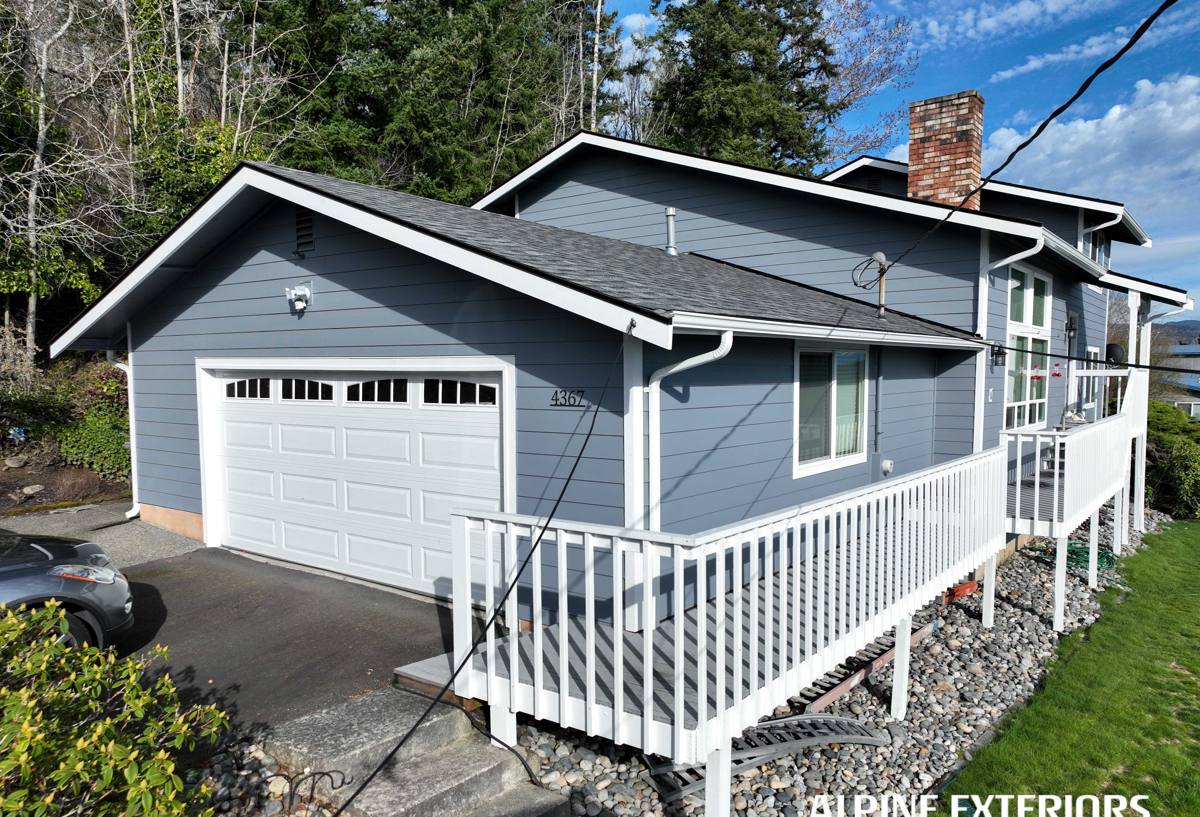
Signs a Columbia Roof Needs Repair, Not Just a Look
Most roof problems don't announce themselves with a sudden leak — they show up as smaller signals first. Homeowners in this neighborhood should treat any of the following as reasons to get a roof looked at, not necessarily reasons to panic:
- Dark streaking or thick moss mats on shaded roof planes, especially under overhanging trees
- Granules collecting in gutters or at downspout outlets, a sign asphalt shingles are wearing thin
- Soft or discolored ceiling patches after a heavy rain event
- Curling, lifted, or missing shingles, particularly on slopes that catch wind-driven rain
- Rust staining or visible corrosion around flashing, vent boots, or metal valleys
- Daylight visible through the roof deck from inside an attic space
Any one of these can be a minor, inexpensive fix if caught early. Left alone through another wet season, most of them turn into deck damage, insulation damage, or interior repairs that cost far more than the roof work itself.
What a Correct Roof Repair Actually Involves
Diagnosing the Real Source
Water rarely leaks in a straight line. A stain on a bedroom ceiling can trace back to a flashing failure several feet away, following a rafter or sheathing seam before it shows up indoors. A repair that just patches the visible spot without tracing the actual entry point tends to fail again within a season or two. We start every repair by finding where water is actually getting in, which sometimes means checking the attic, the flashing details, and the roof surface together rather than just the ceiling stain.
Matching Materials and Fastening Correctly
A repair is only as good as its weakest connection. That means using shingles, underlayment, and flashing that match the existing roof's material and exposure category, and fastening everything to hold up against the wind-driven rain this area gets in fall and winter storms. Galvanized or bare steel fasteners and flashing don't hold up well this close to the bay — corrosion-resistant materials are worth the small cost difference in a salt-air environment.
Restoring the Roof's Drainage Path
A lot of repair failures aren't about the patch itself — they're about water finding a new path around it because valleys, gutters, or roof-to-wall flashing weren't restored to shed water properly. Part of a correct repair is making sure water still moves off the roof the way it's supposed to, not just that the immediate hole is covered.
Moss and Tree Debris: A Columbia-Specific Challenge
The tree cover that makes Columbia a pleasant neighborhood to live in is also what makes its roofs more prone to moss and organic buildup than roofs in more open, sun-exposed parts of Bellingham. Shaded slopes stay damp longer after rain, and that moisture retention is exactly what moss needs to establish itself in roofing granules and shingle seams. Once moss takes hold, it lifts shingle edges, holds water against the roof surface, and can work its way under flashing over time.
Moss removal has to be done carefully. Scraping or pressure-washing moss off a roof can strip granules and shorten the roof's remaining life faster than the moss itself would. We remove moss using methods that don't damage the shingle surface, then address the underlying moisture and shade conditions where practical — trimming back overhanging branches, clearing debris from valleys, and making sure gutters aren't holding standing water against the fascia and lower roof edge.
Common Roof Types in Columbia and How Repairs Differ
Columbia's mix of older and newer homes means we see a range of roofing materials, and each one calls for a different repair approach:
| Roof Type | Typical Repair Considerations | Climate Sensitivity |
|---|---|---|
| Asphalt composition shingle | Granule loss, sealant failure at edges, nail pops | Moderate — UV and wind exposure matter more than moisture alone |
| Cedar shake or shingle | Splitting, moss and moisture retention, need for breathable underlayment | High — requires attentive maintenance in a wet, shaded climate |
| Metal (standing seam or panel) | Fastener backout, sealant at penetrations, seam integrity | Moderate — corrosion resistance near the bay is the main factor |
| Flat or low-slope (membrane) | Ponding water, seam separation, flashing at transitions | High — drainage design is critical in a heavy-rain climate |
We don't push homeowners toward a particular material when a repair is what's called for. The goal with any repair is to work with what's already on the roof, match it correctly, and be upfront if a material or section has reached a point where repair no longer makes sense.
Our Roof Repair Process
- Inspection and diagnosis — we look at the roof surface, flashing, valleys, and attic (where accessible) to find the actual source of the problem, not just the symptom.
- Written scope and honest recommendation — you get a clear explanation of what's wrong, what we recommend, and why, including whether repair or replacement makes more sense.
- Repair work — matched materials, corrosion-resistant fasteners and flashing, and attention to drainage, not just patching the visible damage.
- Cleanup and debris removal — including moss, old shingle material, and any tree debris cleared as part of the job.
- Final check — we walk the completed repair with you before considering the job done.
Roof Repair vs. Replacement: How We Help You Decide
Not every damaged roof needs to be replaced, and not every repair is a good long-term investment. The decision usually comes down to a few honest factors:
| Factor | Favors Repair | Favors Replacement |
|---|---|---|
| Roof age | Under roughly two-thirds of expected service life | Near or past expected service life for the material |
| Damage extent | Localized — one section, flashing detail, or leak point | Widespread granule loss, multiple leak areas, or deck damage |
| Underlying deck condition | Solid, dry sheathing | Soft, rotted, or repeatedly wet decking |
| Cost outlook | Repair cost is a small fraction of replacement cost | Repeated repairs are adding up close to replacement cost |
Roof repairs for a single problem area often run in the range of several hundred to a couple thousand dollars depending on scope, access, and materials — we'll always give you real numbers for your specific roof rather than a generic estimate, and we'll tell you plainly if replacement is the better financial call.
Why Hire a Crew That Already Works in Columbia
Roofing crews who work regularly in this part of Whatcom County know things that don't show up in a generic repair checklist — which neighborhoods hold moisture longest under tree cover, how driving rain off the bay tends to find weak spots in older flashing details, and what fastening and material choices actually hold up against salt air over years, not just months. That local pattern recognition shortens diagnosis time and helps avoid repairs that look fine for a season and then fail with the next round of fall storms.
It also means faster response. A crew already working in and around Columbia can typically get to an active leak sooner than one dispatching from across the county, which matters when water is actively getting into a home.
Keeping a Columbia Roof in Good Shape Between Repairs
A repair holds up longer when it's supported by basic ongoing maintenance. This is worth doing once or twice a year, especially heading into and coming out of the wet season:
- Clear gutters and downspouts of leaves and debris so water isn't backing up under the roof edge
- Trim tree branches back from the roof surface to reduce shade, debris, and physical abrasion
- Check for and remove moss buildup before it spreads across a full slope
- Look at attic insulation and ventilation for signs of moisture or staining
- Have flashing around chimneys, vents, and skylights checked periodically, since these are the most common leak points
- Address small issues — a lifted shingle, a loose piece of flashing — before the next major storm, not after
If you're noticing signs of wear, moss buildup, or a leak on a home in the Columbia area, we're happy to take a look and give you a straight answer about what it needs. Reach out for a free, no-pressure estimate using the form below.