 Bellingham Exterior
 Roof Replacement for Columbia Homes in Bellingham
The Columbia neighborhood sits close enough to Bellingham Bay that salt air is a daily fact of life, and far enough into the trees that moss, needle debris, and shade are part of the deal too. That combination is hard on a roof in ways that don't show up in a lot of roofing marketing. We work on Columbia roofs regularly, and this page covers what a correct roof replacement looks like for this specific area — not a generic rundown that could apply anywhere in Whatcom County.
If your roof is past the point where patch repairs make sense, this is what you need to know before you sign a contract with anyone.
What Bellingham's Climate Actually Does to a Roof
Whatcom County doesn't get the kind of violent hail or ice-dam winters that wreck roofs elsewhere, but the wear here is slower and sneakier — and homeowners often underestimate it because nothing dramatic ever happens. Three things drive most of the roof failures we see in this part of Bellingham:
Salt Air and Moisture
Being close to the water means airborne salt settles on roofing surfaces and metal components year-round. Over time it accelerates corrosion on fasteners, flashing, and any exposed metal that isn't rated for coastal exposure. A roof built with the wrong-grade hardware can develop rust streaks and leak points at flashing long before the shingles themselves are worn out.
Driving Rain
Bellingham rain rarely falls straight down — wind off the bay pushes it sideways, which means water gets driven up under shingle edges, into valleys, and around anything penetrating the roof deck (vents, chimneys, skylights). A roof that would perform fine in a calmer climate can leak here if flashing details and underlayment weren't installed with that wind-driven rain in mind.
Moss Season
Columbia's tree cover and the region's long damp stretch from fall through spring create ideal conditions for moss and algae growth, especially on north-facing slopes and shaded sections. Moss isn't just cosmetic — it holds moisture against the roofing surface, lifts shingle edges as it grows, and can work its way into seams over several seasons, shortening the roof's real service life well below its rated one.
Signs a Columbia Roof Needs Replacement, Not Another Repair
We'd rather talk you out of a full replacement than talk you into one you don't need yet. But there's a point where repeated patching stops making financial sense. Watch for:
- Granule loss heavy enough that you're finding shingle grit in gutters every season
- Moss that keeps returning within months of cleaning, even after treatment
- Soft spots or sagging when you walk the roof line visually from the ground
- Daylight visible through the roof deck from inside the attic
- Flashing that's rusted, lifted, or was never properly stepped at walls and chimneys
- A roof older than 20-25 years for asphalt, or with multiple recurring leak calls in different spots
- Curling, cracking, or cupping shingles across large sections rather than one isolated area
One or two of these might still be a repair. Several together, especially on an older Columbia home that's never had a full tear-off, usually means it's time.
What a Correct Roof Replacement Actually Involves
A roof replacement is only as good as what's underneath the shingles. This is where corners get cut, and it's also where most future leaks originate.
Tear-Off and Deck Inspection
We remove the existing roofing down to the deck rather than layering over it. That's the only way to actually see the wood underneath — soft, rotted, or delaminated decking is common on older Columbia homes where moisture has been getting in slowly for years without an obvious leak. Any bad decking gets replaced before anything else goes down; installing new roofing over a compromised deck just hides the problem.
Underlayment and Water Protection
Given how much wind-driven rain this area gets, underlayment selection matters more here than in drier climates. Self-adhered ice-and-water membrane at eaves, valleys, and around every penetration gives a second line of defense if wind ever pushes water past the shingles themselves.
Flashing Details
Chimneys, skylights, dormers, and wall intersections are where most roof leaks actually start — not in the open field of shingles. Correct step flashing, counter-flashing, and properly lapped valley metal (not just caulk and hope) are what keep those transitions dry through a Whatcom County winter.
Ventilation
Attic ventilation affects both how long shingles last and how much moss pressure the roof sees. A balanced intake-and-exhaust system helps the roof deck dry out between rain events instead of staying damp, which is one of the biggest factors in how fast moss and algae take hold on a shaded Columbia lot.
Choosing a Roofing Material for This Climate
There's no single "right" material for every home, but each option has real trade-offs once you factor in salt air, rain, and moss exposure. Here's how the common choices compare for a Columbia-area home:
| Material | Moss/Algae Resistance | Coastal Durability | Typical Lifespan | Relative Cost |
|---|---|---|---|---|
| Standard 3-tab asphalt | Low — needs regular cleaning | Fair with correct fasteners | 15-20 years | $ |
| Architectural (dimensional) asphalt | Moderate, better with algae-resistant granules | Good | 25-30 years | $$ |
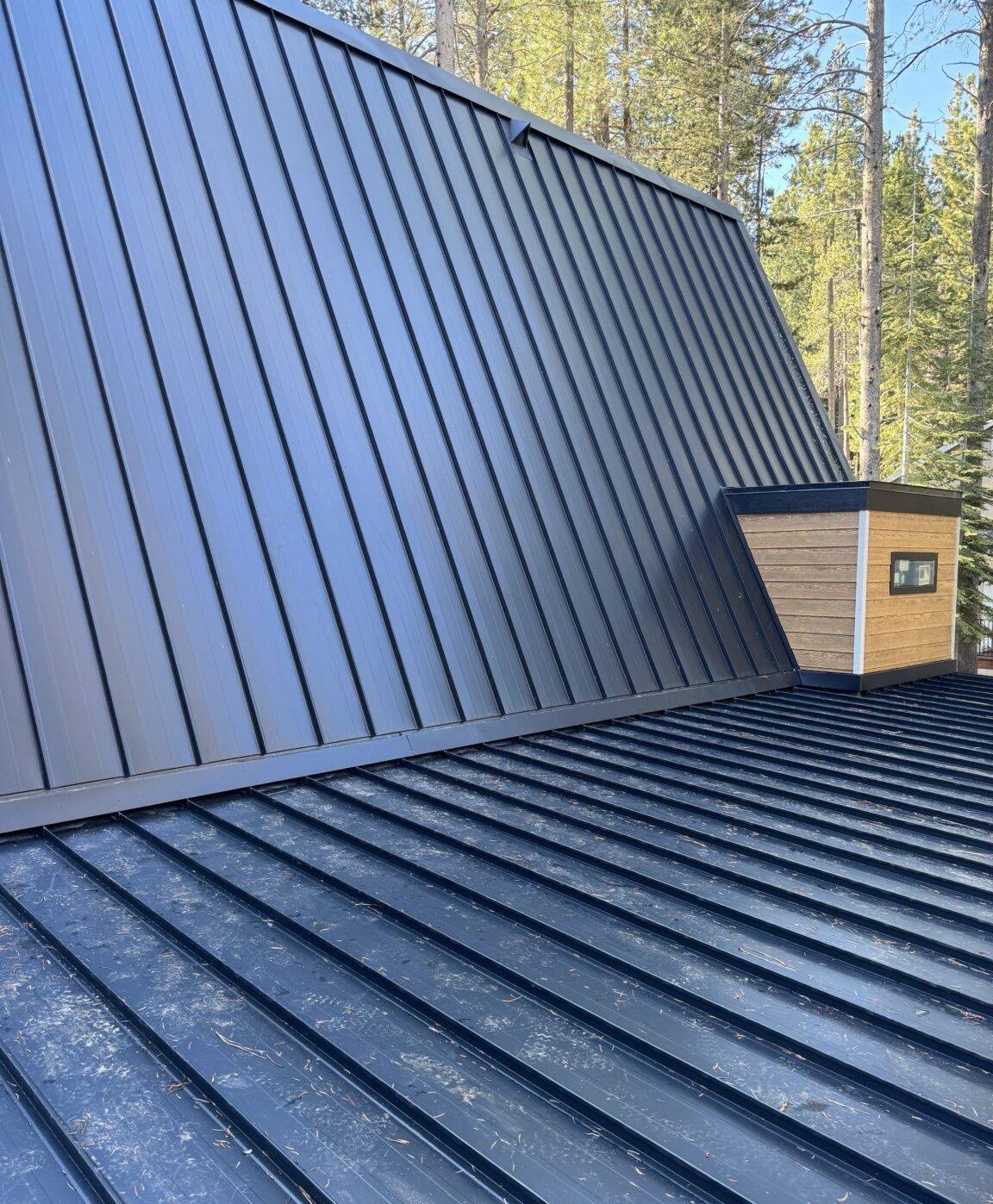
| Metal (standing seam or panel) | High — sheds moss more easily | Very good with marine-grade fasteners/coatings | 40-50+ years | $$$ |
| Cedar shake | Low — high maintenance in this climate | Requires diligent upkeep near salt air | 20-30 years with maintenance | $$$ |
Cedar has real appearance appeal and suits some of the older architecture in the neighborhood, but we're upfront with clients about the trade-off: it needs more frequent moss treatment and maintenance in a damp, shaded, coastal-influenced setting than it would somewhere drier, and skipping that maintenance shortens its life considerably. Metal costs more up front but handles moss and salt exposure the best of the group, which is why we see more interest in it from homeowners planning to stay long-term. Architectural asphalt remains the most common choice because it balances cost, appearance, and reasonable durability without demanding constant upkeep.
Our Process, Start to Finish
- Roof and attic assessment — we inspect the current roofing, decking condition (where visible), ventilation, and flashing points, not just a look from the driveway.
- Written estimate — material options, scope of work, and price laid out clearly, with no vague allowances hiding in the fine print.
- Scheduling around the weather — we plan tear-off sections to match forecast windows so your home isn't sitting open to a Whatcom County rain system overnight.
- Tear-off and deck repair — old roofing removed, deck inspected and repaired as needed before anything new goes down.
- Underlayment, flashing, and roofing installation — done in that order, with attention to the wind-driven rain details covered above.
- Cleanup and magnetic sweep — job site and yard cleared of debris and stray fasteners.
- Final walkthrough — we go over the finished roof with you before calling the job done.
Why a Crew That Already Works in Columbia Matters
Roofing crews that mostly work drier, inland climates sometimes under-spec for what this area actually needs — lighter-gauge flashing metal, standard fasteners instead of corrosion-resistant ones, or underlayment choices that are fine for less exposed sites but marginal here. A crew that regularly works Columbia and the surrounding Bellingham neighborhoods knows which slopes hold moss longest, where wind-driven rain tends to cause the most trouble, and what hardware actually holds up this close to the bay. That local pattern-recognition is worth more than it sounds — it's usually the difference between a roof that needs attention again in five years and one that doesn't.
Older homes in this part of Bellingham also sometimes have decking dimensions or framing quirks from their original era of construction. A crew unfamiliar with older Whatcom County housing stock can get surprised by these mid-project; we generally aren't, because we've run into them before.
Keeping a New Roof in Good Shape
A properly installed roof still needs basic upkeep in this climate, especially around moss season. After your replacement, we recommend:
- Clearing gutters and valleys of needle and leaf debris at least twice a year, more often under heavy tree cover
- Having moss growth treated at the first sign of it rather than waiting for a visible carpet to form
- Trimming back overhanging branches to reduce shade and debris buildup on north-facing slopes
- Scheduling a quick visual inspection after any major windstorm to check flashing and look for lifted shingles
- Avoiding pressure washing the roof surface directly, which can strip granules and shorten shingle life
None of this is complicated, but skipping it is how a well-installed roof ends up needing premature attention in a climate like this one.
Get a Straightforward Estimate
If your Columbia-area roof is showing its age or you just want an honest read on what shape it's in, we're glad to take a look. There's no pressure and no sales script — just a clear assessment and a written estimate you can think over. Use the form below to request your free estimate.