 Bellingham Exterior
 Board & Batten Siding in Cordata: A Style That Has to Earn Its Keep
Board and batten has become one of the most requested siding styles in Cordata over the last several years, and it's easy to see why. The vertical lines pair well with the modern farmhouse and craftsman-influenced homes going up throughout north Bellingham, and the deep shadow lines the battens create give a house real depth instead of a flat, builder-grade look. But board and batten isn't a purely decorative choice out here. In Whatcom County, a vertical siding profile has to handle a specific set of climate pressures that a lot of homeowners don't think about until they're dealing with a problem behind the wall.
This page is about that one job, done right, for Cordata specifically — what the local climate does to vertical siding, what a correct board and batten installation actually requires, and why the material behind those clean vertical lines matters as much as the look.
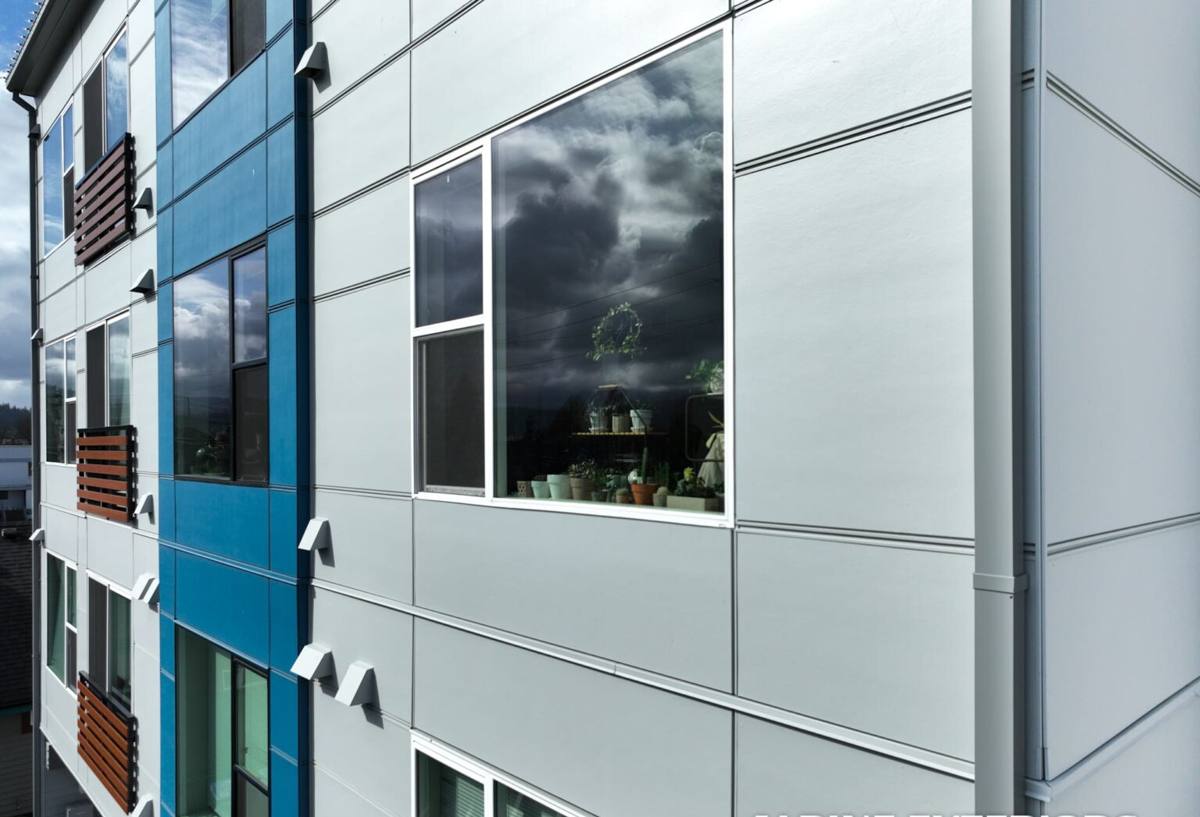
What Bellingham's Climate Does to Vertical Siding
Cordata sits close enough to Bellingham Bay and the Strait of Georgia that homes here get regular marine air, wind-driven rain, and long stretches of overcast, damp weather. None of that is unusual for Whatcom County, but it creates specific problems for board and batten siding that don't show up the same way on a flat lap-sided wall.
Water Finds the Vertical Seams
Board and batten relies on a series of vertical joints — where each batten overlaps the panel or board beneath it. Every one of those joints is a potential water entry point. On a home that catches driving rain off the water, wind pushes moisture sideways and upward, testing every seam, fastener, and piece of flashing in that vertical run. A profile that isn't detailed correctly at the top, bottom, and around penetrations will eventually let water behind the cladding, even if it looks fine from the street.
Moss and Organic Growth
Whatcom County's long, wet moss season is hard on any exterior surface, but board and batten's vertical battens create narrow, shaded channels where moisture lingers longer than it does on a smooth wall. On the north and west faces of a Cordata home — the sides that get the least sun and the most weather — that means more time for moss, algae, and mildew to take hold if the material and the assembly behind it can't dry out between storms.
Salt Air and Coastal Exposure
Homes closer to the bay deal with a steady, low-grade dose of salt-laden air. Over years, that air is hard on fasteners, unprotected wood fiber, and paint films that weren't engineered for a marine climate. It doesn't destroy a house in one season — it just quietly shortens the life of whatever wasn't built to handle it.
Why the Material Behind the Look Matters
A lot of board and batten failures we get called out to inspect in this area aren't installation failures at all — they're material failures. The board and batten look can be built out of several different products, and they do not perform the same way once Bellingham's climate gets a few years to work on them.
| Material | How It Handles Rain & Moisture | How It Handles Moss Season | Long-Term Outlook Here |
|---|---|---|---|
| Solid wood board and batten | Absorbs and releases moisture with every wet cycle; swells and shrinks | Prone to holding moisture in shaded joints; needs regular treatment | Requires ongoing refinishing and vigilant caulk maintenance |
| Vinyl board and batten panels | Sheds surface water but seams and J-channels can trap moisture behind panel | Resists rot but can't stop mold/mildew growing on its own surface | Can warp or fade; not repairable in sections, only replaceable |
| Engineered wood (LP-style) board and batten | Better than solid wood but still wood-based; edges are the weak point if not sealed | Improved resistance but edge swelling is a known failure mode in wet climates | Depends heavily on installers protecting every cut edge |
| James Hardie fiber cement board and batten | Non-combustible fiber cement core; engineered to resist moisture absorption | Dense material sheds water and resists the softening that feeds organic growth | Built and finished for exactly this kind of coastal, wet climate |
We install James Hardie exclusively, and this is a big part of why. We're not interested in installing a beautiful board and batten wall today that turns into a maintenance headache — or a full re-side — in eight years because the substrate couldn't handle Whatcom County's weather.
The James Hardie Board & Batten System
James Hardie offers board and batten through a couple of configurations, and the right one depends on the home's style and the look a Cordata homeowner is after. The most common approach uses HardiePanel vertical siding with Hardie batten trim installed over the panel joints, giving you the classic reveal and shadow line. Hardie's Artisan collection offers a more refined, tighter-reveal board and batten option for homes going for a higher-end, more finished appearance.
Both are built on Hardie's fiber cement formulation and finished with the ColorPlus factory finish system, which bakes color onto the board before it ever reaches the job site. That matters here specifically because factory-cured finishes resist the fading and moisture penetration that field-applied paint struggles with in a climate that rarely gives paint a long, dry cure window. Hardie's HZ product lines are also engineered with regional moisture and climate exposure in mind, which is exactly the profile Cordata sits in.
What a Correct Installation Actually Involves
The single biggest factor in how board and batten performs over time isn't the brand on the box — it's whether the assembly behind the boards was built to let the wall breathe and drain. This is where we see the most corners cut on other job sites around Bellingham.
A Drainable Gap Behind the Siding
Vertical siding in a wet marine climate needs a rainscreen gap — a small air space between the water-resistive barrier and the back of the siding — so any moisture that does get past the surface can drain and the wall can dry out instead of staying wet against the sheathing.
Flashing at Every Transition
Every window, door, roofline, and horizontal trim break along a board and batten wall needs proper flashing so water is directed out and away rather than behind the cladding. On a vertical profile, these transitions carry more water than they would on lap siding because water runs straight down the wall face.
Fastening and Batten Spacing
Battens need to land on framing, follow Hardie's specified fastener pattern, and maintain consistent spacing so the wall reads correctly and each board is actually secured — not just decoratively attached over a panel joint.
Sealed, Not Just Caulked, Joints
Manufacturer-specified sealants at the right joints, applied correctly, are what keep board and batten performing after year one. Caulk used as a substitute for correct flashing is a shortcut that shows up as a callback a few winters later.
Our Process for Cordata Projects
- On-site assessment — we look at wall orientation, current siding condition, and where the home is most exposed to wind-driven rain.
- Sheathing and WRB inspection — once old siding comes off, we check for hidden moisture damage before anything new goes up. This step catches problems a homeowner can't see from the outside.
- Rainscreen and flashing install — the drainage plane, flashing, and any needed trim go in before a single piece of Hardie touches the wall.
- Board and batten installation — panels and battens installed to Hardie's fastening and spacing specifications, with attention to every transition point.
- Final walkthrough — we go over the finished work with the homeowner and address anything before we consider the job done.
What to Expect After Installation
Correctly installed James Hardie board and batten is a low-maintenance system, but "low-maintenance" doesn't mean "no maintenance" in this climate. A short annual routine keeps a Cordata home's siding performing the way it should.
- Rinse the exterior once or twice a year, focusing on north- and west-facing walls where moss takes hold first
- Check caulking at trim and penetration points annually and have any cracked sealant addressed promptly
- Keep gutters and downspouts clear so water isn't dumping directly onto siding runs
- Trim back landscaping that shades siding and keeps it damp longer than it should stay wet
- Have a professional inspect flashing details every few years, especially after severe wind-driven storms
Why Hiring a Crew That Already Works in Cordata Matters
Board and batten is not a forgiving style to get wrong. Because every seam is vertical and every joint carries running water, small installation mistakes show up faster and more visibly here than they would on a horizontal lap-sided wall. A crew that regularly works Whatcom County homes has already seen how this specific climate — the salt air, the driving rain angle, the length of the moss season — plays out on real walls over real winters, not just in a manufacturer's install manual. That experience shows up in the details: where the rainscreen gap gets prioritized, how flashing gets sequenced around windows, and which walls get extra attention because they take the worst weather.
We install James Hardie fiber cement exclusively because we don't want to hand a Cordata homeowner a beautiful wall today that turns into a moisture problem in a few years. That standard shapes every part of how we approach a board and batten project in this area, from the material we quote to the sequence we build it in.
If you're weighing board and batten for a home in Cordata, we're glad to take a look and give you a straightforward, no-pressure estimate — including an honest read on your home's specific exposure and what a correct installation would involve. There's a quick form below to get started.