 Bellingham Exterior
 Birch Bay Decks Fail on Their Own Schedule
A deck in Birch Bay doesn't age the way a deck fifteen miles inland does. Sitting right on Semiahmoo Bay and the Strait of Georgia, homes here take on salt-laden air almost year-round, plus wind-driven rain that gets pushed sideways under railings and into ledger connections that a landlocked deck would never see. Add in Whatcom County's long, damp winters and the moss and algae growth that comes with them, and you've got a structure that's fighting corrosion, moisture intrusion, and slip hazards all at once — often before the wood itself looks obviously old.
We see this pattern a lot: a deck that looks fine from the yard but has rusted fasteners, soft ledger boards, or a substructure that's been quietly wicking moisture for years. Replacement, when it's actually needed, is about getting ahead of that pattern rather than reacting to a board finally giving way underfoot.
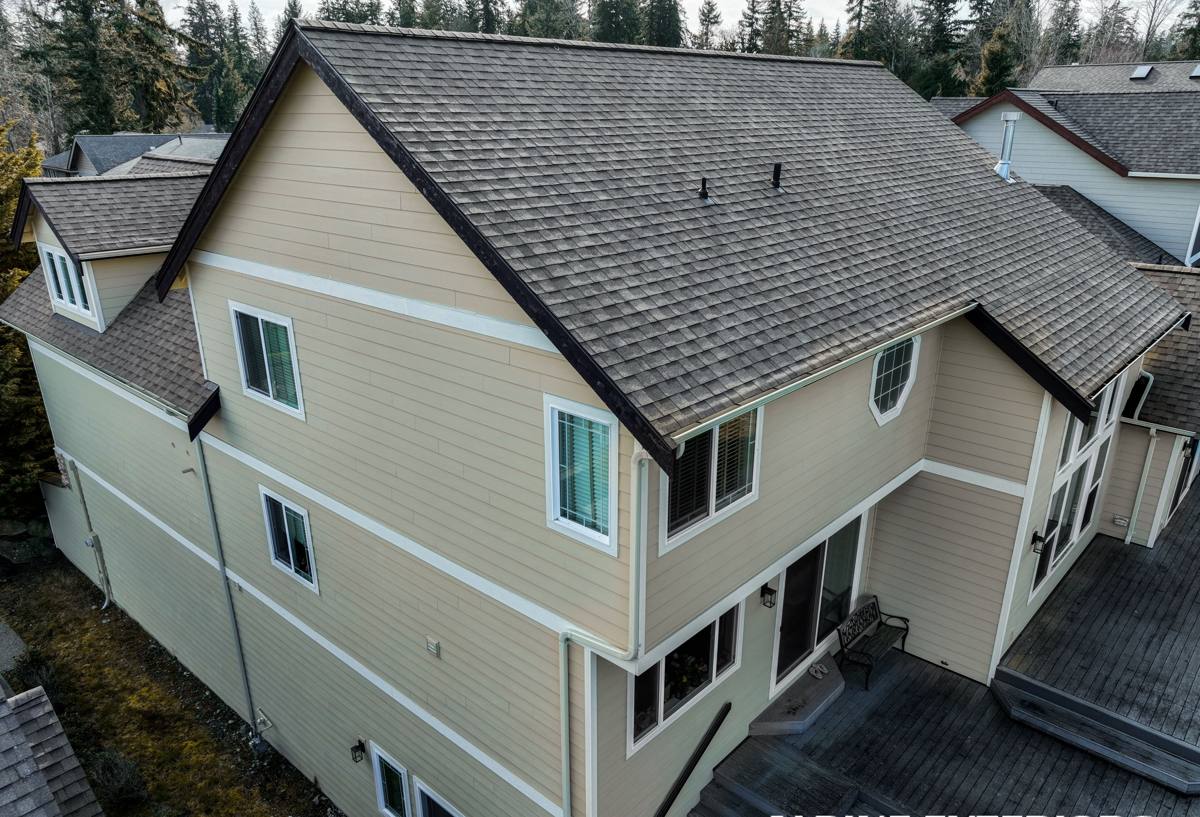
Signs a Birch Bay Deck Needs Replacing, Not Patching
Repair makes sense when the problem is isolated — a cracked board, a loose railing baluster, a few popped fasteners. Replacement becomes the honest recommendation when the damage is systemic. In this climate, that usually shows up as:
- Soft or spongy spots anywhere on the decking surface, especially near the house or along the outer rim joist
- Rust streaking below fastener heads or around post bases — a sign the hardware itself is breaking down, not just staining the wood
- Persistent moss or green film that comes back within weeks of cleaning, even in areas that get some sun
- Visible gaps or separation at the ledger board where the deck meets the house — a common entry point for water in wind-driven rain
- Posts or footings that feel loose or have visible movement when the deck is loaded
- A structure built more than 20–25 years ago to codes and fastening standards that have since changed
If it's one or two of these, a repair can buy real time. If it's three or more, or if the ledger and framing are involved, replacement is usually the more honest — and ultimately cheaper — answer than repeated patch jobs.
Material Choices That Actually Hold Up Here
Salt air and a long wet season narrow the field of decking materials that make sense in Birch Bay. We walk homeowners through the real trade-offs rather than pushing one product line.
| Material | Behavior in Salt Air & Wet Winters | Maintenance | General Cost Tier |
|---|---|---|---|
| Pressure-treated lumber | Holds up structurally if properly sealed and re-sealed; end grain and cut edges are the weak point for moisture entry | Annual cleaning and re-sealing recommended | Lowest upfront |
| Cedar | Naturally resists rot better than PT lumber but still needs finish maintenance in salt air, or it grays and checks faster | Regular cleaning, periodic staining/sealing | Mid-range |
| Capped composite | Best resistance to moisture absorption and salt exposure since the cap layer sheds water; doesn't feed moss the way bare wood fibers can | Occasional washing, no sealing or staining | Higher upfront |
| Uncapped or budget composite | More prone to moisture wicking at cut edges and fastener holes over time — a real consideration this close to the water | Low, but edge sealing at cuts matters | Mid-range |
We don't default to any one product. What we won't do is install a decking material without properly sealing cut ends and fastener penetrations, or use fastener hardware that isn't rated for the corrosion exposure this location gets — that's a maintenance and warranty problem we're not willing to hand a homeowner, regardless of upfront cost savings.
Railings and Hardware Matter as Much as the Boards
A beautiful deck surface with corroding railing brackets or standard-coated screws is a deck that's already on a shorter clock. In a salt-air environment, we spec stainless or heavily coated, marine-rated fasteners and hardware as a baseline, not an upgrade option.
Where Failures Actually Start: Substructure and Fasteners
Most of the deck failures we investigate in this area didn't start at the visible decking surface — they started underneath, where nobody looks until something feels wrong. The ledger connection to the house, the joist hangers, and the fastener coating are doing the real structural work, and they're also what's most exposed to trapped moisture and salt corrosion.
A correct replacement means:
- Proper flashing at the ledger board so wind-driven rain can't work its way behind the house's siding or into the rim joist
- Corrosion-resistant joist hangers and structural screws rated for the exposure — not general-purpose galvanized hardware
- Joist tape or equivalent moisture barrier on top of joists before decking goes down, so standing water doesn't sit directly on cut lumber
- Post bases that keep wood off standing water, with proper drainage at the footing
None of this is visible once the job is finished, which is exactly why it's worth asking a contractor to walk you through it before the decking boards go on.
Designing Against Moss Before It Starts
Whatcom County's moss season isn't a minor cosmetic issue — moss and algae hold moisture against the deck surface and framing, and that moisture is what accelerates rot and corrosion underneath. A deck that's designed with drainage in mind fights this passively, instead of relying on the homeowner to scrub it every few months.
What We Build In
Correct slope away from the house (typically a slight pitch built into the framing, not just hoped for), gapping between boards sized for airflow and drainage, and keeping the underside of the deck ventilated rather than boxed in tight all reduce how long the surface stays wet after a storm. In a spot that gets driving rain off the water, that drainage detail is doing more long-term work than almost anything else in the build.
How Our Replacement Process Works
We keep this straightforward and try not to surprise anyone partway through:
- On-site assessment — we inspect the existing deck, ledger, and substructure (not just the surface boards) and tell you honestly whether repair or replacement is the right call
- Material and design conversation — we go through the trade-offs above based on your budget, sun exposure, and how exposed the deck is to wind off the water
- Permitting — most deck replacements in this area require a permit, especially if the footprint, height, or footings change; we handle that paperwork rather than leaving it to you
- Demolition and structural inspection — once the old decking is off, we check the ledger, joists, and posts underneath, since that's often where the real story is
- Rebuild — correct flashing, corrosion-rated hardware, drainage-conscious framing, then the decking and railing system you chose
- Final walkthrough — we go over the finished deck and what maintenance, if any, it needs going forward
Permits and Practical Local Considerations
Deck work in and around Birch Bay commonly involves permitting through the applicable local jurisdiction, and decks near the shoreline can also fall under additional review depending on setback and shoreline regulations. Requirements vary by exact location and project scope, so we confirm what applies to your specific property rather than assuming — that's part of what we handle before work starts, not something we leave you to sort out.
Why Hiring a Crew That Already Works Birch Bay Matters
Deck replacement isn't a one-size-fits-all trade. A crew that mostly works drier, inland properties may default to standard-grade hardware and finishing details that are perfectly fine there and undersized here. Working regularly in Birch Bay means we already know which fastener grades hold up against this salt air, how aggressive the moss season really gets on north-facing and shaded decks, and which framing details actually stop wind-driven rain from finding its way into a ledger board. That's not something you can fully price into a generic bid — it shows up years later, in whether the deck is still solid or quietly failing underneath.
Before you hire anyone for a deck replacement here, it's worth asking a few direct questions:
- What fastener and hardware grade do you use, and is it rated for coastal/salt-air exposure?
- Will you inspect and, if needed, replace the ledger board and framing — not just the surface decking?
- What flashing and drainage details are included at the ledger and joists?
- Do you pull the required permits, and have you worked on decks in this specific area before?
- What does the warranty actually cover — materials, labor, or both?
A contractor who answers these plainly, without dodging into brand names or vague reassurances, is generally one worth trusting with the job.
Get a Straight Answer on Your Deck
If your deck is showing rust at the fasteners, soft spots near the house, or moss that keeps coming back no matter how often you clean it, it's worth having someone look at what's happening underneath before deciding between repair and replacement. We're happy to come take a look at your Birch Bay property, give you an honest read on the deck's condition, and walk you through options and rough costs — no pressure, no obligation. Use the form below to request a free estimate.