 Bellingham Exterior
 Why Columbia Homes Need a Roof Built for This Climate
Columbia is one of Bellingham's older, established neighborhoods, and that means a real mix of roof ages and roof types sitting under the same demanding weather patterns that define Whatcom County. Marine air moving in off Bellingham Bay carries salt and moisture into neighborhoods across the city, not just the waterfront blocks. Combine that with our long, wet fall-through-spring stretch and the mature tree canopy common in older Bellingham neighborhoods, and you get a roofing environment that punishes shortcuts.
Metal roofing has become a popular answer for homeowners here because it handles the two biggest local stressors — sustained rain and moss growth — better than most alternatives when it's installed correctly. The keyword is "correctly." A metal roof is only as good as its flashing details, fastening method, and underlayment, and in a climate like ours those details matter more than the brand name on the panel.
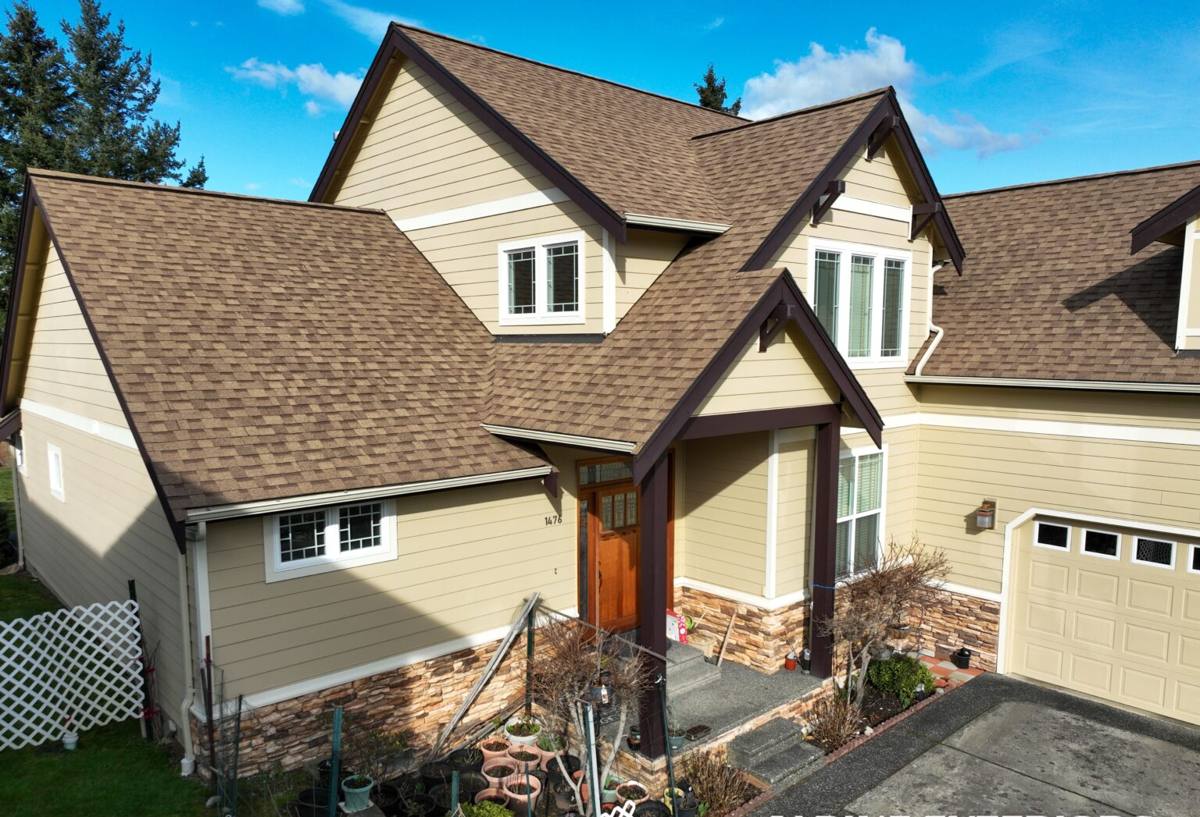
What Driving Rain and Salt Air Actually Do to a Roof
Driving Rain
Bellingham doesn't just get rain — it gets wind-driven rain that hits roof planes at an angle instead of falling straight down. That pushes water sideways into laps, fastener penetrations, and valley transitions that a fair-weather installation might never test. Roofs here need generous overlap, properly lapped underlayment, and flashing details sized for water moving uphill under wind pressure, not just gravity.
Salt Air
Salt-laden air accelerates corrosion on any exposed metal — fasteners, flashing, panel edges — especially where dissimilar metals touch and start a slow electrolytic reaction. It's not usually dramatic; it's a fastener head rusting a decade early, or a cut edge that starts bleeding rust down a panel. The fix isn't complicated, but it does mean fastener and flashing selection can't be an afterthought on a Columbia job.
Moss Season and What It Means for Your Roof
Whatcom County's moss season runs long — realistically most of the year on shaded or north-facing roof planes. Moss isn't just cosmetic. On absorbent roofing materials it holds moisture against the surface and works into laps and fastener lines over time. Metal roofing has a real advantage here: a smooth, hard, non-porous surface gives moss spores far less to grip, and what does take hold tends to sit on the surface rather than root into the material.
That said, "moss-resistant" doesn't mean "moss-proof." Panels in heavy shade under mature trees can still collect organic debris in valleys and at eave lines, and that debris holds moisture even on a metal roof. Homes on tree-lined Columbia lots benefit from a roof design that sheds debris cleanly and from periodic clearing of valleys and gutters — a five-minute check that prevents a much bigger problem.
What a Correct Metal Roofing Installation Involves
A metal roof is a system, not just a layer of panels. Each part has a job, and skipping one undercuts the whole thing in a climate like ours.
- Underlayment: A synthetic or high-temp ice-and-water underlayment beneath the panels, lapped correctly, so any water that gets past the metal has a second line of defense.
- Fastening method: Concealed-fastener systems reduce the number of exposed penetrations; where exposed fasteners are used, they need corrosion-resistant heads and gaskets rated for coastal-influenced air.
- Flashing at every transition: Valleys, chimneys, skylights, sidewalls, and eaves are where roofs actually fail. Custom-formed flashing beats stock trim pieces stretched to fit.
- Ventilation: Metal roofs need proper intake and exhaust airflow to prevent condensation from forming on the underside of the panels, especially in our humid, moisture-heavy climate.
- Panel expansion allowance: Metal expands and contracts with temperature swings; clips and seams need room to move without stressing the fasteners or the seams themselves.
When any one of these is rushed, the roof can still look fine for a couple of years — the problems show up later, usually as a leak that's hard to trace back to its real cause.
Choosing the Right Metal Roofing System
Not every metal roof is the same product wearing a different color. The three systems homeowners in Columbia typically consider have real differences in cost, appearance, and long-term performance.
| System | Best For | Trade-Offs |
|---|---|---|
| Standing seam (concealed fastener) | Homeowners prioritizing longevity and a clean, modern look | Higher upfront cost; installation is more labor-intensive and installer skill matters a lot |
| Exposed-fastener panel | Budget-conscious projects, outbuildings, some traditional home styles | Fasteners need periodic inspection and eventual replacement as gaskets age |
| Stone-coated steel | Homeowners who want the look of shingle or tile with metal's durability | Higher material cost; heavier system, so structure should be checked during estimate |
We'll walk through which system fits your roof's slope, your home's style, and your budget honestly during the estimate — there's rarely a single "best" answer, just the right fit for your house.
A Note on Product Selection
We're selective about the panel systems, coatings, and fastener hardware we install, particularly for coastal-influenced climates like ours. That's not a knock on every product on the market — it's a standard we hold ourselves to because we're the ones your neighbors call back if something underperforms. If we steer you away from a particular option, it's because we've seen how it holds up (or doesn't) in Whatcom County conditions specifically, not because of a brand preference.
Our Process, Start to Finish
- On-site assessment: We inspect your existing roof deck, ventilation, flashing points, and any problem areas — moss buildup, valley wear, prior leak history.
- Honest recommendation: You get a clear explanation of what your roof actually needs, including whether a full replacement or targeted repair makes more sense.
- Written estimate: Materials, labor, and scope spelled out — no vague allowances.
- Installation: Deck inspection and repair as needed, underlayment, panels, and flashing installed to manufacturer specification and local code.
- Final walkthrough: We review the completed roof with you, including maintenance basics specific to your home's exposure and tree cover.
Cost Factors for a Columbia Metal Roof
Metal roofing costs more upfront than asphalt shingles, but the factors that move the price on any given Columbia home are usually the same handful of variables.
| Factor | Why It Matters |
|---|---|
| Roof complexity | More valleys, dormers, and penetrations mean more custom flashing labor |
| Panel system chosen | Standing seam runs higher than exposed-fastener panel for the same square footage |
| Existing deck condition | Rot or damage found under old roofing adds repair scope before panels go on |
| Roof pitch and access | Steeper roofs and difficult access increase labor time and safety staging |
| Ventilation upgrades | Older homes sometimes need intake/exhaust improvements to meet current standards |
We'd rather walk your specific roof and give you real numbers than quote a broad range that doesn't mean much for your house.
Signs Your Roof Needs a Closer Look
You don't need to climb a ladder to catch most warning signs. From the ground or a second-floor window, watch for:
- Heavy moss growth on north-facing or shaded roof planes, especially in valleys
- Rust streaking below fasteners, flashing, or panel edges
- Sagging or uneven roof lines, which can point to deck damage underneath
- Granule buildup or debris collecting in gutters after storms
- Water stains on interior ceilings, particularly near chimneys or skylights
- Fasteners backing out or panels that look loose along an edge
Any one of these on its own isn't necessarily an emergency, but they're worth a professional look before the next heavy rain season.
Why Hire a Crew That Already Works in Columbia
Roofing crews who work regularly in this part of Whatcom County know how the local weather actually behaves on a roof — not in the abstract, but on the specific mix of home styles and tree cover you find in neighborhoods like Columbia. That familiarity shows up in small decisions: where to add extra underlayment, how to detail a valley that collects debris under mature trees, which fastener hardware holds up against salt-influenced air over a decade rather than just looking fine at installation.
It also matters for accountability. A local contractor is easy to reach if a question comes up two years down the road, and has a reputation in the community worth protecting. That's a different relationship than a crew passing through from out of the area for one job.
If you're weighing a metal roof for your Columbia home, we're happy to walk the roof with you and give you a straight answer about what it needs — no pressure, no sales script. Use the form below to request a free estimate.