 Bellingham Exterior
 Siding Built for the York Neighborhood's Conditions
York is one of Bellingham's older, established residential pockets — a mix of early-to-mid-century homes shaded by mature trees, sitting close enough to Bellingham Bay to catch salt-laden air on windy days. That combination is tougher on exterior siding than most homeowners realize. Salt air accelerates corrosion on fasteners and trim, driving rain off the water pushes moisture sideways into wall assemblies rather than letting it run straight down, and heavy tree canopy keeps siding shaded and damp long after a storm has passed — which is exactly the recipe for moss and algae growth. A siding installation in this neighborhood has to account for all three at once, not just look good on install day.
We install exclusively James Hardie fiber cement siding, and we've done enough work in and around Whatcom County's older neighborhoods to know that the products and techniques that work fine in a dry inland subdivision don't hold up the same way three blocks from the bay under a stand of Douglas fir. This page walks through what York homes specifically need, what a correct installation involves, and how our process handles it.
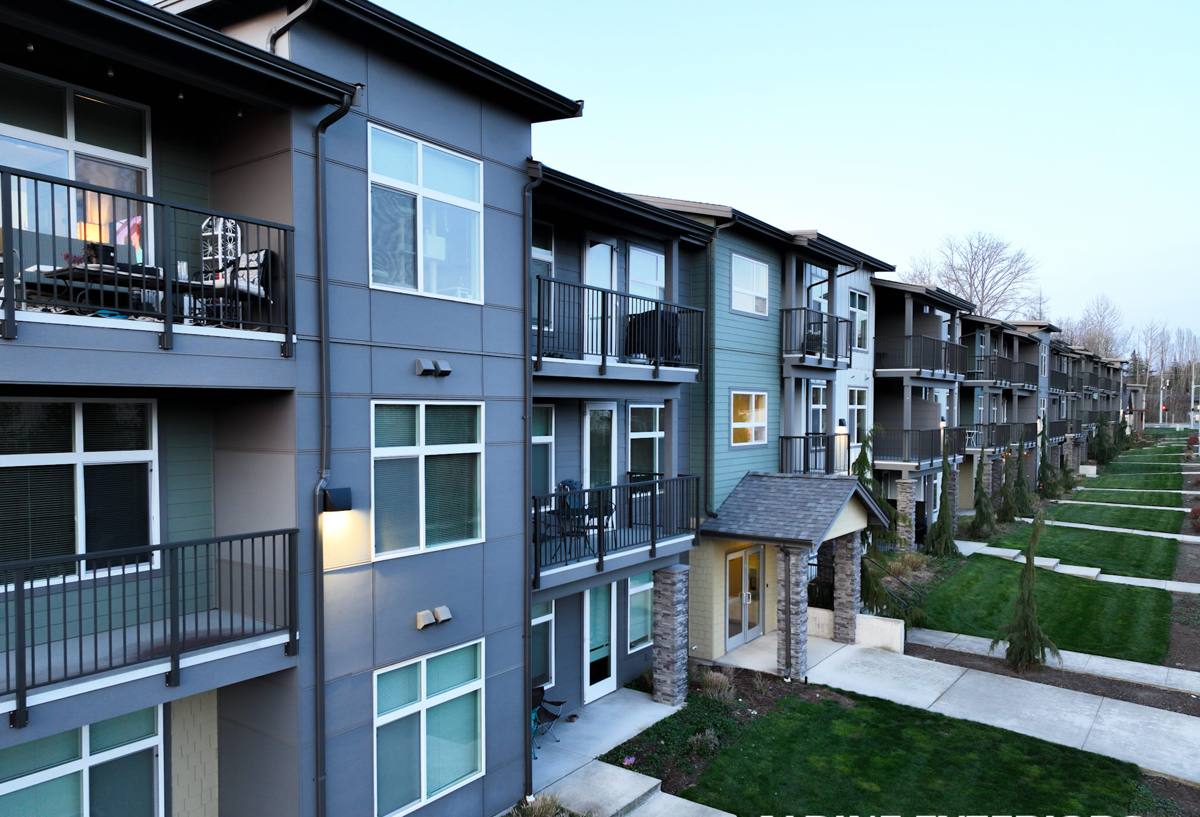
What Bellingham's Climate Does to Siding Over Time
Whatcom County gets a lot of rain, but the specific challenge for York homes is less about total rainfall and more about how that rain arrives and where it lingers.
Driving rain and wind-driven moisture
Storms coming off the Salish Sea often push rain sideways, not straight down. That means water hits vertical wall surfaces with real force and works its way behind trim, around window edges, and into any gap in the water-resistive barrier. Siding that isn't properly lapped, caulked, and flashed will eventually let moisture through — sometimes years before it shows up as a visible problem inside.
Salt air and metal fatigue
Proximity to the bay means airborne salt settles on exterior surfaces. Over years, that accelerates corrosion on fasteners, flashing, and any exposed metal trim. Uncoated or poorly rated fasteners can start to bleed rust stains down the face of siding well before the siding itself is due for attention.
Moss, shade, and slow-drying surfaces
York's tree cover is part of what gives the neighborhood its character, but shaded, slow-to-dry siding is where moss and algae take hold fastest. Once established, moss holds moisture against the surface, which shortens the life of paint and caulking and gives water more opportunities to find a way in.
Why We Only Install James Hardie Fiber Cement
We don't install vinyl, LP SmartSide, primed wood, cedar, or other fiber cement brands — not because those products have no merit, but because we standardized on one system we can stand behind on every job, and James Hardie is the one that best matches what Whatcom County's climate demands: dimensional stability in wet-dry cycling, non-combustible construction, and a factory-applied finish that isn't relying on a field-painted coat to keep moisture out for the next fifteen years.
| Material | How It Handles Sustained Moisture | Long-Term Maintenance |
|---|---|---|
| Vinyl | Doesn't rot, but can warp, crack, or fade in temperature swings; seams are a moisture entry point | Low, but limited repair options if damaged or discontinued |
| Cedar / primed spruce | Absorbs moisture, prone to swelling, splitting, and rot without diligent upkeep | High — regular painting, caulking, and inspection required |
| James Hardie fiber cement | Engineered for wet climates; doesn't rot, warp, or feed moss the way wood fiber does | Low — factory ColorPlus finish holds color without repainting on the manufacturer's schedule |
That said, fiber cement is only as good as the installation. A poorly installed Hardie job can still leak; a well-installed one is genuinely low-maintenance for decades. The installation details matter more than the brand name on the box.
What a Correct Siding Installation Actually Involves
This is where most siding jobs succeed or fail, and it's largely invisible once the project is finished — which is exactly why it's worth understanding before you hire anyone.
- Full removal of old siding and inspection of the sheathing underneath for existing rot or moisture damage
- A continuous, correctly lapped water-resistive barrier (weather barrier) installed before any siding goes up
- Proper flashing at every window, door, and roofline transition — the single most common source of hidden leaks
- Correct fastener spacing, type, and depth per James Hardie's installation specifications, not "close enough"
- Manufacturer-specified gaps at butt joints and trim to allow for expansion and prevent moisture trapping
- Rain-screen or drainage plane detailing appropriate for a wet, shaded lot
- Final caulking and paint touch-up done to spec, not rushed to close out the job
James Hardie publishes detailed installation requirements, and the company's warranty coverage depends on following them. Skipping steps to save a day of labor is how a good product ends up with a bad reputation on a specific house.
Our Process, Start to Finish
1. On-site assessment
We look at the existing siding, the sheathing condition where accessible, sun and shade exposure, roofline drainage, and anything specific to the lot — tree cover, wind exposure, proximity to the bay — that should factor into product choice and detailing.
2. Product and color selection
We walk through the relevant James Hardie lines and ColorPlus finish options and talk through what actually suits the home's exposure, not just what looks good in a sample chip.
3. Removal and prep
Old siding comes off, sheathing gets inspected and repaired where needed, and the water-resistive barrier and flashing go in correctly before a single piece of new siding is hung.
4. Installation to spec
Fastening, gapping, and flashing follow James Hardie's published requirements, not shortcuts. This is also where crew experience with older, shaded, moisture-prone properties like those in York actually shows.
5. Final walkthrough
We go over the finished work with the homeowner, confirm caulking and trim are complete, and answer any questions about care going forward.
James Hardie Product Lines Worth Considering for This Area
James Hardie makes several siding profiles and a regionally engineered HZ product line built for different climate zones. For Bellingham's marine, wet-winter conditions, the moisture and mold resistance built into the HZ5 formulation is the relevant baseline — it's engineered for regions that see exactly the freeze-thaw and sustained damp conditions common here. Beyond the underlying formulation, homeowners typically choose between:
- Lap siding — the traditional horizontal profile, available in different exposure widths and smooth or woodgrain textures
- Board and batten — a vertical profile often used as an accent or full-facade treatment on more contemporary homes
- Shingle-style panels — a textured look that echoes traditional cedar shingle siding without the maintenance
- Trim and soffit products — matched fiber cement trim that finishes the job with the same durability as the field siding
ColorPlus factory finish is worth understanding on its own: the color is baked on at the factory under controlled conditions, rather than field-painted after installation, which is a meaningful difference in a climate where field-applied paint has less time to cure properly between rain events.
What Affects the Cost of a Siding Installation Here
Every home is different, but these are the factors that most commonly move the price up or down on a York-area siding project.
| Factor | Why It Matters |
|---|---|
| Sheathing condition underneath old siding | Rot or moisture damage found during removal adds repair work before new siding can go on |
| Home size and wall complexity | More corners, gables, and trim details mean more labor and material cuts |
| Siding profile and finish chosen | Lap width, texture, and trim complexity affect material cost |
| Access and site conditions | Mature trees, tight lot lines, and older foundations can add setup time |
| Scope of trim and flashing replacement | Full trim replacement costs more upfront but avoids mismatched old trim against new siding |
We give straightforward, itemized estimates after an on-site look — not a ballpark over the phone, since the sheathing condition alone can change the scope significantly on an older home.
Living With Your Siding After Installation
Fiber cement is genuinely low-maintenance, but "low-maintenance" isn't "zero-maintenance," especially under the tree cover common in York. A periodic soft wash to keep moss and algae from establishing on shaded walls goes a long way. Keeping gutters clear and trimming back branches that hold foliage against the siding reduces the moisture load the material has to deal with. Beyond that, an occasional visual check of caulking around windows and trim — the same places any siding job can eventually show wear — is worth doing after major storms.
Why Local Installation Experience Matters
A crew that's worked on homes in this specific part of Bellingham already knows what to look for: the kind of sheathing condition common in homes of a certain age, how much shade a given lot orientation actually gets, and how wind off the bay tends to hit a wall versus a more sheltered inland lot. That's not something a general-purpose installer picks up on their first job in the neighborhood — it's the difference between a siding job that looks right at handoff and one that's actually detailed for the conditions it has to survive for the next several decades.
If you're weighing a siding replacement for a home in York, we're happy to take a look and walk you through what we see — no pressure, no hard sell. Reach out for a free estimate using the form below.