 Bellingham Exterior
 Why Silver Beach's Waterfront Position Changes the Job
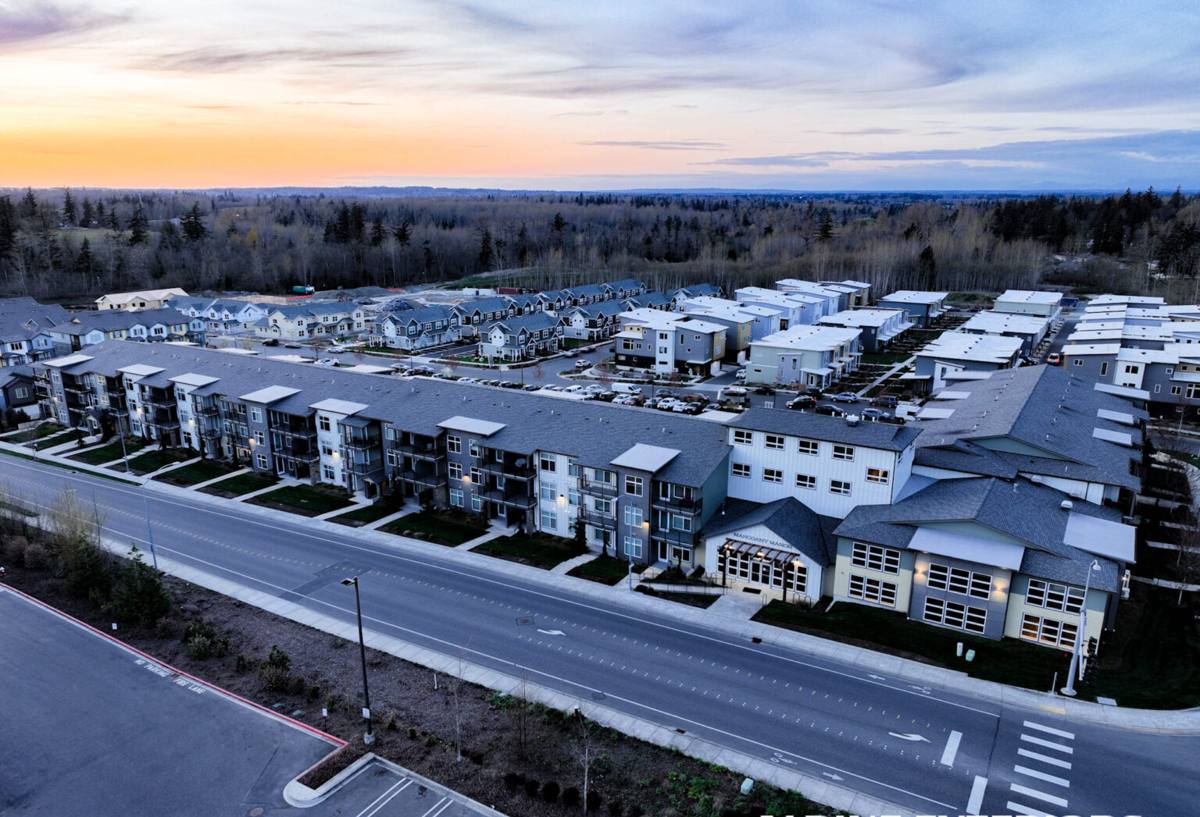
Silver Beach sits close enough to the water that the siding on these homes lives a different life than siding a few miles inland. Homes here take on salt-laden air, wind-driven rain off Bellingham Bay, and shaded, damp corners where moss gets a foothold and never really lets go. None of that is exotic or unusual for this part of Whatcom County — it's just a more concentrated version of what every Bellingham home deals with. But it means the margin for error on a siding job is smaller here than it is a few miles from the shoreline.
We've worked on enough homes in this neighborhood to know the difference between a siding job that looks fine at handoff and one that's actually built to hold up through another decade of Pacific Northwest winters. The difference almost never shows up in the first year. It shows up in year six or seven, when the wrong product or a rushed installation starts telling on itself — soft trim, streaking under the laps, moss creeping across a north wall that never fully dries out.
What Salt Air, Driving Rain, and a Long Moss Season Actually Do to Siding
Three environmental factors do most of the damage to siding in Silver Beach, and they compound each other rather than acting alone.
Salt Air
Airborne salt is corrosive to exposed metal fasteners, flashing, and trim hardware, and it can accelerate the breakdown of lower-quality paint finishes over time. It also leaves a fine residue on siding surfaces that holds moisture longer than clean siding would, which feeds directly into the next problem.
Wind-Driven Rain
Rain that falls straight down is manageable for almost any siding product. Rain that's pushed sideways by wind off the water finds every gap, seam, and undersized overlap and drives water behind the cladding instead of down the face of it. That's why lap coverage, flashing details, and the water-resistive barrier behind the siding matter more here than they would on a sheltered, inland lot.
A Long Moss Season
Bellingham's wet season runs long, and shaded, north-facing walls near mature trees or close plantings rarely get enough sun or airflow to dry out fully between rain events. That's the exact environment moss and algae need. Once organic growth establishes itself on a siding surface, it holds moisture against that surface almost continuously, which shortens the life of whatever's underneath it.
None of these three factors is dramatic on its own. Together, over years, they're what separates a siding system that needs real maintenance from one that just needs an occasional wash.
Why We Install Only James Hardie Fiber Cement Here
We made a decision as a company to install James Hardie fiber cement siding exclusively — not vinyl, not LP SmartSide, not Cemplank or Allura, not primed spruce or cedar. That's a deliberate standard, not a lack of options, and it matters more in a neighborhood like Silver Beach than it would somewhere drier and more sheltered.
Vinyl siding is affordable and low-maintenance in mild conditions, but it can distort in direct heat, and its seams and J-channels give wind-driven rain more places to work its way behind the panel over time. Wood products like cedar and primed spruce look good going up, but they need real, ongoing upkeep — repainting, caulking, moisture checks — to hold up in a climate this wet, and that upkeep tends to slip once a few years pass. Engineered wood products like LP SmartSide use treated wood strand technology that performs reasonably well when installed and maintained correctly, but wood-based cores are still more sensitive to sustained moisture exposure than a cement-based product, and that sensitivity is exactly what a salt-air, high-rainfall site tests hardest.
Fiber cement doesn't warp, it doesn't rot, and it isn't a fuel source. It's also dimensionally stable across temperature swings, so seams and caulk joints stay tighter for longer. That combination is why we standardized on it rather than offering it as one option among several.
Engineered for This Climate: HZ5 and ColorPlus
James Hardie doesn't make one generic siding product for the whole country — it engineers its HZ (HardieZone) product lines for specific climate conditions, and the Pacific Northwest falls into the wetter, moisture-intensive HZ5 zone. That means the product going onto a Silver Beach home is formulated and tested for exactly this kind of exposure, not a version made for a dry southwestern climate and shipped everywhere.
The other piece worth understanding is ColorPlus Technology, Hardie's factory-applied finish. Instead of being field-painted on site, ColorPlus panels are baked on with multiple coats under controlled conditions, which produces a more even, more durable finish than most site-applied paint jobs can match — and it comes backed by its own finish warranty separate from the substrate warranty. In a salt-air environment where paint failure is one of the first visible signs of trouble, that factory finish is doing real work.
What a Correct Installation Actually Involves
Fiber cement siding is only as good as the installation underneath it. A rushed or under-detailed install can undercut even the best product, and in a neighborhood exposed to driving rain, the details below aren't optional extras — they're the difference between a system that sheds water and one that traps it.
Moisture Management Behind the Panels
Correct installation starts with a continuous water-resistive barrier and properly integrated flashing at every window, door, and penetration — installed so water is directed out and down, never trapped behind the cladding. This layer does the real waterproofing work; the siding itself is the second line of defense, not the only one.
Fastening and Clearances
Hardie specifies fastener type, spacing, and placement for a reason — under-fastened or incorrectly placed nails are a common cause of premature panel movement and cracking. Ground clearance and clearance from roof lines and decks also matter: siding installed too close to grade or to a roof surface stays wet longer and is more exposed to splash-back and debris.
Trim, Corners, and Joints
Every cut edge of fiber cement siding needs to be sealed or capped correctly, since exposed cut edges are more vulnerable to moisture intrusion than the factory-finished face. Corner treatments and joint spacing need to account for the material's expansion and contraction across temperature swings, not just look right on installation day.
Factory Finish vs. Field Painting
Whenever possible, we install ColorPlus prefinished panels rather than field-painting on site. It removes a major variable — weather-dependent, technique-dependent field paint application — from a job in a climate where you don't get many dry, mild days in a row to work with.
How Our Process Works, Start to Finish
- Assessment: we walk the home, check existing siding and sheathing condition, and look specifically at moss-prone and rain-exposed elevations.
- Scope and estimate: a written estimate covering material, tear-off (if needed), moisture barrier and flashing work, and finish selection — no vague allowances.
- Prep and removal: old siding comes off carefully so we can inspect sheathing and framing underneath for hidden moisture damage before anything new goes on.
- Weather barrier and flashing: installed and inspected before a single piece of siding goes up.
- Installation to spec: fastening, clearances, and joint details installed to Hardie's published requirements, not shortcuts.
- Final walkthrough: we review the finished job with the homeowner and go over basic care specific to a Silver Beach exposure.
Fiber Cement vs. the Alternatives in a Coastal, High-Moss Environment
| Material | Moisture Behavior | Moss/Algae Resistance | Fire Behavior | Typical Upkeep |
|---|---|---|---|---|
| James Hardie Fiber Cement | Dimensionally stable; does not rot or absorb water into a wood-based core | Resists growth well; factory finish sheds surface residue | Non-combustible | Periodic gentle washing |
| Vinyl | Seams and channels can allow water intrusion behind panel | Can host growth in shaded, damp areas | Combustible; can soften/deform in heat | Low, but panels can crack or fade over time |
| LP SmartSide (engineered wood) | Treated wood-strand core; more sensitive to sustained moisture than cement-based product | Moderate; depends on coating integrity | Combustible | Regular inspection of edges and seams |
| Cedar / Primed Spruce | Natural wood; absorbs moisture without diligent sealing and upkeep | Prone to growth in shaded, damp spots without maintenance | Combustible | Frequent repainting/resealing and moisture checks |
This isn't a claim that the alternatives are poor products — each has a place and can perform reasonably well when installed and maintained to spec. It's why, for a site with Silver Beach's combination of salt exposure, wind-driven rain, and shaded, slow-drying walls, we standardized on the one material that asks the least of a homeowner over time.
Cost Factors and Ongoing Maintenance
Every job is different, and we won't quote a number without seeing the home, but the factors below are what actually move the price on a Silver Beach fiber cement project.
| Factor | Why It Matters |
|---|---|
| Home size and number of stories | More surface area and taller scaffolding/lift access increase labor |
| Condition of existing siding and sheathing | Hidden moisture damage found during tear-off may need repair before new siding goes on |
| Trim and architectural detail | More corners, gables, and trim transitions mean more cutting, fitting, and flashing work |
| Panel profile and color selection | ColorPlus prefinished panels vs. field-applied finish affects both cost and long-term durability |
| Site access and exposure | Waterfront-adjacent lots can affect staging, scaffolding, and weather-dependent scheduling |
Once the siding is on, upkeep in this environment is manageable but shouldn't be ignored. A few habits go a long way:
- Rinse siding gently (garden hose pressure, not a pressure washer aimed directly at seams) once or twice a year, focusing on shaded, north-facing walls where moss establishes first.
- Keep plantings and tree branches trimmed back from siding so walls get airflow and sunlight to dry out between rains.
- Check caulking at trim and window transitions annually — caulk is a maintenance item even on a low-maintenance siding system.
- Look for streaking, discoloration, or soft spots near ground level or under downspouts, which usually point to a drainage or flashing issue worth addressing early.
- Keep gutters clear so overflow isn't running down the siding face during heavy rain events.
If you're weighing a siding project for a Silver Beach home, we're glad to walk the property, look at what's there now, and give you a straight, no-pressure estimate on what correct fiber cement installation would involve for your house specifically. There's a form below — reach out and we'll set up a time to come take a look.