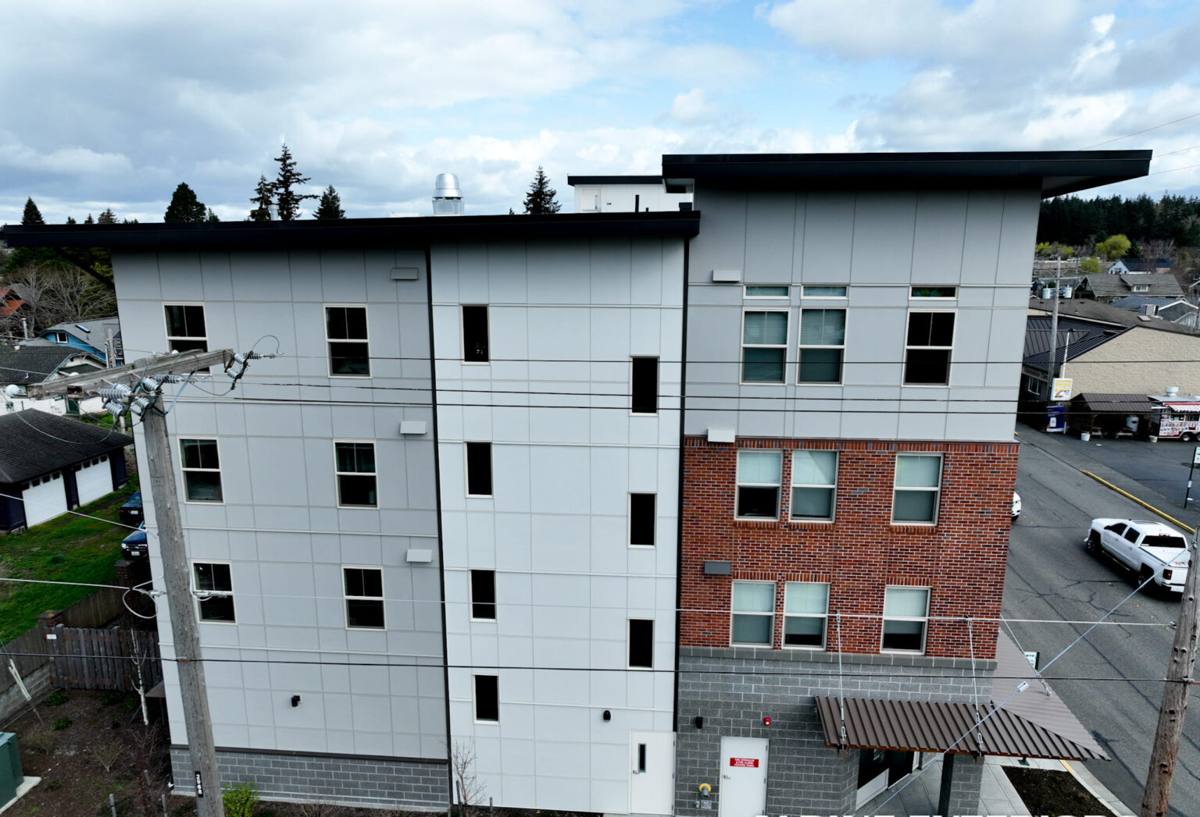
 Bellingham Exterior
 James Hardie Siding for South Hill: A Hillside Home's Specific Exposure
South Hill sits up above the flatter parts of Bellingham, and that elevation changes the exposure a home's exterior actually deals with. Wind off Bellingham Bay reaches these hillside lots with less to break it up than it has lower down, tree cover on the older, wooded properties keeps whole walls shaded and damp for long stretches, and the same driving rain and salt air that hits the rest of Whatcom County lands harder on a wall that's higher up and more exposed to begin with. We install James Hardie fiber cement siding on South Hill homes specifically because it's engineered to hold up against that combination, and because getting it installed correctly on a hillside property takes more attention to detail than a flat, sheltered lot does.
This page is about one job in one neighborhood: James Hardie siding on South Hill houses. Not a general siding overview, not a citywide service list — what this specific hill, this specific climate, and this specific product actually require of each other.
What South Hill's Elevation Adds to Bellingham's Climate Problem
Wind-Driven Rain at Elevation
Rain in this part of Whatcom County rarely falls straight down, and a home higher up South Hill's slope generally takes more of that wind-driven angle than a comparable house lower in town, especially on walls facing open exposure toward the bay. Wind-driven rain doesn't test a siding system the way a calm, straight-down shower does — it gets pushed sideways into laps, seams, and fastener points, which means flashing and clearance details that would be adequate on a sheltered lot need to be treated as non-negotiable up here.
Salt Air Carried Uphill
Salt-tinged marine air off the bay doesn't stop at sea level. It moves with the wind, and elevated, exposed lots on South Hill get a steady dose of it along with everything lower down. That exposure is slow and unglamorous damage — it corrodes fasteners, hardware, and lower-grade trim finishes faster than an inland climate would, and it's usually well underway before it's visible from the ground.
Moss on Shaded, Tree-Covered Walls
South Hill has a lot of mature tree cover and older lots with real shade, which is exactly the condition moss and mildew need. Combined with the region's long damp season, north-facing and shaded walls up here can stay wet for months at a stretch. Any siding material with porosity, or one that holds moisture against the wall instead of shedding it, becomes a growth surface — and on a shaded hillside lot, that clock starts running earlier in the fall and ends later in the spring than it does on an open, sun-exposed property.
Why James Hardie Is the Only Siding We Put on South Hill Homes
We don't install LP SmartSide, vinyl, Cemplank, Allura, primed spruce, or cedar — on South Hill or anywhere else we work. That's a professional standard, not a lack of options, and it comes from what we've consistently found on tear-offs and repair calls on exposed, elevated properties like these.
- Non-combustible core: Fiber cement doesn't feed a fire the way wood-based siding can, which matters for household safety on any home.
- Factory-applied ColorPlus finish: The color coat cures under controlled factory conditions instead of being brushed on at the job site, so it resists the fading and moisture intrusion that constant wind and salt exposure accelerate.
- Climate-engineered HZ formulations: Hardie's HZ5 product line is built for regions with heavy sustained moisture and freeze-thaw cycling, which fits an exposed hillside lot better than a generic national spec.
- Dimensional stability: Fiber cement doesn't swell, cup, or warp the way engineered wood can after repeated wet-season moisture cycles, which matters more on a wall taking direct wind-driven rain.
- Strong transferable warranty: Hardie backs its products with a substantial warranty structure, provided the installation follows spec — which is the part that's actually on us.
Those are legitimate products, and other contractors install them competently elsewhere. But on a hillside lot with this much combined wind, salt, and shade exposure, we'd rather stand behind one system we trust completely than offer a cheaper option that quietly shifts maintenance risk back onto the homeowner a few years down the road.
What a Correct Install Actually Requires on a South Hill Lot
Buying the right material only gets a South Hill home halfway there. The installation itself has to account for the specific exposure a hillside wall takes on, and that's where a lot of the real performance difference between a good job and a mediocre one actually lives.
| Install Detail | Why It Matters More on South Hill |
|---|---|
| House wrap and drainage plane | An elevated, wind-exposed wall needs a reliable path for any moisture that gets past the surface to drain and dry out |
| Flashing at windows, doors, and penetrations | Wind-driven rain finds gaps a sheltered, lower-elevation wall wouldn't test nearly as hard |
| Fastener type and spacing | Salt air accelerates corrosion on the wrong hardware faster at elevation and open exposure than in a sheltered spot |
| Clearance above grade, deck, and roofline | Damp, shaded ground on tree-covered South Hill lots keeps lower courses wet longer without proper standoff |
| Caulk vs. properly lapped joints | Caulk alone fails faster under sustained wind and rain than a joint that's actually built to shed water |
Skipping or shortcutting any one of these doesn't usually show up on install day. It shows up two or three wet seasons later, as staining at a seam, a soft spot near a window, or paint failing on one wall while the rest of the house looks fine — usually the wall that faces the wind and gets the least sun.
James Hardie Product Lines That Fit South Hill's Mix of Homes
South Hill has a genuine mix of older, established homes and newer construction, and the right Hardie product line depends on the house more than on a single default choice.
| Product | Look | Where It Fits Well |
|---|---|---|
| HardiePlank lap siding | Traditional horizontal lap, the most common profile | Older South Hill homes with a classic or craftsman look, and most straightforward re-sides |
| HardieShingle | Staggered or straight-edge shingle pattern | Homes going for a cottage or coastal character, common on view-oriented lots |
| HardiePanel | Vertical panel, often paired with board and batten | Newer construction or modern accents, gable ends, and mixed-material facades |
All three come with Hardie's factory-applied ColorPlus finish, which is worth weighing heavily on a shaded, tree-covered lot: a baked-on finish resists the mildew and fading pressure that constant dampness creates far better than paint applied on site after installation.
Our Process, Start to Finish
- Walkthrough and assessment: We look at each wall individually — which ones face the wind directly, which sit in shade most of the day, and whether there's any sign of existing moisture damage behind the current siding.
- Tear-off and substrate check: Removing the old siding is also when we find out what's actually been happening behind it. Sheathing or framing damage gets addressed before anything new goes up, not covered over.
- House wrap and drainage plane: A properly lapped weather-resistive barrier goes on before any siding, set up to handle the wind exposure this lot actually gets.
- Installation to manufacturer spec: Fastening pattern, clearances, and flashing follow James Hardie's published requirements for this climate zone, not a generic national standard.
- Final walkthrough: We cover what little maintenance the finished siding actually needs and make sure you know what a healthy wall looks like going forward.
Cost Factors on a South Hill Project
| Factor | Why It Matters Here |
|---|---|
| Site access and slope | Hillside lots can add staging, scaffolding, and equipment time that a flat lot doesn't need |
| Tree cover and clearance | Established trees close to the house may need trimming or protection during the job |
| Substrate condition | Years of trapped moisture behind older siding can mean hidden sheathing repair before new siding goes on |
| Wall complexity | Dormers, bump-outs, and roof intersections common on South Hill's older homes add cutting and flashing time |
| Product line and finish | HardiePlank, HardieShingle, and HardiePanel carry different material and labor costs |
Real numbers depend on the specific house and lot, which is why we walk the property before quoting rather than pricing off square footage alone.
Signs a South Hill Home's Siding Needs Attention
- Moss or dark staining that returns quickly after cleaning, especially on shaded or tree-covered walls
- Soft or spongy siding near the base of a wall or around window and door trim
- Paint that keeps failing on one particular wall while the rest of the house holds up fine
- Rust streaks below fasteners or visible hardware corrosion
- Cracked, chipped, or missing siding sections after a windstorm
- Gaps opening up at seams, corners, or trim joints
Any one of these on its own doesn't automatically mean a full re-side. But on a hillside lot with this much combined exposure, it's worth having someone actually look rather than assuming it'll hold.
Why Hire a Crew That Already Works South Hill
A crew that's worked this specific hill knows things a citywide or out-of-area installer generally doesn't: which walls take the worst of the wind, how much longer a shaded, tree-covered lot stays damp compared to an open one a few blocks over, and how much clearance and drainage detail actually earns its keep versus what a generic install guide assumes. That shows up in the decisions that don't get written on the invoice — where extra flashing attention pays off, which fastener spacing makes sense for a genuinely wind-exposed wall, and which of South Hill's older homes are likely to have surprises behind the siding once it comes off.
If your South Hill home needs new James Hardie siding, repair work, or just an honest read on what's going on behind an aging wall, we're glad to take a look. Reach out using the form below to schedule a free, no-pressure estimate.