 Bellingham Exterior
 Building a Deck That Actually Holds Up in Sunnyland
Sunnyland is one of Bellingham's older, tree-canopied neighborhoods — a mix of established homes on lots that often have mature trees, some slope, and plenty of shade for a good chunk of the year. That combination makes it a great place to live and a genuinely tough environment for an outdoor deck. Between the Bellingham Bay marine air, the long stretch of wet months, and the shade that keeps things from drying out, a deck in this part of town works harder than one built in a drier inland climate. We build and repair decks for homes in this neighborhood regularly, and this page covers what actually matters here — not generic decking advice copied from a national site.
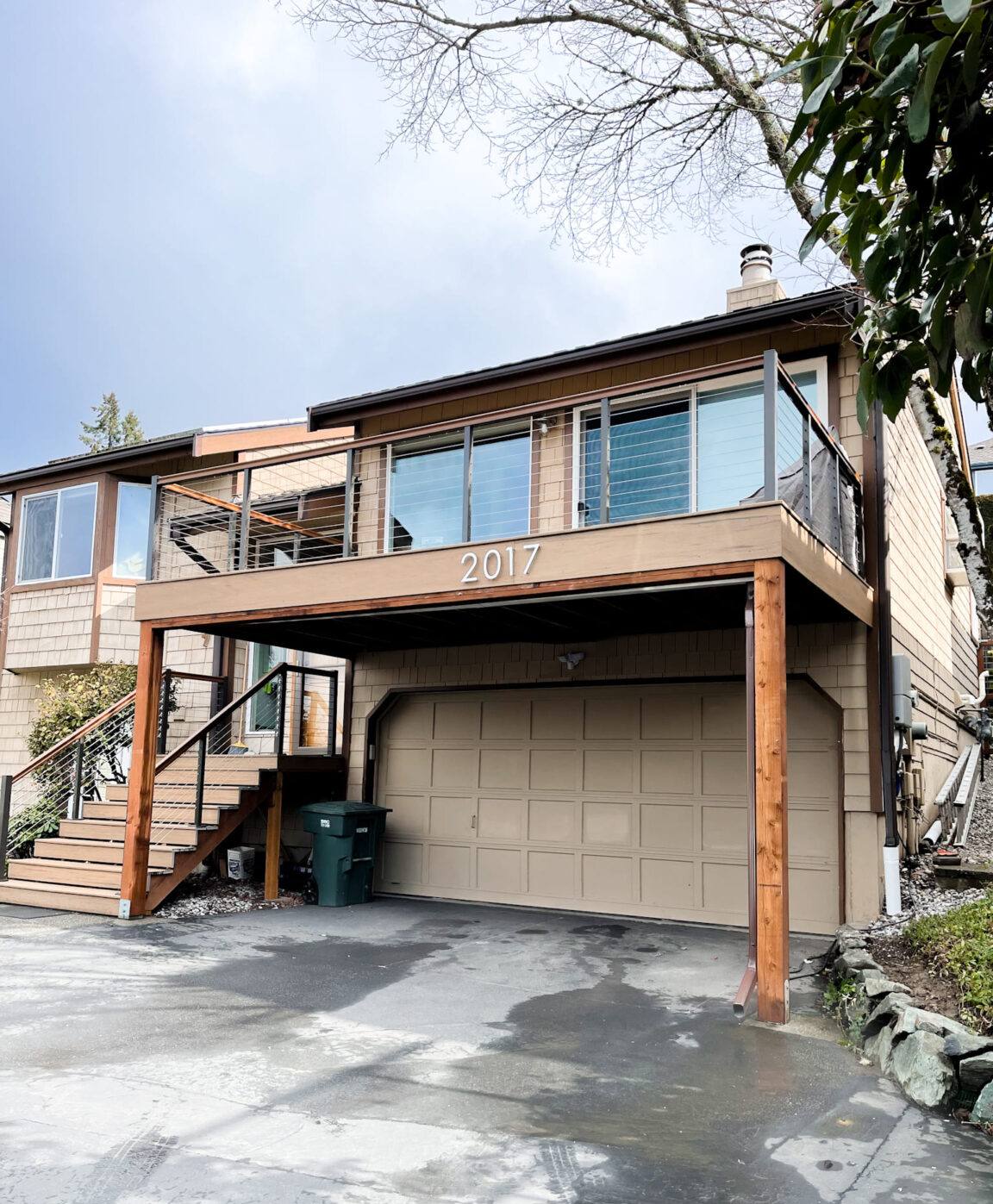
What Whatcom County's Climate Does to an Outdoor Deck
None of this is unique to Sunnyland specifically, but it's the reality every deck in greater Bellingham has to deal with, and it shapes almost every decision we make on a build.
Moisture That Never Fully Dries
Driving rain through the fall, winter, and spring means a deck surface in this area rarely gets a long uninterrupted dry stretch. Wood that would dry out completely in a hot, arid climate stays damp at the surface and in end grain for weeks at a time. That's not a defect in the wood — it's just the water cycle we're working with, and it means every material and detail choice has to account for slow drying, not fast drying.
Moss, Algae, and Shade
Shaded, tree-covered lots — common in Sunnyland — hold moisture longer than open, sun-exposed yards. That's exactly the combination moss and algae need. A deck under tree cover with poor airflow underneath will grow moss faster than the same deck in full sun, regardless of the material used. Moss isn't just cosmetic — it holds water against the surface and makes boards slicker and more slip-prone in wet weather.
Salt Air and Metal Hardware
Bellingham sits on the bay, and the marine air that comes with it accelerates corrosion on lower-grade fasteners, brackets, and structural hardware. It's a slower process than it would be right on the waterfront, but over years it's enough to matter — especially on hidden structural connections that aren't easy to inspect once the decking is down.
What a Correctly Built Deck Needs in This Climate
Drainage Above Everything
The single biggest factor in how long a deck lasts here isn't the decking material — it's whether water actually leaves the structure instead of sitting in it. That means proper board spacing, a substructure that isn't trapping moisture against framing, and grading underneath the deck so water doesn't pool against posts or footings.
Ledger Flashing and Waterproofing
Where a deck attaches to the house is the single most common failure point we see on older decks in this area — not because the decking wore out, but because water worked its way behind the ledger board over years and rotted the rim joist or sill behind it. Correct flashing at that connection, done right the first time, is one of the least visible parts of a deck build and one of the most important.
Fasteners and Hardware Grade
Given the marine air and constant moisture, we use hot-dip galvanized or stainless structural hardware rather than the minimum-grade fasteners that are technically allowed but not built for this environment. It costs more up front and it's invisible once the deck is finished, but it's the difference between hardware that's still sound in fifteen years and hardware that's the reason a deck needs early structural work.
Choosing the Right Decking Material
There's no single "best" decking material — the right choice depends on how much upkeep you want to do, your budget, and how much sun or shade the deck actually gets. Here's how the common options compare for a shaded, wet-climate lot like a typical Sunnyland yard.
| Material | Moss & Moisture Behavior | Maintenance | Typical Lifespan | Relative Cost |
|---|---|---|---|---|
| Pressure-treated wood | Absorbs moisture; needs airflow and regular cleaning to resist moss | Annual cleaning, periodic staining/sealing | 15-20 years with upkeep | Lower |
| Cedar | Naturally moisture- and insect-resistant, but still needs care in constant shade | Regular cleaning, periodic sealing to hold color and resist mildew | 15-25 years with upkeep | Mid-range |
| Composite decking | Doesn't rot, but can still grow surface moss/algae in deep shade without cleaning | Occasional washing; no staining or sealing | 25-30+ years | Mid to higher |
| Capped/PVC decking | Fully moisture-resistant surface; best option for heavy shade and constant dampness | Occasional washing only | 25-30+ years | Higher |
For a heavily shaded lot, we usually steer homeowners toward composite or capped decking specifically because low-maintenance moisture resistance matters more under trees than it does in an open, sunny yard. That said, plenty of Sunnyland homes are older or historic in character, and a well-detailed wood deck can be the right call to match the house — it just needs a homeowner willing to keep up with cleaning and sealing on a schedule.
Framing and Footings: The Part No One Sees
A deck's surface material gets all the attention, but the framing underneath is what actually determines whether it's safe and long-lasting. Whatcom County has specific requirements for footing depth, post spacing, beam sizing, and ledger attachment, and permits are required for most freestanding and attached decks above a certain height or size. Skipping the permit and inspection process might save time up front, but it also means no third party ever verified the footings are deep enough, the ledger is properly flashed, or the connections meet current code — and that matters both for safety and for resale down the road.
On sloped lots, which aren't uncommon in this neighborhood, footing depth and post height calculations get more involved, and it's worth having someone who's done this kind of framing locally rather than working from a generic plan.
Design Choices That Fit Sunnyland Lots
Beyond the technical side, a few things come up often when we design decks for this neighborhood specifically:
- Tree cover and airflow: where possible, we design decking gaps and substructure ventilation to work with existing shade rather than fight it, since removing mature trees usually isn't the goal.
- Matching the house's era: Sunnyland has a mix of older and newer homes, and railing style, board width, and decking color get chosen to fit the house rather than look bolted on.
- Slope and grade changes: multi-level decks or built-in steps are common solutions on lots that aren't perfectly flat.
- Practical layout: sizing the deck to how the space will actually be used — dining, grilling, a quiet sitting area — rather than just maximizing square footage.
Our Process, Start to Finish
- Site visit and honest assessment: we look at drainage, shade, existing structure (if it's a rebuild), and any access or slope challenges before we talk materials.
- Design and material selection: we walk through the material comparison above based on your budget and how much maintenance you actually want to do.
- Permitting: we handle the permit application and coordinate required inspections with Whatcom County or the City of Bellingham, depending on where the property falls.
- Build: footings, framing, flashing, and decking, done in that order with attention to the details that don't show once it's finished.
- Final walkthrough: we go over the finished deck with you, including basic care and what to watch for as it ages.
Keeping a Deck Ahead of Moss Season
Whatever material you choose, a little seasonal attention goes a long way in this climate. A basic yearly routine:
- Sweep debris and leaves off the deck regularly through fall — trapped leaves hold moisture and feed moss growth.
- Wash the surface at least once a year with a deck-safe cleaner before moss gets established, not after.
- Check that gaps between boards are clear so water keeps draining instead of pooling.
- Inspect and re-seal wood decking on the manufacturer's recommended schedule, not just when it looks dry.
- Look underneath the deck once a year for standing water, soft framing, or rust at fastener heads.
- Trim back vegetation that's shading the deck more than necessary, where that's practical.
Why a Local Bellingham Crew Matters
A deck built from a generic national spec sheet doesn't account for Whatcom County's rain totals, the length of the shaded, damp season, or the marine air off the bay. We work in this climate every week, we know what the local permitting process actually requires, and we've seen what happens on the decks that skipped flashing details or used the wrong hardware grade. That local, repeated experience is what shows up ten years later as a deck that's still solid instead of one that needed early repairs.
If you're planning a new deck or need to replace one that's showing its age, we're glad to take a look and give you a straightforward, no-pressure estimate — just fill out the form below.