 Bellingham Exterior
 Deck Replacement for York Homes
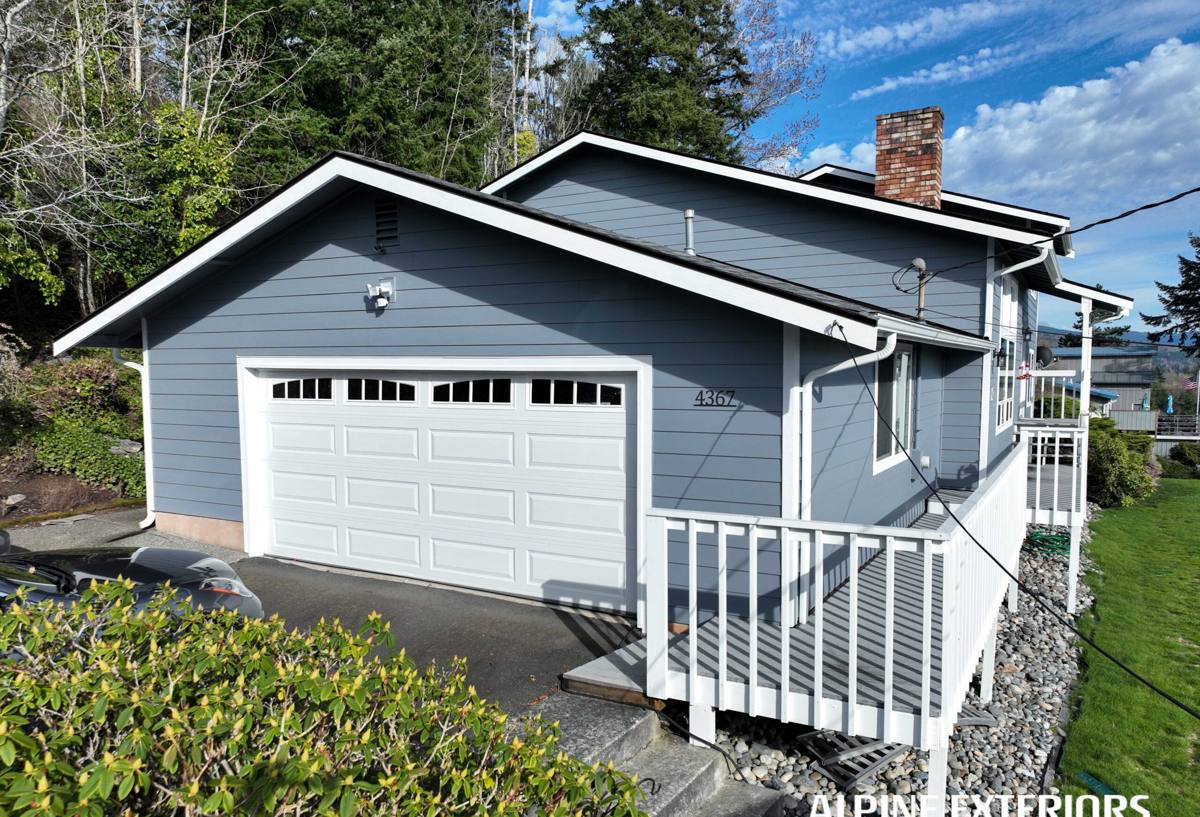
The York neighborhood sits close enough to the water and to mature tree cover that decks here take a beating most inland Whatcom County homes never see. Between salt-laden air rolling off Bellingham Bay, driving rain that comes in sideways during fall and winter storms, and a moss season that can stretch from October through April, an aging deck in York is usually dealing with three problems at once: corroding hardware, trapped moisture, and slick, moss-covered surfaces. If your deck is past the point of spot repairs, a full replacement is often the more honest answer than another round of patchwork.
Why York's Climate Is Hard on Decks
Bellingham's marine climate is generally mild, but that mildness comes with a tradeoff: long stretches of damp, low-sun weather that never quite let a deck dry out. In York specifically, we see a few recurring patterns.
Salt Air and Metal Fatigue
Proximity to the bay means airborne salt settles on exposed hardware — joist hangers, structural screws, post bases, and railing brackets. Over years, standard galvanized fasteners can corrode faster here than the same products would inland. Once a fastener starts to rust, it weakens exactly where the deck depends on it most: the connections holding joists to ledger boards and posts to footings.
Driving Rain and Water Intrusion
Storms off the Sound don't just fall straight down — wind-driven rain gets pushed under railings, into ledger board connections, and behind fascia. Without proper flashing, that water finds its way into end grain and framing lumber, where rot starts from the inside and often isn't visible until a board feels soft or a post wobbles.
Moss, Shade, and Slow Drying
Many York lots have mature landscaping or tree cover that keeps decks partially shaded for much of the day. Combined with our long wet season, that shade means moss and algae get a real foothold on decking boards, stair treads, and anything with limited airflow underneath. Beyond the mess, moss holds moisture against the wood surface and makes stairs and walking surfaces genuinely slippery — a real fall hazard from November through spring.
Signs Your York Deck Needs Replacing, Not Repairing
Not every issue means starting over. But certain signs point to a structural problem that repair alone won't fix.
- Soft, spongy, or spring-back decking boards, especially near the house or in shaded corners
- Rust streaks or crumbling at joist hangers, screw heads, or post bases
- A ledger board connection that shows staining, gaps, or soft wood where the deck meets the house
- Railings or posts that flex, wobble, or feel loose when pushed
- Persistent moss or black staining that returns within weeks of cleaning
- Visible daylight gaps between deck boards that have widened significantly from cupping or shrinkage
- A deck older than 15-20 years that has never had hardware or flashing upgraded
If you're seeing two or more of these, it's worth having someone look at the framing underneath, not just the surface boards.
What a Correct Deck Replacement Involves
A deck replacement done right in this climate isn't just swapping old boards for new ones on the same frame. It's an opportunity to fix the moisture and drainage details that caused the original deck to fail in the first place.
Structural Assessment First
Before any demo, we check footings, posts, beams, and the ledger board connection to the house. If the framing is sound, it can sometimes be reused with upgraded hardware. If it's compromised, replacing decking over bad framing just delays the same failure a few years down the road.
Ledger Flashing and Waterproofing
Since the ledger connection is one of the most common failure points in wind-driven rain, correct flashing detail here matters more in York than it might in a drier climate. This includes proper flashing shape, a water-resistant barrier behind it, and correct fastener spacing so water is directed away from the house framing rather than trapped against it.
Corrosion-Resistant Hardware
Given the salt air exposure, we spec hardware and fasteners rated for coastal or high-moisture use rather than standard-grade galvanized products. It costs a bit more up front and saves the headache of hardware failure well before the decking itself wears out.
Airflow and Drainage Underneath
Where possible, we build in ventilation and grading so water moves off and away from under the deck instead of pooling. This is one of the simplest ways to reduce moss growth and slow wood decay, and it's often missing entirely on older decks.
Decking Material Selection
We'll walk you through the honest tradeoffs between wood and composite decking for a shaded, damp lot like many in York. Wood costs less up front but needs regular cleaning and refinishing to resist moss and moisture staining. Composite costs more initially but resists moisture absorption and moss staining better, though it still needs periodic cleaning and isn't maintenance-free. Neither is automatically "better" — it depends on your budget, how much upkeep you want to do, and how shaded your specific lot is.
Decking Material Comparison for a Damp, Shaded Lot
| Factor | Pressure-Treated Wood | Composite Decking |
|---|---|---|
| Upfront cost | Lower | Higher |
| Moss/algae resistance | Needs regular cleaning and sealing | Better resistance, still needs occasional cleaning |
| Moisture absorption | Absorbs water, can cup or warp over time | Minimal absorption, more dimensionally stable |
| Maintenance | Annual cleaning, periodic staining/sealing | Occasional washing, no staining needed |
| Expected lifespan | 15-20 years with upkeep | 25-30+ years typical |
| Appearance over time | Weathers and grays without maintenance | Holds color longer, some fading possible |
We install both, and we'll give you a straight recommendation based on your deck's sun exposure, budget, and how much yearly maintenance you actually want to take on — not just push whichever product carries a better margin.
Our Process for York Deck Replacements
Because we already work regularly in this part of Bellingham, we've got a process that accounts for the local conditions rather than treating every deck the same.
- On-site assessment — we inspect the existing deck, framing, ledger connection, and drainage, and explain what we find in plain terms.
- Honest scope and estimate — you get a clear breakdown of what needs full replacement versus what can be reused, with material options and pricing factors explained up front.
- Permitting — most deck replacements in the City of Bellingham require a permit, especially when structural elements are involved. We handle that paperwork so you don't have to chase it down.
- Demo and disposal — old decking, framing, and debris are removed and hauled off.
- Rebuild with upgraded details — proper flashing, corrosion-resistant hardware, and drainage improvements go in as standard practice, not an upsell.
- Final walkthrough — we go over the finished deck with you, including basic maintenance guidance suited to your material choice and your lot's shade and moisture exposure.
Why Hiring a Crew That Already Works in York Matters
York isn't a generic subdivision — lot layouts, tree cover, and proximity to the water vary block to block, and those details change how a deck should be built. A crew that already works in this part of Bellingham has a working sense of which lots need extra attention to drainage, which areas see the heaviest moss buildup, and how far salt air exposure typically reaches inland from the bay. That local familiarity means fewer surprises during the assessment phase and a build that's suited to your actual conditions rather than a one-size-fits-all approach borrowed from a drier region.
It also matters for permitting and inspection — familiarity with the City of Bellingham and Whatcom County process means fewer delays getting your project scheduled and signed off.
Maintenance After Replacement
A new deck built with the right details still needs some seasonal attention in this climate.
- Clear leaves and debris from between boards before the fall rains set in, so water doesn't pool and feed moss
- Rinse or lightly scrub decking and stairs at least once during moss season to keep growth from taking hold
- Check railing and post connections annually for looseness, especially after winter storms
- Reseal or refinish wood decking on the schedule recommended for your specific product
- Keep gutters and downspouts clear so runoff isn't dumping extra water onto or near the deck
Get an Estimate for Your York Deck
If your deck is showing signs of wear, soft spots, or hardware corrosion, it's worth having it looked at before another wet season adds to the damage. We offer free, no-pressure estimates for York homeowners — just fill out the form below and we'll schedule a time to take a look.